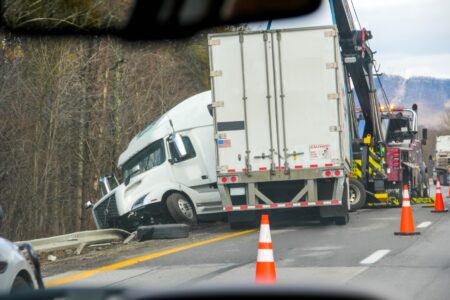

Conversely, most auto injury cases today are seldom decided by two memories. There are its own truths in cameras, phones, and the cars themselves, and that information tends to be more dependable than anything a scared driver may recall on the go. But digital records are vulnerable in ways that a dented bumper is not. Video is erased; phone data is held captive by a reluctant carrier; and vehicle records are destroyed when a car is fixed or recycled for parts. The difference between an evidence-based assertion and a hope-based claim has to do with knowing what’s available and how quickly it fades.
What a Negligence Claim Actually Has to Show
All fault-based car accident claims involve the following four criteria. 1. The other driver breached his or her duty owed to safely drive, which gave rise to the cause ultimately causing the crash causing actual harm. The duty element is almost never disputed: we all have a duty on a public road. The dispute is almost always over violation and causation: Was the other driver speeding, inattentive, with no light, and was her action (not something else) the faulty act that caused the crash?
Digital evidence is good since it speaks directly to those two contested elements. Then that officer gets to be justified in the police report. Then it’s on video or in a data log, so insurance companies care, and defenders try to exclude or expunge it from evidence.
Dashcams and Witness Video
The closest thing to an uninterested witness for a driver is the dashcam. It records lane location, signal timing, and following distance (and, with many dashcam versions, speed and GPS position) on every frame. That context is important, because a tape of the other car creeping toward the center line for 3 seconds before contact is a much better response to a breach than a driver saying it “came out of nowhere.”
Witness video works the same way but comes from places a driver cannot control: a phone held up by a pedestrian, a doorbell camera across the street, a security system on a gas station lot. The sensible move is to note every camera visible from the scene and ask for footage the same day, because many commercial systems loop over themselves within days. Lawyers who handle these cases spend a surprising amount of time on exactly this kind of collection, and understanding the evidence needed to prove negligence helps explain why a single clip from a corner store can carry more weight than a page of written statements.
Traffic Cameras Record Less Than People Assume
Many drivers assume that a crash at a monitored intersection will be on tape somewhere. Often it is not. A large share of public traffic cameras exist to help engineers manage congestion and dispatch responders, and they stream live images without saving them. The City of Everett in Washington, for instance, states plainly that it does not routinely record video from its traffic cameras, because the snapshots are meant for real-time traveler information.
Unlike red-light and speed cameras, they’re there to prove violation, but they don’t like all cameras record a video of an entire crash but more often a snapshot of a portion of infringement. The moral of the story is not to assume “the city will have it,” but to ask “who runs any given camera, does it even record, and how long is anything kept, etc.”
Phone Records and the Distraction Question
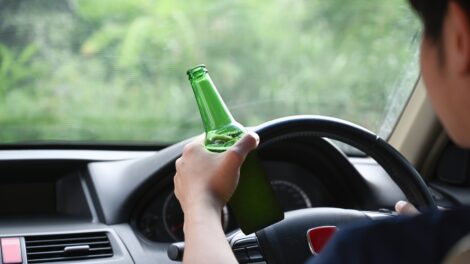
Distraction is one of the hardest forms of negligence to prove, because the evidence lives inside the other driver’s phone. Carrier records can show whether calls or texts were active around the moment of impact, and app or device data can sometimes go further. These records generally require a formal request through the claims or litigation process, and timing matters, since carriers do not keep every category of data forever.
State law can sharpen the point. Missouri’s Siddens Bening Hands-Free Law outlawed handheld phones for all drivers from August 28, 2023, after the state recorded nearly 200,000 distracted driving related crashes and at least 801 deaths between 2012 and 2021. When a statute specifically bans the behavior that phone records reveal, those records do more than suggest carelessness. They can point to a clear rule that was broken.
Phone evidence cuts both ways, of course. An injured driver who was scrolling at a red light should expect the other side to look for exactly the same records.
Vehicle Data as the Tiebreaker
New cars record a short loop of data around a crash, such as how fast the car was going and if the driver was on the brake or the throttle in the seconds before impact. It’s not too often that the data alone provides the full story, but it can be highly effective in deciding a discrete disagreement, such as whether a car paused for a yellow light or flew through it. It’s also among the most perishable pieces of evidence, because a car can be fixed, auctioned, or even sometimes totaled altogether, leaving its data behind. Asking to save the automobile or to download the data first saves that option.
Evidence That Proves the Damages, Not Just the Fault
Digital records assist, too. Weeks later, photographs show a far greater story than just an injury call, including photo of the swelling and bruising and sutures. Phones steps, fitness trackers – less movement post injury. Treatment notes, really no argument there, but they do be beefed up with additional patient portal messages, appointment reminders, pharmaceutical apps.
“This all helps to fill in the gaps between appointments and gives an adjustor more insight into life in recovery,” adds Kristen, “but none of it supersedes medical records.”
The First Forty-Eight Hours Decide What Survives
The Achilles’ heel for all of the digital evidence we cover here is that it is temporally bound and not yours to own. Store cameras are rewritten, carriers are wiped, vehicles are serviced, witnesses delete their clips. Save your space for someone injured or in need of medical help, but once everyone is safe and tended to, the most helpful thing anyone can do after a crash is to note where the cameras were, who had their cameras out, and identify cars with the data, then work to save the material while it’s still around.
After all, a claim is just a tale with evidence. The best evidence is increasingly not what we recall but what a machine has silently recorded, if only someone had inquired in time.