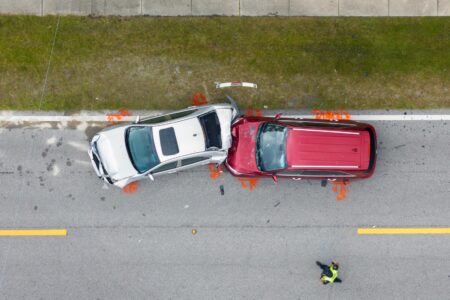

Most drivers think of traffic control as lights, signs, and painted lines. What catches people off guard is the other category — the human one. A traffic officer standing in an intersection, directing vehicles with hand signals and whistles, has legal authority that supersedes the traffic signals themselves. And failing to follow an officer’s directions — even when the light says you can go — is a violation that carries real consequences.
Traffic officer violations in Kansas City are less common than standard moving violations, but they generate real confusion when they happen precisely because most drivers have never had to think about this situation before it happens to them in real time.
What Missouri Law Says About Traffic Officers
Clear and more significant than drivers typically expect.
Missouri Revised Statutes § 304.234 addresses compliance with traffic control devices and traffic officers. When a law enforcement officer or authorized traffic control officer is directing traffic, drivers must comply with their directions. The statute explicitly establishes that an officer’s direction takes precedence over signals, signs, and other traffic control devices. A green light doesn’t override an officer’s raised hand. A right turn that’s normally legal doesn’t override an officer’s signal to stop.
The scope of who qualifies as an authority figure in this context extends beyond uniformed police officers. Traffic control officers, flaggers in construction zones with proper legal authority, school crossing guards in their designated areas, and officers directing traffic at accident scenes all carry similar legal weight. Failure to comply with any of these creates citation exposure under Missouri’s traffic control framework.
Where These Violations Actually Come From
The situations that generate traffic officer violation citations in Kansas City follow recognizable patterns — and most of them involve ordinary drivers who simply weren’t prepared for the situation they encountered.
Construction zones are the most consistent source. Kansas City’s ongoing highway and street construction projects create constant situations where flaggers direct traffic in ways that differ from normal traffic flow — stopping one direction while allowing another to proceed, creating temporary single-lane passages, controlling speed through active work areas. A driver who doesn’t see the flagger in time, misjudges the flagger’s signal, or assumes the traffic signal takes precedence over the flagger creates a violation in the blink of an eye.
Major event traffic in and around downtown Kansas City — games at Ariel Re Stadium, concerts at T-Mobile Center, events at the Convention Center — frequently involves officers directing traffic at intersections to manage volume that the normal signal timing can’t handle. Drivers focused on where they’re going, watching for parking, or simply not expecting an officer in an intersection where a signal is also present can miss or misread the officer’s direction.
Accident scenes generate their own version of this situation. When officers are managing traffic around a crash scene, the normal rules of the road are suspended in favor of officer direction. A driver who proceeds when signals indicate they can, without recognizing that an officer has authority over the intersection, creates a violation even when they’re technically following the light.
What “Failure to Comply” Actually Looks Like
The violation isn’t always as obvious as driving straight through an officer’s raised hand. The situations are more varied.
Proceeding through an intersection when an officer has signaled stop. Turning when an officer’s direction indicates no turn is permitted. Failing to reduce speed when a flagger’s position and signal require it. Driving through a space an officer has blocked off as part of managing a scene. All of these constitute failure to comply with officer direction under Missouri law — even when the driver’s conduct seemed reasonable given other visible cues.
The confusion factor is real. Officers directing traffic sometimes make direction changes quickly in response to traffic flow, and drivers approaching at speed don’t always have the time to read and respond before they’re in the intersection. That’s a genuine factual circumstance that shapes how these cases get handled — but it doesn’t automatically prevent the citation from being written.
What the Consequences Look Like
Not dramatically different from other moving violations in structure, but with some dimensions worth understanding.
A traffic officer violation in Missouri adds points to your driving record — typically two to three depending on how it gets classified. Those points stay active for three years, count toward suspension thresholds, and appear on records insurance companies check at renewal. Premium adjustments compound over the following policy periods in ways that consistently exceed the original fine over time.
When the failure to comply with officer direction contributed to an accident or created a dangerous situation at a scene the officer was managing, the charge can carry additional weight in how prosecutors approach it and what the realistic outcome range looks like. Context matters significantly in these cases.
For commercial drivers, any moving violation adds CDL record complexity that federal regulations scrutinize carefully. Multiple moving violations within a three-year window create compounding exposure that affects CDL status in ways that extend beyond Missouri’s state traffic system.
A Missouri traffic ticket lawyer who handles these violations understands how traffic officer citations move through Kansas City’s court system and where defense opportunities exist. Speeding Ticket KC works with Kansas City drivers on moving violations of all types, including situations where the violation arose from a complex traffic control scenario rather than a standard road situation. Getting guidance before any decisions get made keeps options available that paying immediately closes.
Questions: Drivers Ask About Traffic Officer Violations
1. Does a traffic officer’s direction really override a traffic signal in Missouri?
Yes — explicitly under Missouri law. When an officer or authorized traffic control official is directing traffic, their directions take precedence over signals, signs, and other devices. A green signal doesn’t override an officer’s direction to stop. A right turn normally permitted by law doesn’t override an officer’s signal to proceed straight. The officer’s authority in that moment is the controlling legal standard, and failure to follow their direction is a violation regardless of what other traffic controls indicate.
2. Do construction zone flaggers have the same authority as police officers?
Flaggers in Missouri construction zones have authority to direct traffic when they’re properly authorized and positioned according to Missouri’s work zone standards. Failure to comply with a flagger’s direction in an authorized work zone creates citation exposure under the same traffic control framework that applies to officer direction. The specific authorization standards matter — a flagger who isn’t properly positioned or equipped may not have the same legal authority — but most active construction zones with flaggers meet those standards and create real legal obligations for approaching drivers.
3. What if I genuinely didn’t see or understand the officer’s direction?
That’s a factual circumstance worth examining and documenting carefully. The speed of the situation, the officer’s visibility from the driver’s approach position, the clarity of the direction given, and what other traffic controls were visible at the same moment all factor into whether the failure to comply was genuinely unavoidable given the conditions. This doesn’t automatically eliminate the violation, but it shapes how the case gets handled and what arguments carry weight in the legal process. An attorney who examines the specific circumstances can assess whether this factual argument holds up.
4. How many points does a traffic officer violation add to my Missouri license?
Most traffic officer violations add two to three points depending on how they get classified. Those points stay active for three years and count toward suspension thresholds — eight points within eighteen months triggers a suspension. Combined with other recent violations, a traffic officer citation can push someone toward suspension territory faster than anticipated. Understanding your current record before deciding how to respond is essential information rather than optional background.
5. Is getting legal help worth it for a traffic officer violation?
For a single citation with a clean record and no accident connected — it’s a genuine judgment call depending on specifics. But for anyone with prior violations making points a real concern, anyone where the citation is connected to an accident or scene disruption, anyone whose insurance situation makes additional points a real problem, or commercial drivers — yes, legal guidance makes a measurable difference. Speeding Ticket KC helps Kansas City drivers understand exactly what their specific citation means before making any decisions. That clarity at the start consistently produces better outcomes than paying first and dealing with the full consequences afterward.