Right-of-way violations are consistently among the most common moving violations written in Kansas City — and consistently among the most contested by drivers who genuinely believed they were in the right when the citation was issued. That disconnect is real, and it’s worth understanding, because it goes beyond simple mistakes. It reflects a genuine gap between how drivers learned right-of-way rules and how Missouri traffic law actually applies them in specific situations.
The mistakes that generate these citations aren’t usually reckless behavior. They’re judgment calls made in fractions of seconds by drivers who thought they had adequate clearance, or who misread a situation, or who simply applied a rule incorrectly because they’d never fully understood the specifics. Understanding where these mistakes happen most consistently in Kansas City changes how you approach these situations — and changes how you respond when a citation lands in your hand.
The Left Turn Mistake That Generates More Citations Than Almost Anything Else
Honestly, if there’s one right-of-way mistake that produces more Kansas City traffic tickets than any other, it’s the left turn across oncoming traffic — specifically, misjudging the speed and distance of approaching vehicles before committing.
The problem isn’t that drivers are reckless. It’s that speed perception from a stopped position is genuinely unreliable. Approaching vehicles look slower than they are when you’re sitting still, especially on roads with higher speed limits. The gap that appears workable from your stopped position is often tighter than it actually is once you’re in motion and oncoming traffic is arriving faster than your stationary brain estimated. The result is an oncoming driver who has to ease off the throttle, brake more than usual, or swerve slightly — and an officer who observed that reaction has grounds to write the citation.
Missouri’s standard isn’t whether you thought the gap was adequate. It’s whether any approaching driver actually had to adjust because of your movement. Those are two meaningfully different bars.
The Stop Sign Mistake That Feels Technical But Isn’t
At uncontrolled intersections — those with stop signs on all approaches — Missouri’s right-of-way rule is straightforward: the vehicle on the right has priority when two vehicles arrive at approximately the same time. In practice, this rule gets misapplied constantly.
Most drivers operate at all-way stops on a first-come-first-served basis that approximates the right-of-way rule most of the time, but doesn’t always. When two vehicles arrive simultaneously from different directions, and both proceed simultaneously — because neither driver was certain who had priority — the resulting conflict creates the foundation for a citation. The driver on the left was supposed to yield. That rule isn’t instinctive for many drivers because it requires quickly identifying relative arrival times and positions under pressure.
Kansas City intersections with poor visibility, unusual geometry, or high traffic density create constant situations where this rule gets applied inconsistently.
The Pedestrian Crosswalk Mistake That Catches People Off Guard
You know what surprises drivers most when they receive a pedestrian right-of-way citation? The pedestrian wasn’t directly in front of them. They were approaching. Maybe stepping off the curb. Maybe already in the crosswalk, but in the far lane. The driver thought they had enough clearance to proceed before the pedestrian reached their lane.
Missouri law requires drivers to yield to pedestrians in marked crosswalks when the pedestrian is in the driver’s half of the roadway or approaching closely enough that continuing would create a hazard. That standard covers more situations than “pedestrian directly in your path.” A pedestrian who’s legally crossing and would reasonably have to slow, stop, or change direction because of your movement has created the legal threshold for the violation.
This is why pedestrian yield citations happen in situations where the driver genuinely believed they weren’t cutting anyone off.
The Highway Merge Mistake That’s More Common Than People Admit
Highway on-ramps require drivers to yield to traffic already traveling in the lane they’re merging into. Most drivers understand this in principle. What many apply in practice is a version of mutual accommodation — the expectation that highway traffic will adjust to let them in.
That expectation isn’t legally protected. When a merging driver forces a highway vehicle to brake, swerve, or adjust, the merging driver has failed to yield, regardless of whether highway traffic moved over to help. Officers positioned on Kansas City’s highway corridors observe these situations regularly — particularly at busy interchange points where merge lanes are short, and traffic is dense.
A Missouri traffic ticket lawyer who handles right-of-way violations understands how each of these common mistakes gets prosecuted and where the defensible angles are in each situation. Speeding Ticket KC works with Kansas City drivers on failure-to-yield citations across all these scenarios regularly and brings the local knowledge that shapes actual outcomes. Getting that perspective before any decisions get made changes what options remain available.
Questions Drivers Ask About Right-of-Way Violations
What’s the most common right-of-way mistake that leads to a Kansas City traffic ticket?
Left turns across oncoming traffic generate the most citations, followed closely by failure to yield to pedestrians in crosswalks and improper highway merges. All three share a common thread — the driver believed they had adequate clearance based on their assessment of the situation, but an approaching driver or pedestrian had to adjust because of their movement. The legal standard is the forced adjustment, not the driver’s subjective sense of whether the gap was workable.
Can I be cited even if I thought I had the right of way?
Yes — and this is where the confusion most often lives. Both drivers in many right-of-way situations believe they were correct. The citation reflects the officer’s assessment of who was legally required to yield, given the specific traffic configuration and what actually happened. That assessment can be examined and challenged — but the citation gets written based on what the officer observed, not on what either driver believed at the time.
How many points do right-of-way violations add to my Missouri license?
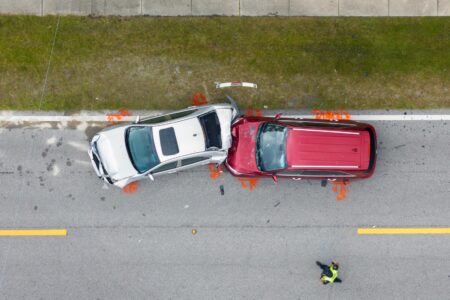
Most failure-to-yield violations add two to three points, depending on classification. Those points stay active for three years and count toward suspension thresholds — eight within eighteen months triggers a suspension. When a right-of-way violation is connected to an accident, it creates documentation of fault that simultaneously affects insurance proceedings. Understanding the full point and insurance picture before deciding how to respond is information worth having before any decisions get made.
Does it matter if the other driver was also doing something wrong?
Yes — and this shapes how both the traffic citation and any related insurance claim get handled. Missouri uses comparative fault principles, meaning fault can be allocated between multiple parties based on their respective contributions. A right-of-way citation doesn’t automatically mean you were entirely responsible. What both drivers were doing — not just the cited driver — is part of building an accurate legal picture of the situation.
Is getting legal help worth it for a right-of-way ticket?
For a single citation with a clean record and no accident, it depends on the specific circumstances. But for anyone with prior violations, anyone where an accident was connected, anyone whose insurance situation makes additional points a real concern, or commercial drivers — yes, legal guidance makes a measurable difference. Speeding Ticket KC helps Kansas City drivers understand exactly what their specific citation means before making any decisions. That clarity at the start consistently produces better outcomes than paying first and dealing with the aftermath.