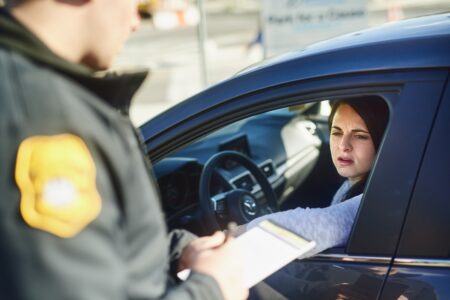

The conditions that give rise to this charge rarely appear like something from a criminal movie. No one’s going to hot-wire a stranger’s automobile in the dark parking garage. More commonly, it’s a family member who took the keys without asking, a roommate who felt it was okay because they borrowed them before, or an employee who used a business car for a purpose that was never approved. The circumstances are personal and often messy, yet Missouri law treats them all the same.
If you are charged with this crime in Kansas City, you want to know what the law says, and how these cases really go before you step into a courtroom.
The Actual Missouri Law
It is unlawful in Missouri, pursuant to RSMo 570.080, to operate a motor vehicle knowing the owner has not provided agreement to the use of the vehicle. The act does not require permanent intent to remove the car. If you took it for a little while with the intention of returning it, if you drove it for a little errand without seeking permission first, all of that fits the legal criteria if no permission was granted.
First offense is a Class A Misdemeanor in Missouri. That is punishable by up to one year in jail and $2,000 in fines. A second conviction within five years makes it a Class E felony, which is punishable by up to four years in jail. If the vehicle crosses state lines, then federal statutes come into play in addition to what Missouri law provides.
This is a criminal charge, not a traffic charge. A conviction stays on your criminal record, shows up on background checks, and can impact job applications, housing checks, and professional licenses for years to come.
Where Cases Really Turn Is The Consent Question
Consent is a total defense. No crime if the owner gives consent. Simple enough in theory. Retroactive proof is more difficult than most people imagine in practice.
Most borrowing of vehicles among people who know each other is conversational, informal, and undocumented. No one signs a form. No one texts back to confirm. Which means when the connection turns sour, and the owner says no authorization was given, it boils down to two competing narratives with nothing tangible to reconcile them.
Support for an implied permission theory can be found in past borrowing practices. If a person has been using a vehicle without protest for some time, that can give rise to a reasonable inference that authorization exists. The courts look very carefully to see whether that history actually extends to the exact use, this distance, this duration, this particular day, rather than merely showing a tendency in general.
The defense is significantly less successful when the relationship between the parties has deteriorated prior to the incident, when the vehicle is removed from a place that indicates the owner did not want it used, when the driver is absent for an appreciably longer period of time or travels a far greater distance than any previous use would have shown to be normal, or when the owner reports the vehicle stolen before the driver returns it.
What These Cases Really Come From in Kansas City
Family arguments make up a large number of these allegations. A couple separates, and one takes what they think is a joint vehicle before any legal agreement is made. Adult child and parent at odds. Brothers or sisters who have borrowed the car one time too many.
Workplace settings constitute a different category. Here’s an example. If employees use business cars for their own purposes, like conducting personal errands in the delivery van, or taking the company truck for a side gig on the weekend, and the employer chooses to take action, the fee is this.
Roommate settings make up another common source. Keys left accessible, casual borrowing that worked OK until it didn’t, and assumed authorization that the vehicle owner explicitly denies.
A Missouri traffic ticket lawyer that handles criminal cases can look at the exact details of your circumstance and offer you a realistic idea of what is truly going on.
How KC Speeding Ticket Handles These Cases
Speeding Ticket KC is a renowned law company in Kansas City, Missouri. They handle traffic and criminal defense, including illegal use of vehicles. For folks who need honest answers about what they are up against and what realistic solutions there are.
Their lawyers look at the particular facts. What was the relationship between the parties involved? Was consent provided, was it implied, or was it really absent? What docs do they have on both ends? What are the real charges in the charging document, and where are its flaws? According to the particular facts, the range of outcomes can be reduced to dismissal. Every situation is studied in real life.
Questions People Ask For Realness
1. Is this like stealing a car in Missouri?
They are linked but separate legal entities. To steal a car, there must be a purpose to permanently deprive the owner of the vehicle, and Missouri’s theft statutes cover that. RSMo 570.080 does not require permanent intent for unauthorized vehicle use. It is enough to take a car without consent, even temporarily. The difference impacts how charges are categorized and prosecuted, although both are crimes. The lower charge is not a traffic citation, and interpreting it as such is a mistake that tends to yield worse outcomes.
2. What if the owner says it’s okay later?
Getting authorization thereafter does not erase the charge. The question is whether there was permission at the time of the taking. If an owner later decides not to help with prosecution, it can have an impact on how aggressively the matter is prosecuted, especially if the owner will not testify as a witness. Owners pulling back usually have better results. But that’s not a given, and you shouldn’t bank on that without legal advice on how to really do it.
3. Can the charge be lowered or dropped?
Yes, and the conditions matter a lot. There is typically real room to bargain for first-time offenders with a legitimate consent case, mitigating facts, or limited owner participation. Missouri diversion programs let some first-time offenders meet conditions for discharge. That will depend on your prior record, the facts of the case, and the prosecutor’s office that handles it. An attorney who has been in the Kansas City courthouse can give you a concrete answer instead of a broad one that may not apply to you.
4. What if I believed the car to be half mine?
Ownership problems make these instances more complicated than pure stranger cases. If you are the legal owner of the car because you have jointly bought it, or you have a domestic partnership arrangement, or you have a verbal agreement to use it jointly, then these facts are relevant to the issue of consent and to any defense. They don’t automatically dismiss the charge, but they’re just the kind of special situation that affects how a case is viewed, and what arguments play in court.
5. What do I do immediately after I get charged?
Call an attorney before your first court date, not after. The early decisions in criminal cases determine everything that follows: how the charge is worded, what plea options are available, how the consent question is handled from the outset. Even if you tell the truth to police or prosecutors, trying to explain the issue without representation often causes complications that take a lot of work to fix later. You should make the call the same day you’re charged.