Trains don’t stop on a dime. Neither does the fine you’ll owe if you don’t stop for one.
Here’s a scene that plays out all over Kansas City, probably more than most drivers realize. Someone’s running a few minutes late, they hit a crossing they’ve driven past a thousand times, the lights start flashing, and… they roll through anyway. No big deal, right? Except it is a big deal, at least as far as Missouri law is concerned. Let’s get into what the statute actually says, why officers don’t cut much slack here, and what your options look like if you’ve already got the ticket in hand.
What the Law Says, Minus the Legalese
Missouri requires drivers to come to a full stop before certain railroad crossings — not slow way down, not creep through, stop. Specifically, you’re supposed to stop somewhere between fifteen and fifty feet from the nearest rail whenever a signal is flashing, a gate is down, a flagman’s waving you off, or a train is close enough that crossing would be dangerous. You wait until it’s clearly safe before moving again.
That fifty-foot window isn’t arbitrary, by the way. Stop too close, and a wider train car can clip you on the way by. Stop too far back, and you’re blocking the lane behind you, or worse, you haven’t technically satisfied the stop requirement at all. Fifteen to fifty feet gives you a clear sightline without putting your bumper in harm’s way.
A couple of other things trip drivers up here. You can’t drive around a lowered gate, even if the train looks a mile off and you’re pretty sure you’d make it. And you can’t enter a crossing unless there’s room on the far side to get all the way through — getting stuck halfway across a set of tracks is one of the worst places a car can be, so that rule exists for good reason, not just to slow you down for fun.
Why This Particular Violation Gets Taken So Seriously
Car versus train isn’t really a contest. It never has been. That’s the blunt truth behind why Kansas City officers tend to write these tickets without much patience for excuses.
“I didn’t see the lights.” “The gate was going down slowly, I figured I had time.” Honestly? None of that carries much weight once you’re pulled over. The law doesn’t ask whether your reasoning made sense in the moment — it asks whether you stopped when you were supposed to.
Under Missouri statute, failing to stop at a railroad crossing is a class C misdemeanor. That’s nothing. A conviction can bring fines, points against your license, and a permanent mark on your driving record that your insurance company will eventually see, whether you want them to or not.
How These Tickets Usually Happen
Talk to enough people who’ve gotten one of these, and you start noticing patterns. It’s rarely reckless driving in the dramatic sense — it’s more often a small miscalculation that snowballs.
- Trying to beat a gate that’s still lowering, betting the train hasn’t reached the crossing yet
- Misjudging how fast an oncoming train is actually moving (they’re deceptively quick for their size)
- Rolling through because the car behind you is riding your bumper and honking
- Getting distracted for two seconds right when the warning lights kick on
None of these hold up as excuses in traffic court, unfortunately. The law expects every driver to treat every warning signal as the real thing, every single time, no exceptions for being in a rush or having somewhere to be.
What Happens After You Get the Ticket
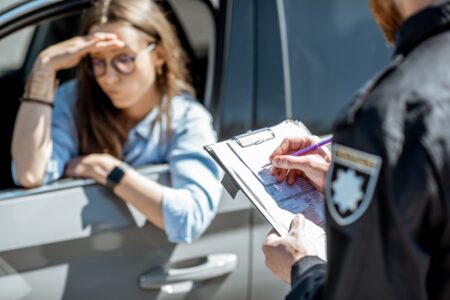
Once you’re cited, you’ll usually get a court date, or in some cases, the option to just pay the fine outright. Paying it feels like the easy way out. It’s quick, it’s simple, and you move on with your life. But here’s what a lot of people don’t think through: paying the ticket counts as admitting guilt, and that means points land on your record automatically.
Points don’t just sit quietly in a file somewhere. Missouri’s point system feeds into your license status, and insurance companies check your driving record every time your policy comes up for renewal. One railroad crossing violation can raise your premium for years afterward. That’s real money, for what was probably a fifteen-second decision.
This is usually where it makes sense to talk to a Missouri traffic ticket lawyer before doing anything else. A lawyer who handles these cases regularly knows how local Kansas City courts tend to rule, which defenses actually get traction, and whether your specific situation has a real shot at reduction or dismissal. Every case looks a little different once you get into the details, so it’s worth a conversation before you just hand over the fine.
Defenses That Sometimes Actually Work
Not every ticket holds up under scrutiny, and that surprises people. Signal malfunctions happen more often than you’d think — a gate that sticks, a light that doesn’t sync properly with the train’s actual arrival. If the equipment wasn’t working right, that’s a legitimate defense worth raising.
Visibility problems come up too. Was the signal actually visible from your lane, or was it blocked by a tree, a parked truck, or bad weather? Did the gate stay down long after the train had already cleared the crossing, training drivers to assume it’s unreliable? These are the kinds of specifics that matter in court, and they’re exactly what an attorney knows to dig into.
Protecting Your Driving Record
Nobody plans on getting a railroad crossing ticket. It happens fast, usually at a crossing you’ve crossed a hundred times safely before without giving it a second thought. But once it’s on your record, it doesn’t just disappear — it sits there affecting your insurance and your license for longer than you’d expect.
If you’ve been cited for failing to stop at a railroad crossing anywhere around Kansas City, it’s worth finding out what your options actually are before assuming there’s nothing you can do. Speeding Ticket KC works with drivers dealing with exactly this kind of case, and a short conversation before your court date can genuinely change the outcome. Talking to a Missouri traffic ticket lawyer costs a few minutes of your time. Skipping that step could cost you a lot more down the road.