
It’s one of those situations that happens before you fully understand what’s occurring. Traffic moves, you follow, and then everything ahead stops —, but you’re already on the tracks. The gate starts coming down. Your stomach drops. And what started as a routine commute through Kansas City has turned into something you definitely weren’t prepared for.
Getting stuck at a railroad crossing isn’t just dangerous. It carries real legal consequences that most drivers haven’t thought through until they’re dealing with them.
How Missouri Law Treats This Situation
Missouri law under RSMo § 304.035 is specific about this. Drivers cannot enter a railroad crossing unless there is sufficient clear space beyond the tracks to hold the entire vehicle without stopping on or over the rails. That means before your front wheels cross the first rail, the road beyond the crossing must be long enough to fit your entire vehicle — bumper to bumper — completely off the tracks.
If traffic ahead stalls and any part of your vehicle remains on or over the rails, you wait before the crossing. Not when you think it might be clear. Until it actually clears. The law removes the judgment call entirely — you don’t enter until the space beyond is genuinely open.
This applies to every vehicle type. A standard sedan, a full-size pickup, an SUV, a commercial vehicle — all of them. Longer vehicles face tighter margins because more clearance is required, and the consequences of misjudging that clearance are considerably more severe for a semi-truck than a Civic.
Why This Happens to Careful Drivers
Honestly, most people who end up stuck on tracks weren’t being reckless. They were following traffic in the most natural way — moving when the car ahead moved, closing the gap, keeping pace with the flow.
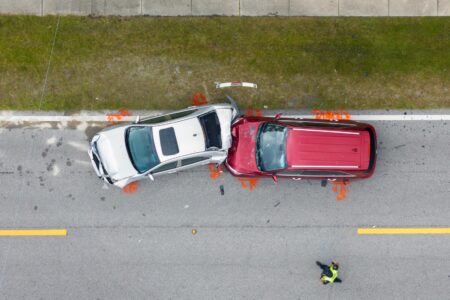
The typical scenario is predictable. A signal turns green. Vehicles roll forward. The driver moves with them without registering that traffic has already stalled again just past the crossing. By the time the brain processes what’s happened, the rear wheels are over the rail, and the car behind has taken the space left behind.
Impatience plays into it, too. Sitting at a crossing while traffic idles ahead is frustrating — especially when you’re already running late. A gap appears and looks like it’s going to clear. Sometimes it does. That gamble, made under pressure, is exactly what Missouri law was written to eliminate.
Kansas City’s summer construction season adds complexity. Detour routes push drivers through crossings they’ve never navigated before. The intersection geometry beyond the tracks is unfamiliar. Clearance distances are harder to judge at an unfamiliar crossing than at one you’ve used a hundred times. Honest misjudgments happen — and the law treats them as violations regardless.
What You’re Actually Facing Legally
Getting stuck on a railroad crossing is a moving violation in Missouri. Points go on your license. Fine amounts vary based on the specific charge and circumstances — but this violation doesn’t get treated like a minor administrative slip-up.
The reason is straightforward. A vehicle on active tracks represents a risk category that most traffic offenses simply don’t reach. Trains operating at freight speed cannot stop quickly. The physical outcome of a collision between that kind of mass and a passenger vehicle isn’t uncertain. Missouri courts and prosecutors reflect this in how they handle these cases — the weight given to crossing violations is noticeably heavier than a standard speeding ticket.
If the situation contributed to an accident — property damage, injuries, emergency response — civil liability opens up alongside the traffic charge. What started as a citation becomes considerably more complicated and costly to resolve.
Getting a Missouri traffic ticket lawyer involved early — before decisions get made — gives you a clear picture of what you’re actually dealing with.
How Speeding Ticket KC Handles These Cases
Speeding Ticket KC is a well-known law firm in Kansas City, Missouri. They handle traffic violations and criminal defense matters — including railroad crossing citations that catch drivers off guard with how much legal weight they carry.
Their attorneys review each case on its own facts. What exactly was cited? What did the officer document at the scene? What were the traffic and signal conditions at that specific crossing? What realistic options exist — reduction, dismissal, or a negotiated outcome that protects your record? No generic responses, no assumptions. The specific details of your situation shape the approach.
Questions People Actually Ask
Is getting stuck on the tracks automatically a traffic violation?
Yes — if you entered the crossing without sufficient clear space to hold your entire vehicle off the rails, Missouri law treats it as a violation regardless of how it happened. The intent behind the entry doesn’t change whether the violation occurred. It can affect how the case gets prosecuted and how much leniency gets applied, but the legal threshold is whether you entered without adequate clearance. That’s a factual question courts answer based on what the officer documented and what evidence exists about the crossing conditions at the time.
What should I do immediately if I’m stuck on the tracks?
Get out of the vehicle and move away from the tracks immediately — specifically toward the direction a train would approach from, so you’re clear of debris if impact occurs. Do not stay in the vehicle trying to restart it or move it under power. Most crossings have emergency notification numbers posted on the signal equipment. Call that number if you can see it. Call 911 regardless. Your car is replaceable. Getting physically clear of the crossing is the only priority.
Does it matter that no train was actually coming?
For the safety side, absolutely — the absence of a train is what makes a stuck-on-tracks situation survivable rather than catastrophic. For the legal side, it doesn’t affect whether the violation occurred. Missouri law prohibits entering a crossing without sufficient clearance, regardless of whether a train is actively approaching. The violation is the act of entering without adequate space, not the presence of a train. Courts apply the statute based on what happened, not on what could have happened.
Can I challenge this citation?
Yes. Traffic conditions at the specific crossing, signal timing, road layout, visibility limitations, and what the officer actually observed all factor into whether the citation accurately reflects what happened. A lawyer examines the available evidence and identifies where the charge has weaknesses. Even when outright dismissal isn’t the realistic outcome, reducing it to a non-moving violation removes the points entirely, which changes the license and insurance implications considerably going forward.
How does this affect CDL holders differently?
Federal regulations impose additional consequences on commercial drivers for railroad crossing violations beyond what Missouri state law provides. Depending on the specific violation, a CDL holder can face disqualification from operating commercial vehicles for a defined period, which directly impacts employment. Federal rules treat crossing violations as serious safety offenses, and those consequences stack on top of state penalties rather than replacing them. CDL holders facing crossing citations need legal help immediately rather than waiting to see how things develop on their own.