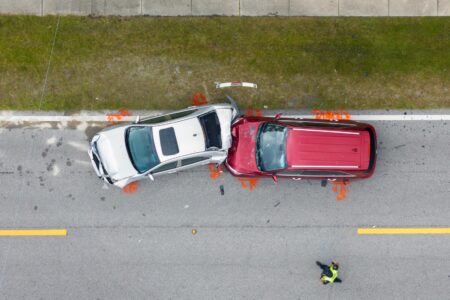

It happens in about three seconds. You’ve been waiting in your driveway, watching for a gap in traffic, and you see what looks like enough space. You pull out. The car coming down the road hits the brakes hard. Nobody gets hurt — but an officer nearby saw the whole thing.
Next thing you know, you’re holding a citation for improper entry from a driveway. It feels like an overreaction. It usually doesn’t feel that way once you understand what’s actually at stake.
This Violation Is More Common Than People Realize
Kansas City is a driving city. Highways, surface streets, residential cuts — people spend real time behind the wheel here, and driveways empty onto busy roads constantly. Wardrobes change with the seasons, but traffic patterns don’t. Morning rush, school pickup, weekend errands — the streets stay active, and driveway entries happen thousands of times a day across the metro.
Most go fine. Some don’t.
Officers cite improper driveway entry when a driver pulls into traffic without yielding appropriately — forcing other vehicles to brake, swerve, or adjust. The law doesn’t require an accident to happen. The unsafe entry itself is enough. That distinction surprises people. They think: nothing bad happened, so what’s the problem? But traffic law is concerned with risk, not just outcomes.
What the Law Actually Requires
Missouri law is clear on this. Under RSMo § 304.351, a driver entering a roadway from a private road, driveway, or alley must yield to all vehicles already on the roadway. Full stop — no wiggle room.
“Yield” means more than just slowing down and hoping for the best. It means waiting until the path is clear enough that your entry doesn’t force anyone to react. If a driver on the main road has to touch their brakes because of your movement, that’s a problem under the statute.
The challenge is that “clear enough” involves judgment. Your judgment, in the moment, about closing speeds and distances. Officers make their own judgment about what they observed. Those two assessments don’t always match — and when they don’t, a citation gets issued based on the officer’s version.
That gap between what you believed and what got written down is exactly where a legal challenge becomes possible.
The Scenarios That Lead to Citations
Let me walk through the situations that actually produce these tickets in Kansas City, because the circumstances vary more than people expect.
Busy arterial roads are the most obvious setting. Streets like Troost Avenue, Wornall Road, or Van Horn Road move fast, and driveways along them require real patience. A driver who pulls out during a gap that’s slightly too small — misjudging the speed of an approaching vehicle — creates exactly the kind of situation this law addresses.
Blind driveways are another common factor. Fences, landscaping, parked vehicles, or building placement can cut sightlines dramatically. A driver who can’t fully see oncoming traffic makes the entry riskier, and officers factor visibility into their assessment of whether the entry was appropriate.
Residential street entries catch people off guard, too. Quieter streets feel forgiving — speeds seem lower, traffic lighter. But the yield requirement applies everywhere, not just on highways. A driver who rolls out of a side driveway into the path of a cyclist or another car on a neighborhood street faces the same statute as someone pulling onto a major road.
And honestly, distraction plays a role in more of these than anyone admits. Watching the traffic on one side while inching forward, not fully accounting for what’s approaching from the other direction — that’s how gaps get misjudged.
What Happens After the Ticket
Two points. That’s the typical hit on a Missouri license for this violation. And the same math applies here as with any moving violation: the state suspends licenses at eight points within 18 months, and insurance carriers treat convictions as signals to raise premiums.
Paying the ticket closes every option. Once you pay, it’s a conviction — permanent on your driving record, visible to insurers at renewal, counted in the point total. People pay because it feels easier. That ease costs them later, sometimes for years.
The smarter move, before paying anything, is talking to a Kansas City traffic ticket lawyer at Speeding Ticket KC. The firm handles traffic citations in Kansas City courts regularly — they know how these cases get evaluated, what documentation helps, and whether a particular citation has weaknesses worth pressing. Many clients resolve their cases without ever stepping into a courtroom.
The Citation Isn’t Always Airtight
Here’s what people miss: an officer’s account of a traffic stop is one perspective, captured in a short window, from a particular vantage point. That account can be examined.
Was the officer’s view of the entry obstructed? Was the traffic approaching at an unusual speed? Were there road conditions — rain, low light, construction — that affected the situation? Did the driver on the main road actually have to brake hard, or did they slow mildly out of general caution? These distinctions matter in court, and they’re worth raising before assuming the ticket is settled.
A solid legal review looks at exactly this kind of detail. Sometimes it changes everything.
Questions Drivers Ask About This Charge
Does the other driver have to actually brake for this to be a violation?
Not necessarily — though it’s the clearest evidence that a yield didn’t happen. The statute requires yielding to vehicles on the roadway; an officer who observes a close entry can cite the violation based on their judgment of the risk created, even if no contact or hard braking occurred. That said, if no other driver reacted at all, it strengthens the argument that the entry was actually safe.
What if visibility from my driveway was genuinely poor?
Poor visibility is a double-edged factor. It can help explain why you misjudged the gap — but it also raises the question of whether you should have inched out more carefully, or used a spotter, or approached the entry differently. Courts look at the full picture. Document the visibility conditions if you can — photos of the driveway sightlines, time of day, any obstructions present. That documentation gives an attorney something concrete to work with.
Can this ticket be reduced to a non-moving violation?
Yes, in some cases. Kansas City municipal courts do allow reductions, particularly for drivers with clean records. A non-moving violation carries no points and typically doesn’t affect insurance. Getting there requires negotiation — which is where having Speeding Ticket KC in your corner matters. They handle these negotiations directly and know which prosecutors are open to reductions on this type of citation.
What if I were pulling out of a business driveway, not a residential one?
The statute covers both. RSMo § 304.351 applies to any private road or driveway — residential or commercial. Pulling out of a strip mall parking lot, a gas station, a restaurant — same yield requirement, same potential citation. The type of property doesn’t change the obligation.
How quickly do I need to act after getting the ticket?
Sooner than most people move. Court dates come up faster than expected, and options narrow as deadlines approach. Speeding Ticket KC recommends reaching out as soon as possible after receiving a citation — ideally within a few days, not a few weeks. Early review means more time to gather relevant information, more time to build a response, and more options on the table when it counts.