
Nobody thinks they’re going to get cited at a railroad crossing. It’s one of those violations that feels almost theoretical until it’s happening to you — traffic bunching up ahead, a gap that looked like it was clearing, a split-second call that turned out wrong. And suddenly your car is sitting on the tracks, and the situation is no longer theoretical at all.
Missouri takes this violation seriously. Understanding why — and what it means legally — matters more than most drivers realize.
What the Law Requires
Missouri law under RSMo § 304.044 is direct. You cannot enter a railroad crossing unless there’s enough clear space on the far side to fit your entire vehicle without stopping on the tracks.
That means before your front wheels cross the first rail, the road beyond the crossing has to be clear enough to hold your whole car bumper to bumper. If traffic ahead is backed up and any part of your vehicle would end up stranded over the rails while you wait, you don’t move forward. You hold your position before the crossing and wait until the space beyond it is genuinely open. Probably not open. Actually open.
Every vehicle type falls under this rule. Passenger cars, trucks, SUVs, commercial vehicles — all of them. Longer vehicles face a tougher version of the same problem because more clearance is needed beyond the tracks, and the margin for error shrinks fast.
Why It Happens to Normal Drivers
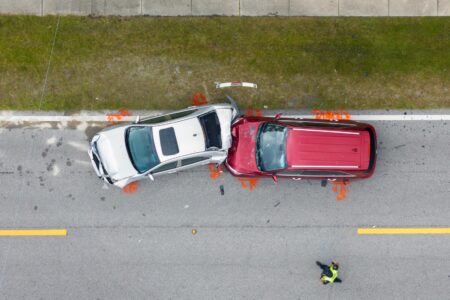
The most common scenario isn’t recklessness. It’s traffic flow. The light ahead turns green. Cars start moving. You follow along without fully registering that the lane beyond the tracks has already stalled again. By the time your brain catches up, your rear wheels are over the rails, and the car behind you has closed the gap you came from.
Impatience makes it worse. Waiting at a crossing while traffic idles ahead — especially during a morning commute when you’re already running behind — creates pressure to move when a gap appears. Sometimes it clears. Sometimes it doesn’t. That calculation is exactly what the law exists to prevent drivers from making.
Kansas City’s construction season adds another layer. Summer detours push drivers through crossings they don’t normally use. The intersection geometry is unfamiliar. The space available beyond the tracks is harder to judge. It’s not a reckless choice — it’s an honest mistake at an unfamiliar crossing, and the legal system doesn’t always distinguish between the two without someone making that argument on your behalf.
What You’re Actually Facing
This is a moving violation. Points land on your Missouri license. Fine amounts vary by charge and circumstances — but courts don’t treat railroad crossing violations as minor paperwork.
These violations sit in a different category than most traffic offenses because the potential consequences are categorically different. A vehicle stopped on active tracks in the path of a train isn’t just a traffic inconvenience. Missouri courts reflect that. The weight given to these citations is noticeably heavier than a standard speeding ticket, and prosecutors treat them accordingly.
If the violation contributed to an accident — damage to another vehicle, injuries, or emergency response — things escalate quickly. Civil liability opens up alongside the criminal side. What began as a traffic citation becomes something considerably more complicated.
Talking to a Missouri traffic ticket lawyer early gives you a clear picture of what you’re dealing with before anything compounds.
What Speeding Ticket KC Does With These Cases
Speeding Ticket KC is a well-known law firm in Kansas City, Missouri. They handle traffic violations and criminal defense matters — including railroad crossing citations that most drivers don’t fully understand until they see what the charge actually carries.
Their attorneys look at each case individually. What was cited? What did the officer document? What were the road and traffic conditions at that specific crossing that day? What realistic options exist — reduction, dismissal, or a negotiated outcome that protects your record? No formula, no templates. Each case gets a genuine read based on what actually happened.
Questions People Actually Ask
What exactly counts as not enough space at a railroad crossing?
Your entire vehicle — front to rear — must clear the tracks completely before you enter. If any part of your car would still be sitting on or over the rails while you wait for traffic ahead, there isn’t enough space. For longer vehicles like extended-cab trucks, large SUVs, or anything with a significant wheelbase, more clearance is needed beyond the tracks than most drivers instinctively account for. The rule itself isn’t complicated. Applying it calmly when traffic is moving and someone is sitting behind you is the harder part. When in doubt, stay put.
Is this treated more seriously than a regular moving violation?
Generally yes. Railroad crossing violations carry more weight in Missouri courts than a standard lane or speed violation. The reason is the risk level — a vehicle stranded on active tracks creates a potential collision scenario with a train, and courts take that seriously in how they classify and prosecute the offense. A standard speeding ticket might be handled more leniently. This type of citation tends to get a different level of scrutiny from prosecutors and judges.
What should I do if I end up stopped on the tracks?
Get out of the car immediately and move away from the tracks — specifically in the direction a train would approach from, so you’re out of the debris path if impact occurs. Don’t stay in the vehicle trying to restart it or shift gears. Most crossings have an emergency notification number posted on the signal equipment. Call it if you can see it. Call 911 regardless. Your car is replaceable. Getting physically clear is the only priority in that moment.
Can this citation be challenged?
Yes. Traffic conditions, road layout, crossing geometry, signal timing, and what the officer actually observed all factor into whether the citation holds up. A lawyer examines the evidence, identifies weaknesses in the charge, and assesses what outcomes are realistic. Even when dismissal isn’t on the table, reducing the charge to a non-moving violation removes the points entirely — which changes your insurance situation and protects your license record in ways that matter long after the fine is paid.
How does this affect my license and insurance?
Points attach to your Missouri license and your insurer checks your record at renewal. For commercial drivers, the stakes are higher — railroad crossing violations carry additional consequences under both state and federal commercial licensing rules. CDL holders face a stricter penalty structure and stronger reasons to get legal help quickly. Speeding Ticket KC can give you a straight answer on where your specific situation stands before you decide how to respond.