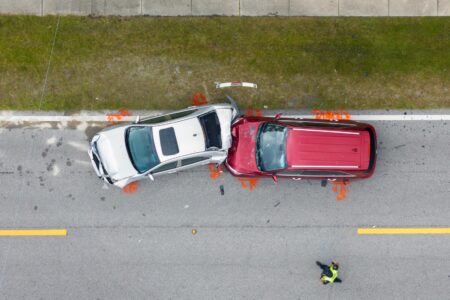

Most traffic accidents come with a citation. That’s almost always expected. What catches people off guard is the specific citation they receive — not speeding, not running a red light, but failure to reduce speed. They weren’t exceeding the posted limit. They thought they were driving normally. And yet the officer investigating the accident wrote a citation that says their speed was the problem.
Understanding why this happens — and what it means for everything that follows — starts with recognizing that Missouri traffic law goes beyond posted speed limits in ways that most drivers have never fully internalized.
The Law Behind the Citation
Missouri Revised Statutes § 304.010 establishes something separate from the posted speed limit. Drivers must operate at a reasonable and prudent speed given the conditions present at the time. Posted limits represent the maximum allowable speed under ideal circumstances — clear weather, dry pavement, good visibility, typical traffic. When conditions change, the law creates an independent obligation to reduce speed accordingly.
Here’s the thing most people miss. Maintaining the posted limit when weather, road surface, visibility, or traffic conditions clearly require something slower is still a violation. The sign isn’t the whole answer. The sign is on the ceiling under ideal conditions. What’s legally appropriate in deteriorating conditions can fall significantly below that ceiling — and when an accident occurs because a driver didn’t make that adjustment, the failure-to-reduce-speed citation follows.
Why This Citation Shows Up in Accident Investigations
When an officer responds to an accident and reconstructs what happened, speed relative to conditions is one of the first things examined. The sequence leading up to impact — what the road surface was, what visibility was, how quickly the driver could have stopped given those conditions, whether the speed was appropriate for what was happening around them — gets documented in the accident report.
A driver was maintaining 45 mph on an icy residential street. A driver was traveling at highway speed in dense fog. A driver who didn’t slow down approaching a construction zone with active workers. In each situation, the posted limit might have technically permitted that speed. The conditions did not. And when an accident results, the failure to recognize that distinction creates the citation.
This is the version of failure-to-reduce-speed violation that carries the most legal weight — because it’s now connected to documented harm, and every subsequent proceeding references that connection.
What the Connected Citation Actually Does to You
A failure-to-reduce-speed citation connected to an accident is not just a moving violation with points. It’s a documentation of fault that operates across multiple legal tracks simultaneously.
The traffic citation creates an official record of the conduct that contributed to the accident. Insurance adjusters reference it when determining how the claim gets processed and who bears what share of the costs. If the other party or their insurance company pursues recovery, that citation is foundational documentation in how liability gets allocated. Missouri uses comparative fault principles — fault can be shared between parties — but a citation documenting your conduct as a contributing factor shapes that allocation in ways that directly affect financial outcomes.
Points on your driving record are the obvious consequence. Premium adjustments that compound over the following years are the financial reality that outlasts the accident itself. For commercial drivers, the implications extend further — FMCSA regulations treat condition-related speed violations with heightened scrutiny, and a citation connected to an accident creates CDL record complications that can affect employment.
Why Early Legal Involvement Changes the Outcome
The decisions made in the first days after an accident connected to a failure-to-reduce-speed citation have an outsized influence on how everything else resolves.
The accident report gets written with a particular framing that becomes the baseline for every subsequent account. Evidence at the scene — road conditions, skid marks, vehicle positions, weather data — gets documented now, or it fades. Insurance investigators begin their process quickly, and how the situation gets characterized in those early interactions shapes the claim. An attorney who gets involved early can ensure the complete picture gets preserved and accurately represented, rather than being built entirely on one perspective.
Paying the traffic citation without examining the full situation is an admission of guilt — one that locks in a documented fault position before the insurance claim resolves or any civil proceedings develop. That decision deserves more thought than most people give it in the disorienting days following an accident.
A Missouri traffic ticket lawyer who handles traffic incidents involving accident-related citations understands how the traffic, insurance, and civil dimensions interact simultaneously. Speeding Ticket KC works with Kansas City drivers in exactly these situations — where a traffic citation is one piece of a larger legal picture that requires a coherent strategy rather than a piecemeal response. Getting that guidance early, before decisions get made that compound the situation, is where the most meaningful work happens.
Questions Drivers Ask About Accident-Connected Speed Citations
How can I receive a speed citation if I wasn’t over the posted limit?
Missouri requires drivers to operate at a speed that’s reasonable and prudent given conditions — separate from and in addition to the posted limit. When weather, visibility, road surface, or traffic conditions change, the law creates an independent obligation to reduce speed below the posted maximum. Maintaining the posted limit when conditions clearly require something slower is still a violation. The citation reflects that mismatch between your speed and what conditions actually required, not just whether you exceeded the speed limit.
How does an accident-connected citation affect my insurance claim?
Directly and significantly. A failure-to-reduce-speed citation creates official documentation of fault that insurance adjusters reference throughout the claims process. How that documentation gets used affects claim resolution, liability allocation under Missouri’s comparative fault framework, and your premium trajectory going forward. Addressing the citation and the insurance situation together — with awareness of how each affects the other — consistently produces better outcomes than treating them as separate problems handled independently.
Can the citation be contested even if an accident occurred?
Yes — and the specific circumstances shape where the defensible angles are. Whether conditions at that time and location actually required a speed below what you were maintaining is a factual question, not a settled one. Whether the conditions were accurately characterized in the citation, whether other factors contributed to the accident, and whether your speed was actually unreasonable given everything present at that moment are all questions worth examining carefully rather than accepting the citation as the final word.
What role does the accident report play in subsequent proceedings?
A significant one. The accident report becomes foundational documentation that insurance adjusters, civil attorneys, and traffic courts all reference. How the scene gets documented — road conditions, vehicle positions, skid marks, contributing factors — shapes the framing that every subsequent account builds on. Evidence that’s accurately preserved in the immediate aftermath serves you in ways that evidence not documented or poorly documented simply can’t later. This is one of the strongest arguments for early legal involvement after any accident that produces a citation.
How quickly should I contact a lawyer after an accident with a speed citation?
As soon as circumstances allow. Evidence preservation, witness contact, insurance positioning, and legal strategy all benefit from early involvement. Every day that passes without legal representation is a day the other side’s position hardens without a counterbalancing perspective. Speeding Ticket KC works with Kansas City drivers in situations where a traffic citation and an accident have created connected legal consequences that require a coherent response across all fronts. The earlier the involvement, the more options remain available throughout the entire process.