
Railroad crossings feel routine until they’re not. You’ve crossed the same tracks a dozen times this month without a second thought. But there’s a specific violation that catches Kansas City drivers completely off guard — entering a crossing without enough clear space on the other side to hold your vehicle completely off the rails. It sounds obvious when you read it. In real traffic, under real pressure, it happens more than anyone wants to admit.
And when it does, the legal weight behind it surprises people every time.
What the Law Actually Says
Missouri law under RSMo § 304.035 is direct. A driver cannot enter a railroad crossing unless the space beyond the tracks is clear enough to hold the entire vehicle without any part of it stopping on or over the rails.
Every inch of your vehicle needs to be clear completely — front bumper to rear bumper — before you commit to crossing. If traffic ahead is backed up and any portion of your car would end up stranded over the rails while you wait, you stay put before the crossing. Not probably clear. Actually clear. That distinction matters legally, and it matters in a way that has nothing to do with whether a train was actually coming.
The rule covers every vehicle type. Passenger cars, pickup trucks, SUVs, commercial vehicles – they all do it. Anything larger than a typical sedan lowers the margin for error fast and longer vehicles require proportionally greater room beyond the tracks.
How Normal Drivers End Up in This Situation
Most people who are cited for this weren’t being irresponsible. They were on the road.
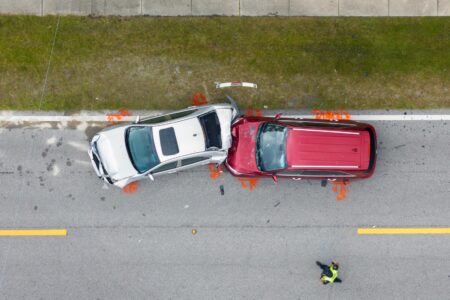
The same thing happens over and over again – the light ahead turns green, the cars start to move, and the driver goes with the wave, not realizing that the lane past the tracks has already stopped again. The rear wheels are over the rail, and the vehicle behind has closed the gap by the time the brain has realized what is happening. There’s nowhere to go.
Traffic pressure makes it worse. Sitting at a crossing while cars stack up ahead creates an almost physical urge to close the distance when a gap opens. Sometimes it clears. Sometimes it doesn’t. That judgment call under pressure is exactly what Missouri law removes from the equation — you don’t enter until the space beyond is genuinely open.
Summer construction around Kansas City makes things more complicated. Detour routes push drivers through crossings they don’t normally use. The geometry of the intersection beyond the tracks is unfamiliar. Available clearance is harder to read than at a crossing you’ve used a hundred times. Honest misjudgments happen at unfamiliar crossings regularly, and the law treats them as violations regardless of intent.
The Legal and Financial Consequences
This is a moving violation. Points go on your Missouri license. Fine amounts vary based on the specific charge and what happened, but courts don’t treat railroad crossing violations as minor paperwork.
The reason is the risk category. A vehicle stopped on active tracks in the path of a freight train isn’t a minor traffic inconvenience — it’s a potential catastrophe. Trains traveling at freight speed don’t stop quickly. Missouri courts and prosecutors understand this, and how they handle these citations reflects it directly. The scrutiny applied to crossing violations is noticeably heavier than that applied to a standard speeding ticket receives.
If the violation contributed to an accident — property damage, injuries, emergency response involvement — civil liability opens up alongside the traffic charge. That turns a citation into something considerably more complicated and expensive to resolve.
Talking to a Missouri traffic ticket lawyer early — before any decisions get made — gives you a clear picture of what you’re actually facing.
How Speeding Ticket KC Handles These Cases
Speeding Ticket KC is a well-known law firm in Kansas City, Missouri. They handle traffic violations and criminal defense — including railroad crossing citations that carry more legal weight than most drivers initially realize when they first see the citation in their hand.
Their attorneys look at each case on its own specific facts. What exactly was cited? What did the officer document at the scene? What were the traffic and signal conditions at that particular crossing? What realistic options exist — reduction, dismissal, or a negotiated outcome that protects your record? No templates. Each case gets a genuine read based on what actually happened.
Questions People Actually Ask
What exactly makes a crossing violation a “space” violation?
Your entire vehicle — front to rear — must clear the tracks without stopping on them before you enter. If any part of your car remains over the rails while you wait for traffic ahead, you don’t have sufficient clearance. Extended-cab trucks, large SUVs, and anything towing a trailer need considerably more clear space beyond the crossing than a standard sedan does. The calculation isn’t complicated in theory — applying it calmly when traffic is moving, and someone is sitting behind you, is the harder part. When in doubt, don’t move forward.
Is this treated more seriously than a standard moving violation?
Generally yes. The risk profile behind a vehicle on active railroad tracks is categorically different from most traffic offenses. Missouri courts apply more scrutiny to crossing violations than to lane changes or standard speeding citations. The potential for catastrophic consequences is exactly why the statute exists, and that reality shapes how prosecutors and judges handle these cases in practice.
What do I do if my vehicle stalls on the tracks?
Get out immediately and move away from the tracks — specifically toward the direction a train would approach from, so you’re clear of debris if impact occurs. Don’t stay in the vehicle trying to restart it. Most crossings have emergency notification numbers posted on the signal equipment. Call that number if you can see it. Call 911 regardless. Your car is replaceable. Nothing about it is worth staying near the tracks for.
Can I fight this citation?
Yes. Traffic conditions at that specific crossing, road layout, signal timing, visibility limitations, and what the officer actually observed and documented all factor into whether the citation accurately reflects what happened. A lawyer examines the evidence and identifies where the charge has weaknesses. Even when dismissal isn’t the realistic outcome, reducing the charge to a non-moving violation removes the points entirely — which changes both the license and insurance picture in ways that matter long after the fine is paid.
How does this hit CDL holders differently than regular drivers?
Federal restrictions add additional implications to Missouri state penalties for commercial vehicles that receive railroad crossing offenses. Depending on the infraction, a CDL holder can be disqualified from driving commercial vehicles for a period of time, which would impact their ability to work directly. Under the federal system, crossing violations are treated as serious safety violations in addition to, not in lieu of, state sanctions. CDL holders who receive these citations require legal advice right away, not after they have already made up their minds how to reply on their own.