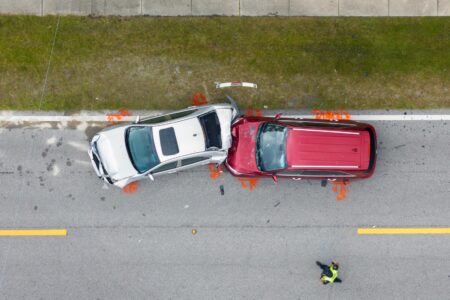
Right-of-way violations are one of those situations where both drivers usually think they were right. You thought you had enough clearance to go. The other driver thought you cut them off. An officer watching from a fixed position made a judgment call — and the result is a citation with your name on it that says you failed to yield.
These situations happen constantly in Kansas City. At intersections, during merges, pulling from driveways, making left turns across traffic, and navigating pedestrian crossings near the Plaza or in midtown neighborhoods. The city’s combination of dense residential streets, busy commercial corridors, and complex highway interchanges creates endless situations where right-of-way questions get answered imperfectly. Sometimes nothing bad happens. Sometimes it becomes a ticket. Sometimes it becomes something more serious.
Understanding what Missouri law says about right of way — and what your actual defense options are — changes how you handle the situation when you’re holding that citation.
What Missouri Right-of-Way Laws Cover
More ground than most drivers consciously think about — and the specifics determine how these cases get handled.
Missouri Revised Statutes § 304.341 through § 304.351 establish right-of-way rules across a range of traffic scenarios. At controlled intersections, signals and signs establish priority. At uncontrolled intersections where two vehicles arrive simultaneously, the vehicle on the right has priority. Left turns across oncoming traffic require the turning driver to yield to all oncoming vehicles before completing the turn. Merging onto a highway requires yielding to vehicles already in the travel lane. Pulling from a driveway requires yielding to all approaching traffic and pedestrians before entering the roadway.
Pedestrian right of way creates its own specific obligations — drivers must yield to pedestrians in marked crosswalks and at intersections where pedestrians are legally crossing. Passing a vehicle that’s already stopped for a pedestrian is prohibited separately. Emergency vehicles always have priority — pull over and stop when lights and sirens are active, regardless of what the intersection signal shows.
The Left Turn Problem — Where Most of These Violations Start
Honestly, left turns across oncoming traffic generate more failure-to-yield citations in Kansas City than almost any other situation. And it’s worth understanding why.
The problem isn’t that drivers are reckless. It’s that speed perception from a stopped position is genuinely difficult. Approaching vehicles look slower than they are when you’re sitting still. The gap that looks workable from your stopped position turns out to be tighter than you thought once you’ve committed to the turn and traffic is actually arriving. The result is an oncoming driver who has to ease off the throttle, tap the brakes, or react in some way — and an officer who observed that reaction has grounds to write the citation.
The legal standard isn’t whether you thought you had enough room. It’s whether any approaching driver had to adjust because of your movement. Those are two very different bars, and the second one is lower than most drivers realize while they’re making the turn.
What the Ticket Really Costs You
Most people figure a right-of-way citation means a fine and a few points. The full cost picture is usually stickier than that.
Missouri adds two to three points for most right-of-way violations. Those points stay active for three years, count toward suspension thresholds, and appear on records insurance companies check at renewal. Premium adjustments from a moving violation conviction compound over the following policy periods in ways that consistently exceed the original fine. When the right-of-way violation was connected to an accident — and it frequently is, since these violations often surface precisely because something went wrong — the citation creates documentation of fault affecting both the traffic proceedings and the insurance claim simultaneously.
Commercial drivers face additional weight here. Right-of-way violations contribute to CDL record complexity under federal regulations, and repeated violations within a three-year window carry disqualification risks that can affect employment directly.
How a Defense Actually Gets Built
Right-of-way violations feel like settled cases when you’re holding the citation. They often have more room than that first impression suggests.
The officer’s assessment of what happened is one perspective from one position. What traffic conditions, approach speeds, and clearance actually looked like from the driver’s position — including the point at which the movement was committed and what surrounding traffic was doing — shapes whether the cited conduct actually met the threshold the statute requires.
Intersection conditions matter too. Whether signage was properly maintained, whether visibility was obscured by construction or parked vehicles, whether the intersection configuration made right-of-way ambiguous — these factual details affect whether the citation accurately describes a legal violation. An attorney who examines the specific location and circumstances can identify questions worth asking before accepting the citation as the final word on what happened.
A Missouri traffic ticket lawyer who handles right-of-way violations regularly understands where these citations have defensible space and how to build an argument around the specific circumstances. Speeding Ticket KC works with Kansas City drivers on failure-to-yield citations constantly and brings the local court knowledge that shapes outcomes in ways that general advice simply can’t replicate. Getting that perspective before any decisions get made keeps options available that paying immediately closes.
Questions Drivers Ask About Right-of-Way Violations
What exactly creates a right-of-way violation in Kansas City?
Missouri requires the driver entering an established traffic flow to yield to vehicles and pedestrians already moving in that flow. The violation occurs when your entry or movement forces another driver or pedestrian to adjust — brake, swerve, or change path. Physical contact isn’t required. Neither is actual danger. The forced adjustment itself meets the legal threshold. That standard applies at intersections, driveway exits, highway merges, and pedestrian crossings — and it’s more demanding than the gap-assessment most drivers apply in real-time.
Does it matter if the other driver contributed to the situation?
Yes — and this shapes how both the citation and any related insurance claim get handled. Missouri uses comparative fault principles, meaning fault can be allocated between parties based on their respective contributions. A right-of-way citation doesn’t automatically mean you were entirely responsible. Examining what both drivers were doing — not just what the cited driver did — is part of building an accurate picture of the situation that serves you in both legal and insurance proceedings.
How many points does a right-of-way violation add to my license?
Most right-of-way violations add two to three points, depending on classification. Those points stay active for three years and count toward suspension thresholds. Eight points within eighteen months trigger a suspension. Combined with other recent violations, a right-of-way citation can push someone toward suspension territory faster than anticipated. Understanding your current record before deciding how to respond is essential — not optional.
If there was an accident, how does the citation affect my insurance?
Directly and significantly. A right-of-way citation creates documentation of fault that insurance adjusters reference when processing any connected claim. How that documentation gets used affects both the claim resolution and your premium trajectory going forward. Addressing the citation and the insurance situation with awareness of how each affects the other consistently produces better outcomes than treating them as completely separate problems handled at different times.
Is getting legal help worth it for a right-of-way ticket?
For a single citation with a clean record and no accident connected, it’s a judgment call depending on specifics. But for anyone with prior violations, anyone where an accident was involved, anyone whose insurance situation makes additional points a real concern, or commercial drivers — yes, legal guidance makes a measurable difference. Speeding Ticket KC helps Kansas City drivers understand exactly what their specific citation means before making any decisions. That clarity at the start consistently produces better outcomes than paying first and dealing with the full consequences afterward.