Summer nights in Kansas City have their own rhythm. Windows down, warm air, long stretches of road that feel empty in a way they never do during the day. For most drivers, that’s just a pleasant commute home. For some, those stretches become something else entirely — an unofficial starting line, an unspoken challenge between two cars sitting at a red light. What happens next can follow a driver for years.
Speed competition laws in Missouri aren’t widely understood until someone is facing charges under them. By then, the stakes are already higher than most people anticipated when they pressed the accelerator.
This Isn’t Just an Aggravated Speeding Charge
That’s the first misconception worth clearing up. Drivers sometimes assume a speed competition charge is basically a serious speeding ticket — pay a bigger fine, maybe take a course, move on. That’s not how Missouri treats it.
Speed competitions on public roads fall under reckless driving statutes. Reckless driving is a misdemeanor. Not a traffic infraction — a criminal charge. The distinction matters enormously because a misdemeanor conviction doesn’t just touch your driving record. It goes on your criminal record, where employers, landlords, and licensing boards can see it.
Missouri law focuses on the act of competing, not just the speed. Two cars traveling fast in the same direction might both be speeding — but a speed competition charge requires establishing that they were racing, that there was a competitive element, a deliberate contest between drivers. That distinction is what separates a speeding ticket from something with criminal record consequences. And it’s also where defense arguments often live.
What Kansas City Officers Actually Watch For
Kansas City police have become increasingly focused on speed competition enforcement, particularly as organized events have grown more visible in certain corridors. Industrial areas on the east side, highway stretches on I-70 and I-435 late at night, surface streets near vacant lots that attract gatherings — officers know these patterns and patrol them deliberately.
Direct observation by patrol units is the obvious method. But it’s not the only one. Traffic cameras capture vehicle behavior at intersections and on monitored corridors. Dashcam footage from other drivers — submitted voluntarily or pulled during investigations — has supported prosecution in Kansas City cases. And social media has become a significant evidence source that most participants don’t anticipate.
People film these events. They post the footage. They share it in group chats that investigators eventually access. A driver who was careful at the scene can still end up identified through a video that circulated on Instagram or TikTok days later. Prosecutors in Missouri have used exactly this kind of evidence in speed competition cases, and courts have accepted it. Posting about it — or appearing in someone else’s post — creates a record that doesn’t disappear.
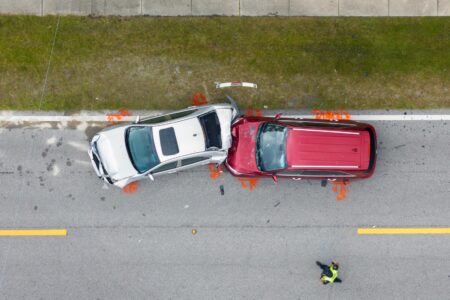
When an accident happens during a competition, the legal situation escalates immediately. Injury accidents involving street racing can bring felony charges depending on what occurred and who was hurt. The original speed competition charge becomes the least of the driver’s problems.
The Legal Framework Behind the Charges
RSMo § 304.012 governs speed restrictions and reckless vehicle operation. Speed competitions on public roads fall under the reckless driving framework — deliberate conduct that shows willful disregard for the safety of others on the road.
Missouri doesn’t require a driver to win the race, finish it, or even formally agree to it. Participating in a speed competition — by engaging with another driver’s acceleration, by racing from a light, by maintaining competitive speeds in a coordinated way — is enough to support the charge. Prosecutors build these cases from observable behavior and any available documentation of coordination between drivers.
Organizers and facilitators face exposure too. A person who set up the event, managed the route, flagged the start, or coordinated the gathering can be charged even if they weren’t behind the wheel of a competing vehicle. This surprises people who assumed that distance from the cars meant distance from the legal risk. It doesn’t.
What a Conviction Actually Costs
Let me be direct about this, because the full picture surprises most drivers who assumed the worst case was a heavy fine.
A reckless driving conviction in Missouri is a Class B misdemeanor. That means up to six months in jail, fines, and a criminal record. Not a driving record entry — a criminal record that surfaces in background checks, rental applications, and professional licensing reviews for years after the conviction.
Points hit the license hard. Missouri suspends licenses at eight points within 18 months, and a reckless driving charge typically pushes well past that threshold on its own. License suspension or revocation follows, and reinstatement requires its own separate process — fees, hearings, and potentially SR-22 insurance filing before driving privileges return.
Insurance reacts strongly. Carriers treat reckless driving convictions as serious risk signals. Standard carriers sometimes decline to renew policies altogether after this kind of conviction, pushing drivers into specialty high-risk insurance markets where premiums can be two or three times what they paid before. That financial burden compounds across renewal periods in a way that makes the original fine look minor by comparison.
Paying a ticket or accepting a plea without fully understanding these downstream consequences is the decision people most commonly regret. A Missouri traffic ticket lawyer at Speeding Ticket KC handles these cases and helps drivers understand exactly what they’re facing before any decisions are made. The firm works Kansas City courts regularly — they know how prosecutors approach speed competition charges, what evidence tends to be strong or weak, and where the arguments that produce better outcomes actually live.
“We Were Just Both Going Fast” — Does That Hold Up?
It’s the most common explanation offered, and sometimes it’s genuinely true. Two cars, similar speeds, same direction — that’s not automatically a competition. The legal challenge is that prosecutors don’t need a confession or a formal agreement between drivers to establish a competition. They build the case from circumstantial evidence.
Side-by-side acceleration from a stop. Matched speeds sustained over distance. Revving engines at a light before both cars launch. Pre-event communication between drivers. Video showing coordination. Any combination of these can form the foundation of a competition charge even when each element individually seems explainable.
The stronger the circumstantial evidence, the harder it becomes to sustain the independent speeding argument. An attorney reviewing the specific facts — what the officer observed, what video exists, what the driving pattern actually looked like — can assess honestly whether that argument is viable or whether a different strategy makes more sense.
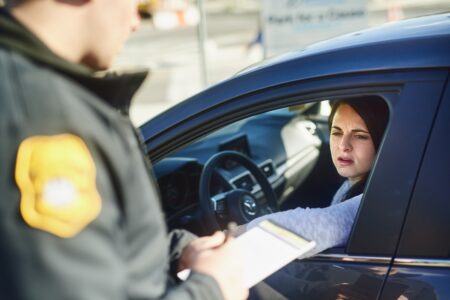
What was said during and immediately after the stop matters too. Statements made at the scene become part of the record. How a driver responds in those first minutes can affect what the prosecution has to work with going forward.
Questions Kansas City Drivers Ask About These Charges
- Is organizing a street race the same charge as driving in one?
Not always the same charge — but organizers face real legal exposure under Missouri law. Facilitating a speed competition on a public road, coordinating participants, managing the route, or flagging the start can all support charges even for someone who wasn’t driving a competing vehicle. The specific charges depend on the facts and how prosecutors characterize the role. If you were involved in organizing any aspect of an event that resulted in charges, legal representation is essential from the start.
- Can social media posts be used against me if I didn’t post them myself?
Yes. If you appear in footage someone else posted — your vehicle, your face, your license plate — that content is accessible to investigators and usable in court. Missouri prosecutors have pulled footage from Instagram, TikTok, and other platforms in speed competition cases. The fact that you didn’t post it yourself doesn’t limit its evidentiary value. If footage of an incident exists online, assume it has already been identified. An attorney needs to know about it early, before the prosecution builds a case around it.
- What happens to my license specifically after a reckless driving conviction?
Missouri can suspend or revoke a license tied to a reckless driving conviction. The point hit alone — typically four or more points — can push past the suspension threshold, particularly for drivers with any prior violations. Beyond points, a judge has discretion to order license revocation as part of sentencing. Reinstating a revoked license requires a formal process: a hearing, fees, and potentially SR-22 filing before driving privileges return. That process takes time and money on top of everything else.
- What if I was only watching, not racing?
Pure spectators have less direct legal exposure than participants or organizers — but the line between spectator and participant is narrower than people assume. If you were part of a coordinated gathering, communicated about the event beforehand, or played any role in facilitating what happened, prosecutors have grounds to include you. Being physically present at a race event, without any other involvement, generally doesn’t result in charges — but any involvement beyond passive observation changes that picture. If you’re uncertain about where you fell, describe the full situation to an attorney before assuming you’re clear.
- Is there a realistic path to a better outcome than a misdemeanor conviction?
Yes — and it depends heavily on the specific evidence, the jurisdiction, and your prior record. Cases where the competition evidence is circumstantial and genuinely ambiguous, where the identification of participants is uncertain, or where a first-time offender with a clean record is involved have more room to work with than others. Speeding Ticket KC evaluates these factors honestly and tells clients what outcomes are realistically achievable — not what they want to hear, but what the facts actually support. That honest assessment is what allows drivers to make informed decisions rather than reactive ones.
Wrap Up
Speed competition charges land differently than almost anything else in traffic law. The criminal record implications, the license consequences, the insurance fallout — it compounds in ways a standard moving violation simply doesn’t. The time between a stop and a court date is when options exist. After a conviction, they don’t.