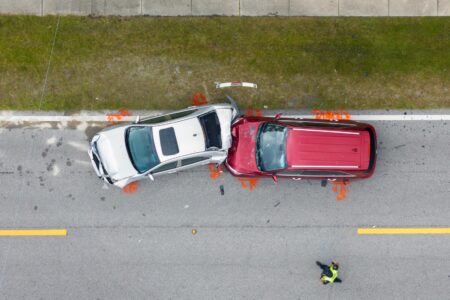

Staying in your lane sounds like the most basic thing a driver can do. And honestly, most of the time it is. But Kansas City officers write these citations constantly — not because drivers are being reckless, but because ordinary moments catch ordinary people off guard. A tired commute, a slick road, two seconds of distraction — and suddenly there’s a ticket to deal with that nobody saw coming.
The legal side of it tends to surprise people more than the incident itself did.
What the Law Actually Says
Missouri law under RSMo § 304.015 requires drivers to stay within a single marked lane and only move from it when it can be done safely. That covers lane lines on highways and city roads, the edges of travel lanes on two-lane routes, and the designated travel portion of the road in general.
Moving between lanes isn’t illegal — lane changes happen constantly, and that’s fine. The violation kicks in when a driver drifts without signaling, weaves without purpose, or leaves the travel portion of the road entirely without a lawful reason. Officers observe this directly. Skid marks, tire tracks on a gravel shoulder, a car resting against a curb — the physical evidence fills in the rest of the picture.
What a driver says at the scene fills in another part. A lot of people don’t realize how much their immediate explanation shapes how the incident gets written up. Those first words after getting pulled over matter more than most people think.
The Real Reasons It Happens
Distraction causes most of these incidents. Nothing dramatic — just the everyday kind. A notification, a coffee cup rolling under the seat, a passenger saying something that pulled your eyes off the road for half a second. The car drifts before the brain registers it’s happening.
Fatigue works the same way but slower. That gradual drift on a long stretch of highway when you’re running on four hours of sleep — the kind where you don’t notice until you feel the rumble strip under your tires. It happens to careful drivers who are just genuinely exhausted.
Weather adds a different layer entirely. Kansas City winters bring ice that hides on bridge surfaces and shaded sections of road well after sunrise. You can be driving at a perfectly reasonable speed, hit a frozen patch, and lose control before you have any real chance to react. Spring rains create standing water that pushes vehicles sideways on roads with poor drainage. Both create situations where doing everything right still doesn’t guarantee you stay between the lines.
Road design plays a role, too. Sharp curves with inadequate banking, faded markings on older stretches, sudden lane narrowing in construction zones — these aren’t driver failures. They’re conditions that make staying within boundaries genuinely harder than it looks.
What the Ticket Actually Costs
A failure to maintain lane citation is a moving violation in Missouri. Two points on your license. Fines typically around $100 to $150 before court costs. On its own, manageable.
The fuller picture is what catches people off guard. Missouri suspends licenses at eight points within 18 months. If you’re already carrying points from a prior speeding ticket or other moving violation, two more can push you toward that threshold faster than expected. And your insurance company reviews your record at renewal — a rate increase that compounds over two or three years frequently costs more than the original fine ever did. Paying the ticket feels like the quick way out. The financial tail it leaves behind often isn’t.
Property damage changes the charge. If your vehicle crossed a lane line and hit something — another car, a sign, a parked vehicle — and you left without reporting it, you’ve stacked a separate violation on top of the original one. Staying and reporting limits the damage considerably.
Injuries are where everything shifts fast. Someone hurt because your vehicle left its lane opens the door to reckless driving charges and civil liability at the same time. That jump from traffic ticket to serious legal problem happens faster than people expect.
A Missouri traffic ticket lawyer can help you get a clear picture of what you’re dealing with before anything compounds further.
How Speeding Ticket KC Works These Cases
Speeding Ticket KC is a recognized law firm in Kansas City, Missouri. They handle traffic violations and related defense matters — including failure to maintain lane citations that look routine on the surface but often have more going on underneath.
Their attorneys look at each case on its own facts. What exactly was cited? What did the officer document? Is there footage or physical evidence that challenges the account? What realistic outcomes exist — reduction, dismissal, or a negotiated result that keeps your record cleaner? No template approach. Each case gets its own read.
Questions People Actually Ask
Is this always a moving violation in Missouri?
In most cases, yes. Failure to maintain lane citations attaches points to your license under Missouri law. Your prior record affects how the court treats the current charge — so the full picture matters more than just the ticket alone. Don’t assume the lightest possible outcome is automatic without actually checking what you’re facing.
What if road conditions caused it?
Weather and road conditions carry legal weight in Missouri courts — but they don’t automatically clear the citation. Prosecutors look at whether your speed fit the conditions and whether the hazard was foreseeable. Dashcam footage, weather reports, and road condition records make a conditions-based argument real rather than just a claim. Without documentation, it’s a hard case to make a stick on its own.
Can the charge be reduced or dismissed?
Yes — and it happens regularly with proper legal help. These citations are built on officer observation, which creates room to challenge the account. Even when dismissal isn’t realistic, reducing it to a non-moving violation removes the points entirely. That outcome alone changes the insurance picture and protects your license point total.
What if I damaged property when I crossed the line?
Missouri law requires reporting damage to property. Leaving without reporting adds a separate charge. Staying and reporting limits the exposure. Document everything at the scene — road conditions, your vehicle’s position, relevant signage — because those details support your account later.
Is getting a lawyer worth it for this?
Clean record, no damage, no injuries — you might get through it without lasting fallout. But prior violations, property damage, any injury, or anything suggesting escalation — those are exactly where legal representation changes outcomes more than people expect. Speeding Ticket KC handles these cases regularly and can give you an honest read before you decide how to respond.