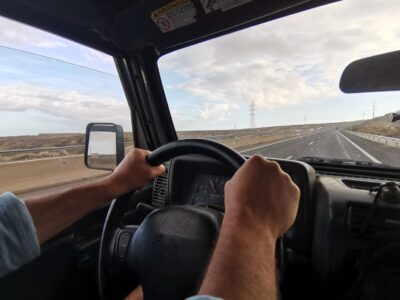

Most drivers think about lane position the same way they think about breathing — it happens automatically, without much conscious thought. You get in a lane, you stay in it, you signal when you move. Simple enough, right?
Except lane position violations are among the more common traffic citations issued on Kansas City roads. And drivers who receive them are often genuinely surprised, because they weren’t doing anything that felt like a mistake. They were just driving — which is exactly the problem. When lane discipline becomes automatic, it also becomes invisible, and the details that matter legally slip past without registering.
Lane Laws Are More Specific Than Most Drivers Know
Here’s the thing about Missouri’s lane position requirements: they go several layers deeper than “stay in your lane.” The statutes address not just which lane you’re in, but where within that lane your vehicle should be, when you’re permitted to leave it, and what specific obligations apply depending on road type and circumstances.
RSMo § 304.015 is the primary statute. It establishes that vehicles must be driven as nearly as practicable within a single lane. That phrase — “as nearly as practicable” — is doing a lot of work. It acknowledges that perfect lane centering isn’t always achievable; road conditions, vehicle size, and other factors affect it. But it sets a standard of reasonable, consistent lane maintenance that officers use as the benchmark for citations.
The statute also addresses multi-lane highways specifically. On roads with two or more lanes moving in the same direction, drivers must keep right except when passing, when the right lane is obstructed, when preparing for a left turn, or on designated left-lane roads. The left lane isn’t a general travel lane on Missouri highways. It’s a passing lane — and the law expects drivers to treat it that way.
Slow-moving traffic requirements add another layer. Vehicles traveling below the normal speed of traffic must keep to the right regardless of lane count or road type. This applies on two-lane roads as well as multi-lane highways. A slow vehicle occupying the left lane of a two-lane road — or the center lane of a three-lane highway when the right lane is available — may be in violation even if other lane-use rules seem satisfied.
The Kansas City Road Network Creates Specific Lane Position Challenges
Lane position laws that seem straightforward in the abstract become complicated when applied to Kansas City’s actual road infrastructure.
Downtown Kansas City is a particular challenge. The grid shifts directions in ways that surprise drivers unfamiliar with it, lane widths vary significantly between older and newer road sections, and the one-way street network creates transition points where lane discipline requires active attention. Drivers who’ve navigated downtown a hundred times sometimes develop habits that don’t actually match the lane markings — and those habits become citations when an officer is watching.
The interchange complexity around I-70, I-35, and I-435 creates situations where maintaining proper lane position requires continuous adjustment. Lane drops, merge points, and braided interchanges demand attention that casual highway driving doesn’t — and drivers who go into autopilot through these sections sometimes drift outside their designated space in ways they don’t notice until lights appear in the mirror.
Construction zones are their own category. Kansas City’s perpetual road projects regularly compress lane widths, shift lane boundaries, and create temporary markings that conflict with or replace permanent ones. A driver carefully following what they believe is the correct lane position may actually be outside the temporary legal boundary established by construction signage. Officers working construction zones know the exact markings — and cite based on those current boundaries, not the driver’s memory of what the road used to look like.
Residential neighborhoods present a different set of challenges. Older Kansas City neighborhoods — in Westside, Hyde Park, Northeast — have streets where parking, landscaping, and the general age of the infrastructure create irregular roadway widths. A driver trying to maintain reasonable lane position on a street where oncoming traffic, parked cars, and narrow pavement leave very little margin may still face a citation if their position crosses into what an officer characterizes as improper territory.
What Actually Gets Cited and Why
Lane position citations don’t come from nowhere. They tend to cluster around recognizable situations, and understanding those situations helps both for prevention and for building a defense.
Sustained lane drift on highways is the most common trigger. A driver who consistently operates near the edge of their lane — not crossing the line, but maintaining a position that suggests inconsistent control — may draw an officer’s attention. The drift itself, combined with duration and consistency, forms the basis for a citation even without a dramatic lane departure.
Lane crossings during turns generate another consistent category. A driver who starts a turn in the correct lane and exits in a different one — cutting a left turn too tight and ending up in the outer lane, or swinging a right turn wide into the inside lane — has crossed a lane boundary in a way Missouri law treats as a violation. These happen most often at complex intersections, and Kansas City has no shortage of those.
Weaving between lanes without consistent signal use — the kind of driving that looks confident but involves frequent small lane changes — produces citations when an officer observes it. Each individual lane change might be technically legal if properly signaled. The pattern of behavior may not be.
And passing in improper locations catches drivers who use the shoulder or a turn-only lane to pass slower traffic. The creative routing solution that saves thirty seconds produces a citation that costs considerably more than that in time, money, and record consequences.
Points, Fines, and the Longer Consequences
Two points on a Missouri license for a basic lane position violation. Against Missouri’s eight-point suspension threshold within 18 months, two points are never truly inconsequential — they contribute to a total that determines whether a driver’s license remains intact.
Fines for lane violations run lower than major moving violations. The lower fine creates a psychological pull toward just paying it and moving on. That pull is worth resisting, because paying is a permanent conviction. It goes on the driving record, gets counted in the point total, and shows up at insurance renewal.
Carriers treat moving violations as risk signals. A lane position conviction signals inconsistent vehicle control — not a dramatic risk indicator, but something that adjusts the premium calculation at renewal. Fifteen to twenty-five percent increases for a single moving violation aren’t unusual, and those increases compound across renewal cycles. The true cost of a paid citation, viewed across three years of insurance renewals, regularly exceeds the fine amount by a significant margin.
A Missouri traffic ticket lawyer at Speeding Ticket KC reviews lane position citations before payment decisions get made. The firm works Kansas City traffic cases throughout the metro — in municipal court and county court, under city ordinance and state statute — and knows how these specific violations get evaluated locally. Many clients resolve lane position cases without appearing in court at all. That outcome requires knowing what options exist before the payment deadline passes.
When Lane Position Becomes a More Serious Charge
Most lane position violations stay in traffic court. A citation, a court date, points on the license — significant, but manageable with the right response.
Context can push things further. A lane position violation that contributed to an accident — particularly one with injuries — becomes evidence in the investigation and in any subsequent civil claim. The citation documents that the driver was operating outside their designated lane at the moment the incident occurred. That documentation influences both criminal and civil proceedings in ways that outlast the original traffic case.
A pattern of lane violations — multiple citations in a short period — can shift how prosecutors characterize the behavior. What looks like isolated incidents individually starts to look like a pattern of poor vehicle control. That characterization affects how aggressively charges get pursued and what reduction options prosecutors are willing to discuss.
And for commercial drivers, lane position violations carry federal regulatory consequences in addition to state traffic penalties. CDL holders face enhanced scrutiny for violations that affect vehicle control, and the professional implications require legal attention from the start.
Questions Kansas City Drivers Ask About Lane Position Violations
1. What does “as nearly as practicable” actually mean for drivers?
It means lane maintenance that a reasonable driver could achieve under the specific conditions present. Perfect centering isn’t required — road conditions, vehicle dimensions, and environmental factors are all relevant. What’s required is a reasonable, sustained effort to maintain position within the designated lane. An officer citing a lane position violation is making a judgment that the driver’s position fell outside what that reasonable standard permits. That judgment can be examined, and the specific conditions at the time of the citation matter for any challenge.
2. Can I be cited for lane position even if I never crossed a line?
Yes — though it’s less common. Missouri’s “as nearly as practicable” standard addresses positioning within a lane, not just whether a line was crossed. Consistent operation near the edge of a lane, even without crossing the marked boundary, can support a citation if it suggests poor vehicle control or creates safety concerns for adjacent traffic. In practice, most citations involve an actual line crossing — but the statute doesn’t require one.
3. What if road conditions made proper lane position difficult?
Road conditions are legitimate context for a lane position defense. Poor pavement, construction zone markings, weather conditions, debris in the lane — these factors affect what “as nearly as practicable” means in practice. If conditions contributed to your lane position, document them immediately: photos of the road, the weather at the time, any construction or road hazards visible in the area. That documentation gives an attorney concrete material to work with rather than a general claim about difficult conditions.
4. Can a lane position violation be reduced to a non-moving offense?
In the right circumstances, yes. Non-moving violation reductions eliminate the point impact and the insurance signal — the two most consequential practical consequences of a traffic citation. Kansas City courts allow these reductions for appropriate cases, particularly for first-time offenders with clean driving histories. Getting there requires negotiation with the prosecutor, and Speeding Ticket KC handles those negotiations with the local knowledge of which courts and prosecutors are open to reductions on lane position violations specifically.
5. I got cited alongside another violation from the same stop. How does that affect things?
Multiple citations from a single stop stack in terms of both points and fines, but they also provide more material for legal review. Sometimes citations from the same stop are inconsistent with each other, or the officer’s account of one violation undermines the factual basis for another. An attorney who reviews all citations together — rather than each one in isolation — sometimes finds that the combined picture is weaker than the individual pieces suggest. Speeding Ticket KC reviews multi-citation stops as a whole and develops a strategy that addresses all charges rather than treating each one separately.
Bottom Line
Lane position laws exist because traffic flow depends on everyone occupying their designated space with reasonable consistency. When that discipline breaks down — through inattention, habit, or the genuine challenges of Kansas City’s road network — citations follow. Understanding what those citations actually mean, and what options exist before any payment decision gets made, is what changes how they end up affecting a driving record.