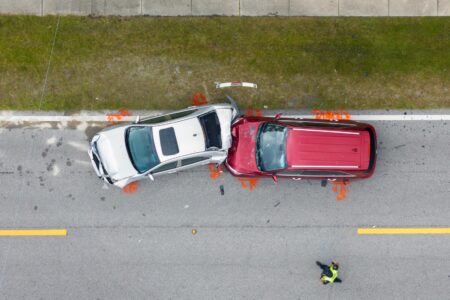

Most drivers don’t think about entering a roadway as something that requires much thought. You pull out of a parking lot, merge from a side street, ease onto the highway — routine stuff you’ve done thousands of times. But Kansas City officers write citations for improper roadway entry more regularly than people expect. And the drivers getting cited usually didn’t think they were doing anything wrong.
That gap between assumption and reality is exactly where these violations live.
What “Entering a Roadway” Actually Covers
This isn’t just about highway on-ramps. Missouri law under RSMo § 304.351 and related statutes covers any situation where a vehicle moves from a non-travel area onto a road being used by other traffic.
Pulling out of a driveway onto a busy street. Leaving a parking lot and cutting across multiple lanes. Merging from a frontage road onto US-71. Entering from a private road without yielding. All of these fall under roadway entry rules. The legal requirement is consistent across every scenario — drivers entering a roadway must yield to traffic already on that road and wait until entry can be made safely.
Simple enough in principle. In practice, people misjudge gaps, underestimate speeds, and make split-second calls that don’t quite work out. Officers see the result and write the ticket.
Where Kansas City Drivers Most Often Get It Wrong
Busy intersections with poor sight lines cause a lot of these violations. Trying to pull out of a side street onto Southwest Trafficway or turn left across traffic on Metcalf — drivers sometimes commit to a gap that closes faster than expected. What felt safe from a stopped position looks different once you’re actually in the road.
Highway merging is another common problem. Missouri law requires merging drivers to yield to highway traffic. That means matching speed and finding a gap — not forcing your way in and expecting traffic to accommodate you. Kansas City’s interchanges, particularly around I-70 and I-435, generate a steady stream of merging violations because drivers treat acceleration lanes as a right of way rather than an opportunity to find safe entry.
Parking lots trip people up differently. A driver focused on the gap to their left sometimes pulls forward without fully clearing their sight line to the right. Pedestrians, cyclists, and oncoming traffic from unexpected directions create exactly the kind of hazard these laws were written to prevent.
What the Citation Actually Means
Failing to yield when entering a roadway is a moving violation in Missouri. Points go on your license — typically two for a standard failure to yield citation. Fines run in the $100 to $150 range before court costs. That’s the base scenario with no accident involved.
If the improper entry caused a collision, the legal picture changes fast. Property damage, injuries, the other driver’s insurance claim — all of it flows from that initial citation. Fault in an accident gets heavily influenced by who had the legal obligation to yield, and a roadway entry violation puts that obligation squarely on the entering driver. Insurance companies use that assignment of fault at claim time and again at renewal.
Points compound, too. Missouri’s license suspension thresholds — eight points within 18 months — are real, and drivers with prior moving violations find that two more points land differently than they would on a clean record.
A Missouri traffic ticket lawyer can help you understand what you’re working with and what options actually exist before you decide how to respond.
How Speeding Ticket KC Handles These Cases
Speeding Ticket KC is a well-known law firm in Kansas City, Missouri. They handle traffic violations and related defense matters — including failure to yield and improper roadway entry citations — for drivers who want to evaluate their options rather than just pay and move on.
Their attorneys review each case on its own facts. What exactly does the citation charge? What did the officer observe? Is there dashcam footage, witness accounts, or physical evidence that challenges the official version? What realistic outcomes exist — dismissal, reduction, a negotiated result that keeps points off your record? No cookie-cutter responses. Just an honest read of what your case actually contains.
Questions People Actually Ask
Who has the right of way when entering a roadway in Missouri?
Traffic already on the roadway has the right of way — always. The driver entering from a driveway, parking lot, private road, or side street carries the legal obligation to yield. This applies regardless of how slowly approaching traffic is moving or how long you’ve been waiting. Missouri law doesn’t create exceptions based on wait time or frustration. If you enter before it’s genuinely safe, you’ve violated the yield requirement — and if an accident follows, fault lands on the entering driver by default.
Can I fight a failure to yield a citation from a roadway entry?
Yes — and the specifics matter a lot. These citations are based on officer observation, which means the account can be challenged. Dashcam footage showing the gap was clear, witness statements contradicting the officer’s version, sight line issues that made proper assessment difficult — all of these feed into a viable defense. A lawyer can assess whether the evidence supports the charge or whether there’s a realistic path to reduction or dismissal. Even a non-moving violation outcome removes the points entirely, which is often the most valuable result.
How does this citation affect an insurance claim after an accident?
Significantly. A failure to yield citation at the scene establishes fault for the accident in most insurance investigations. That fault determination drives claim payouts, affects your rates at renewal, and can follow you for several years, depending on your insurer. Fighting the citation — or at minimum getting it reduced — can meaningfully affect how the insurance side of the incident gets resolved, not just the legal side.
Does it matter if the other driver was speeding when I pulled out?
It can — but it’s complicated. Missouri applies comparative fault principles in accident cases, meaning multiple parties can share responsibility for an incident. If the other driver was traveling significantly above the speed limit, that factor can be introduced as part of your defense. It doesn’t automatically eliminate your liability as the entering driver, but it can reduce your share of fault. That distinction matters both in court and in insurance negotiations.
Is getting a lawyer worth it for a routine roadway entry ticket?
Clean record, no accident, no injuries — you might get through it without lasting damage. But prior violations, an accident tied to the citation, insurance implications, or anything suggesting the charge could escalate — those are exactly the situations where legal representation changes outcomes more than people expect. Speeding Ticket KC handles these cases regularly and can give you a straight read on where things stand before you commit to how you’re going to respond.