
Most drivers never think about their car horn as a legal obligation. It’s just there — something you use when someone cuts you off or when you’re letting a friend know you’ve arrived. The idea that not using it could lead to a traffic stop feels almost backward. Horns are for honking too much, right? Not for failing to honk at all.
Here’s what surprises people — Missouri traffic law covers both. And getting stopped for failure to sound a horn is more common than drivers realize, particularly when an accident or near-miss is involved, and investigators start piecing together what happened and why.
What Missouri Actually Requires From Your Horn
Let me explain this clearly, because most drivers have never thought about horn use as a legal obligation before.
Missouri Revised Statutes § 307.175 requires every vehicle to be equipped with a working horn audible from at least 200 feet. That’s the equipment requirement. But Missouri also permits horn use specifically as a warning signal — meaning in situations where safety requires alerting another driver or pedestrian of your presence. The word “requires” in that framework creates an obligation in situations where a warning was genuinely needed and not given.
Think about what that means in real driving situations. Passing another vehicle on a two-lane road where visibility is limited and a warning horn was warranted. Approaching a pedestrian who’s about to step into the road from between parked cars. Pulling from a parking structure exit where a cyclist has no way of seeing you until you’re already in their path. In each of these situations, using the horn to alert someone serves a genuine safety function — and failing to do so when that function was clearly warranted can factor into how fault gets assessed after an incident.
How Failure to Sound a Horn Comes Up in Traffic Cases
This rarely gets cited in isolation. It almost always surfaces alongside something else — and that’s the part worth understanding.
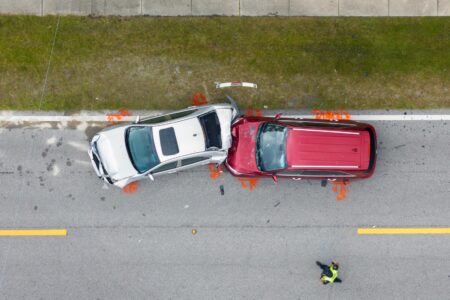
When an accident occurs, and investigators reconstruct what happened, the question of whether a warning signal was used becomes relevant quickly. A driver who passed another vehicle without signaling their approach, or who pulled into traffic from a blind exit without alerting anyone, has created a documented failure that factors into fault and liability assessments. The absence of a horn warning becomes part of the official record — part of what gets written in the report, referenced in the insurance claim, and potentially cited by an attorney representing the other party.
In Kansas City’s commercial corridors and busy arterials, parking lot exits and driveway entries onto active streets create constant situations where a horn warning could have changed the outcome of a near-miss. When those near-misses become citations or accidents, the horn question follows.
The Equipment Side — Separate But Related
There’s another dimension here that drivers often overlook entirely until it becomes a problem.
Missouri requires vehicles to have a functioning horn — audible from 200 feet — and a horn that doesn’t work creates its own citation exposure during a traffic stop or vehicle inspection. But more significantly, when an accident occurs where a warning signal might have prevented harm, a non-functioning horn becomes directly relevant to how fault and liability are evaluated.
You know what’s more common than people think? A horn that stopped working months ago, that the driver never tested because nothing required them to until something went wrong. That’s not an excuse that holds up well when an adjuster or attorney is asking whether you attempted to warn the other party before impact.
What This Means If You’re Dealing With a Related Citation
Horn-related issues almost always come attached to something else — a passing violation, an improper entry citation, a negligent driving charge, or an accident claim. The combination of charges is exactly what benefits from legal guidance rather than the standard pay-and-move-on approach that might work for a simple speeding ticket.
When failure to sound a horn is part of an accident investigation or a multi-charge citation, the different pieces interact in ways that affect outcomes on multiple fronts simultaneously. How the traffic citation gets handled affects the insurance claim. How the insurance claim resolves affects future premiums. How fault gets documented affects potential civil liability. These aren’t separate problems — they’re connected, and they need to be treated that way.
A Missouri traffic ticket lawyer who handles complex traffic situations understands how horn-related failures interact with the broader legal picture. Speeding Ticket KC works with Kansas City drivers on situations where a traffic stop or accident has produced multiple overlapping legal questions — and brings the local court familiarity that helps those situations resolve more favorably than they would without proper guidance.
Questions Drivers Ask About Failure to Sound a Horn
Can I actually get cited for not using my horn in Kansas City?
Yes — though it rarely comes as a standalone citation. Missouri’s horn use framework creates a safety obligation in situations where a warning signal was clearly warranted. When an accident occurs, and investigators determine a horn warning should have been given, that failure gets documented. When a passing maneuver or traffic entry created a situation where alerting another driver or pedestrian was clearly the reasonable action, the absence of that warning factors into how the incident gets evaluated legally and by insurance.
How does a broken horn affect my legal situation after an accident?
Significantly. Missouri requires vehicles to have functioning horn equipment — audible from 200 feet. A non-functioning horn when an accident occurs, particularly one where a warning might have prevented harm, creates documentation of equipment failure that adjusters and attorneys use when evaluating fault and liability. It’s the kind of detail that gets noticed in investigations and matters more than most drivers expect when they’re in the moment of the accident itself.
Is failure to sound a horn a moving violation in Missouri?
It depends on how the specific citation gets written and classified. In some situations, it gets treated as an equipment violation. In others, particularly when connected to a negligent driving charge or accident, it carries more legal weight as part of a broader pattern of conduct. Understanding exactly what classification your specific situation involves — and how that affects points and insurance — is worth clarifying with an attorney before you respond to anything.
How does this affect an insurance claim if there was an accident?
Directly. When an investigation determines that a horn warning was warranted and wasn’t given, that finding becomes part of the fault assessment that insurance adjusters use when processing the claim. It affects how liability gets allocated between parties, which affects both the claim outcome and your premium going forward. This is exactly why addressing the traffic citation and the insurance situation with awareness of how each affects the other produces better outcomes than handling them separately as if they’re unconnected.
Should I get legal help if horn use has come up in my situation?
If failure to sound a horn is part of a citation, accident claim, or negligent driving charge — yes, without hesitation. These situations rarely benefit from the standard pay-and-move-on approach because the horn issue is attached to something with more serious legal weight. Speeding Ticket KC helps Kansas City drivers understand exactly what their specific situation means — including how different elements of a traffic incident interact legally — before any decisions get made. That clarity at the start consistently produces better outcomes than addressing the pieces separately after the fact.