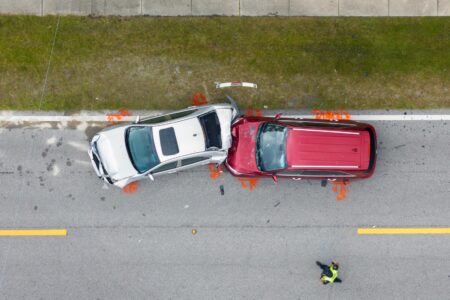

It happens faster than people expect. A curve comes up sharper than anticipated. Traffic stops suddenly, and a driver swerves to avoid it. Someone cut a corner because the turn was tighter than it looked. Tires leave the pavement for a second — maybe two — and then the driver is back on the road, heart rate elevated, hoping nobody saw that.
Sometimes somebody did. And sometimes that somebody has blue lights.
Leaving the pavement violations in Kansas City catches drivers off guard because the behavior often starts as a reaction rather than a choice. The vehicle went somewhere it wasn’t supposed to go, and now there’s a citation attached to a moment that felt more like survival than recklessness. Understanding what the law says about this — and what options exist when you’re holding that citation — matters more than people typically realize when they first open the envelope.
What Missouri Law Addresses Here
Let’s be clear about what “leaving the pavement” means in a legal context — because it covers more than the obvious.
Missouri traffic law addresses driving on improved shoulders, crossing onto unpaved surfaces adjacent to the roadway, and operating a vehicle off the designated travel lane or road surface in ways that create safety concerns. Missouri Revised Statutes § 304.015 addresses lane use and staying within the designated roadway. Related provisions address shoulder use and when pulling off the paved surface is permitted versus prohibited. The specifics depend on the road type, the circumstances, and how the officer characterizes what they observed.
Permitted shoulder use exists — pulling over for a disabled vehicle, yielding to an emergency vehicle, and certain merging situations. What’s not permitted is using the shoulder or unpaved surface as a travel lane, cutting corners onto sidewalks or grass medians, or leaving the roadway in ways that endanger other drivers, cyclists, or pedestrians. The line between an unavoidable reaction and a cited violation sits in the specifics of each situation — and those specifics deserve examination.
The Situations That Generate These Citations Most Often
Knowing where these citations actually come from helps clarify what you might be dealing with.
Corner-cutting happens more than people realize — particularly at intersections where a driver turns more sharply than the turn radius allows and briefly drives across a curb, median, or sidewalk. It can happen at low speed in a completely mundane driving situation, and it still generates a citation if an officer observes it. The fact that no one was hurt and the driver didn’t intend anything doesn’t necessarily change the legal outcome.
Shoulder-running during traffic backups is another common source. Kansas City highway construction and the backed-up interchanges around I-70 and I-435 create situations where drivers inch onto shoulders — thinking they’re just giving themselves a little more room — and end up being cited for improper shoulder use. The shoulder isn’t a travel lane. Using it as one, even briefly, creates exposure.
Weather-related incidents generate these situations, too. Winter driving on Kansas City roads — particularly in residential areas and on ramps — creates conditions where vehicles leave their lane without the driver fully choosing to leave. Sliding off the pavement during a winter event is different from choosing to drive on the shoulder in clear conditions. That distinction matters when examining what a citation actually describes and whether it accurately represents what happened.
What the Citation Actually Costs You
Most people treat this as a minor ticket. The financial reality over time is messier than that.
Leaving the pavement violations in Missouri carry points — typically two to three — that stay active on your driving record for three years. Points accumulate toward suspension thresholds, and insurance companies check records and respond to moving violation convictions with premium adjustments that compound over the following years. A driver who pays a small fine without contesting the citation can end up paying significantly more in insurance increases before the points expire.
When the pavement departure involves an accident — or when another vehicle, pedestrian, or cyclist was affected — the citation becomes documentation of conduct that insurance adjusters and attorneys reference when evaluating liability. That dimension makes the citation far more consequential than a simple moving violation fine.
Where a Defense Actually Lives
These citations have real defensible space — and it often gets overlooked because people assume leaving the pavement is too obvious to contest.
What the officer characterized as a violation might have been a permitted maneuver — yielding for an emergency vehicle, avoiding an obstacle in the road, responding to a sudden hazard. Context determines whether the conduct met the legal definition of a violation. An officer’s observation from a fixed position doesn’t always capture the full sequence of events that led to the vehicle leaving the pavement.
Road conditions matter enormously. Winter surface conditions, construction debris, damaged road edges, and unexpected obstacles all create circumstances where a vehicle leaves the pavement without the driver making a choice to do so. Whether those conditions were accurately reflected in the citation — and whether they create a legitimate defense — is worth examining rather than assuming.
A Missouri traffic ticket lawyer who handles these violations knows where the defensible angles are and how to build an argument around the specific circumstances of each case. Speeding Ticket KC works with Kansas City drivers on citations like these regularly — the ones that seem routine on paper but carry consequences that stack up in ways nobody fully anticipated when they first received the ticket.
Questions Drivers Ask About Leaving the Pavement Citations
What exactly counts as “leaving the pavement” under Missouri law?
Missouri addresses several related situations — driving on unpaved shoulders, cutting corners onto sidewalks or medians, crossing road edges in ways that create safety concerns, and using shoulders as travel lanes. The specific citation language matters because different violations carry different legal weight. What an officer characterizes as leaving the pavement may overlap with lane use violations, negligent driving, or improper shoulder use — each with its own point value and consequences. Understanding exactly what you’re holding before responding is essential.
Can road or weather conditions be used as a defense?
Yes — and this is one of the most legitimate defense angles available. Missouri traffic law considers the circumstances under which a violation allegedly occurred. Winter surface conditions, construction zones, debris in the roadway, or other unexpected factors that caused the vehicle to leave the pavement create factual context that shapes whether the cited conduct meets the legal definition of a violation. Documenting those conditions — photos, weather records, reports — as soon as possible after the incident strengthens any defense built around them.
How many points does this type of violation add to my record?
It depends on how the specific citation gets classified, but most pavement departure violations carry two to three points. Those points stay active for three years and count toward suspension thresholds. Combined with other recent violations, a pavement departure citation can push someone toward suspension territory faster than they anticipated. Understanding your current record before deciding how to respond is essential — not something to figure out after you’ve already paid.
If I left the pavement to avoid hitting something, can that be a defense?
Yes — and it’s worth pursuing. Missouri law recognizes emergency maneuvers as a context that affects how a driver’s conduct is evaluated. If leaving the pavement was a reaction to an obstacle, a vehicle stopping suddenly, or another genuine hazard, that sequence of events matters to whether the citation accurately describes negligent conduct. The challenge is that officer reports rarely capture the full picture of why a driver made a particular maneuver, which is exactly where attorney examination of the specific facts produces the most value.
Is getting legal help worth it for a pavement departure ticket?
For a single citation with a completely clean record and no accident involved, it’s a genuine judgment call. But for anyone with other violations in the past year, anyone where an accident was involved, anyone whose insurance situation makes additional points a real concern, or anyone facing multiple charges from the same stop — yes, legal guidance makes a measurable difference. Speeding Ticket KC helps Kansas City drivers understand exactly what their specific citation means before making any decisions — and that clarity at the beginning consistently produces better outcomes than paying first and dealing with the full consequences afterward.