It happens in a blink. Your attention slips for two seconds — a notification, a kid in the back seat, a deer on the shoulder — and suddenly your tires are on gravel, or worse, you’ve jumped a curb entirely. Leaving the roadway sounds dramatic, but it catches ordinary drivers in Kansas City all the time. And the legal fallout depends heavily on circumstances most people haven’t thought through.
If you’ve been cited for this — or you’re trying to understand what might follow an incident — here’s what actually matters.
What the Law Considers “Leaving the Roadway”
Drivers in Missouri must stay in the part of the road that is marked for travel. RSMo § 304.015 talks about lane requirements, while other laws talk about what to do if a car leaves the road completely, such as going onto a shoulder, over a curb, across a median, into a ditch, or onto a sidewalk.
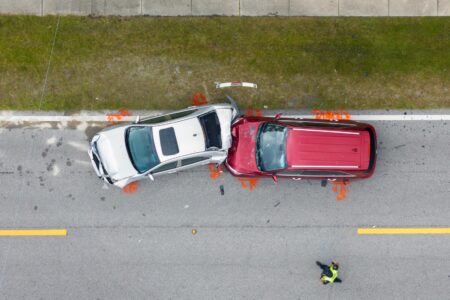
“Without lawful reason” is the most important term in all of this. If you pull over to the side of the road because your tire blew out, that’s not the same as drifting off the road while looking at your phone. The officers write down everything they saw at the scene, such as skid marks, the ultimate position of the vehicles, and the patterns of damage. Everything you say at the scene affects how the report is written. People don’t know how important that detail is when the citation finally goes to court.
Why It Happens — And Why the Reason Actually Matters
Distraction causes most of these incidents. A phone, a passenger, something roadside that grabbed your focus a beat too long. Fatigue is close behind — that heavy-eyed early commute on I-70, or a long drive back from a late night. Kansas City winters add another layer; ice patches on bridge decks and shaded road sections catch drivers off guard every year without fail.
Medical events — a dizzy spell, a seizure, a sudden cardiac issue — can pull a driver off the road through no fault of their own. So can genuine mechanical failure. Both are recognized in Missouri courts, but only when they’re properly documented and argued. You can’t just say “my brakes failed” and expect it to stick without maintenance records or inspection reports backing it up.
Why does the cause matter? Because courts look at intent and circumstances when classifying and prosecuting a charge. Someone who fell asleep from exhaustion sits in a different legal territory than someone who left the road while driving aggressively. Same basic outcome on paper — totally different case.
What Charges Actually Follow
Leaving the roadway on its own typically results in a careless driving citation, a failure to maintain lane charge, or sometimes both. Moving violations — points on your license, fines, and eventually, your insurance company getting wind of it.
Property damage changes the picture. A fence, a fire hydrant, a parked car, a utility box — if you hit something and leave without reporting it, that’s a separate hit-and-run charge under Missouri law. If you stayed and reported it, the legal exposure is smaller but still real.
Injuries are where things escalate fast. A pedestrian, a cyclist, a passenger — anyone hurt in the incident opens the door to reckless driving charges, criminal negligence, or more serious criminal exposure, depending on severity. Kansas City courts have pursued significant charges in cases that started as what seemed like a routine road departure.
A Kansas City traffic ticket lawyer can help you understand what you’re actually facing and where options realistically exist — before the situation gets harder to manage.
What Speeding Ticket KC Brings to These Cases
Speeding Ticket KC is a recognized law firm in Kansas City, Missouri, handling traffic and criminal defense matters — including cases where leaving the roadway led to citations, property damage, or more serious charges.
These cases turn on details. The police report, scene evidence, driver statements, and witness accounts. Their attorneys go through everything carefully — checking whether the charge accurately reflects what happened, whether proper procedures were followed, and what outcomes are genuinely available. No template approach. Each case gets its own read based on what the facts actually show.
Questions People Actually Ask
Is leaving the roadway automatically a moving violation in Missouri?
Usually, yes, but the specific charge depends on how the officer documents the incident. A simple drift onto the shoulder with no damage and no injury might result in a careless driving or failure to maintain lane citation — both moving violations carrying points. Damage or injury pushes the charge higher. Your driving record, the specific circumstances, and how the incident gets documented all feed into what ends up on that citation. Don’t assume the least serious outcome is automatic.
What if icy roads caused me to leave the roadway?
Weather is a recognized factor in Missouri courts — but it doesn’t wipe the slate clean on its own. Officers and prosecutors look at whether your speed was appropriate for the conditions, whether you were following too closely, and whether the hazard was something a reasonable driver should have anticipated. Documented weather conditions — road reports, temperature records, dashcam footage — support a weather-based argument far better than just saying “the road was slippery.” A lawyer can frame that argument in a way that actually moves the needle.
Do I have to report the incident if nobody was hurt?
If you caused property damage — a mailbox, a fence, a parked vehicle — Missouri law generally requires you to stop and make a reasonable effort to notify the owner or report the incident. Leaving without doing so creates a separate legal problem on top of the original one. If no damage occurred and no other parties were involved, the reporting obligation is less clear-cut. Either way, documenting what happened protects you if questions surface later.
Can a sudden medical emergency be used as a defense?
Yes — and it’s legitimate when supported properly. A sudden, unforeseeable medical event that caused loss of vehicle control can negate the negligence elements most traffic charges require. The word “unforeseeable” carries the weight here. If you had a known condition creating a risk of losing consciousness and drove anyway, that defense would weaken considerably. Medical records, emergency room documentation, and physician statements all matter in making this argument hold up.
Is it worth getting a lawyer for this kind of citation?
Depends what’s attached to it. A standalone citation with no damage, no injuries, and a clean record might resolve without lasting damage. But property damage, any injury, prior moving violations, or any ambiguity about how the incident gets classified — those are the situations where legal representation changes the outcome more than people expect. Speeding Ticket KC handles these cases regularly and can give you a straight read on what you’re actually dealing with before you decide how to respond.