
There’s something about a Missouri summer weekend that makes the usual rules feel distant. Trails, open fields, friends, a cooler — and an ATV parked right there waiting. Nobody’s on a highway. Nobody’s watching. The whole setting feels like it exists outside the normal legal framework that governs everyday driving.
That feeling is a trap. And it catches good people every single season.
Missouri’s DUI laws don’t stop where the pavement ends. They follow you onto the trail, across private land, and into situations that feel nothing like a traffic stop — right up until they become exactly that.
The Law Is Simpler Than People Expect
Most riders assume off-road vehicles exist in some separate legal category. They don’t.
Missouri Revised Statutes § 577.010 defines DWI as operating any motor vehicle while intoxicated. ATVs qualify. No carve-out for trails. No exception because there’s no license plate. No special treatment because you’re nowhere near a highway. The only question the law asks is whether you were impaired while operating it — and that question carries the same criminal weight on a dirt trail as it does on I-70.
People hear this and don’t believe it at first. Then they look at the charge in their hand and it starts to feel very real.
Who’s Even Out There Watching?
This is always the first thing people want to know. If you’re deep on a trail or in a private field, who’s going to see you?
More people than you’d think. Missouri Conservation officers patrol off-road areas consistently — not just occasionally. County deputies respond to noise complaints from neighbors more often than riders ever expect. State Highway Patrol jurisdiction extends well past public roads. And some of the most gut-wrenching cases involve riders who crossed a county road for thirty seconds to connect two trails and got spotted at exactly the wrong moment.
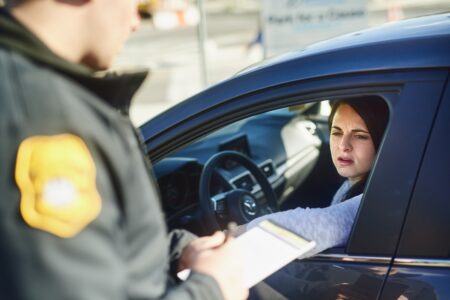
Once reasonable suspicion exists, everything that follows is a standard DUI stop. Field sobriety tests, breathalyzer, the whole process — same as any traffic stop, just with a different backdrop. Some riders genuinely didn’t know they’d crossed a legal line until the handcuffs came out. That’s not dramatic. That’s just how it goes.
What You’re Actually Facing
First-offense DWI in Missouri is a Class B misdemeanor. Up to six months in jail, fines up to $500, 90-day license suspension. That’s just the floor.
The second offense is a Class A misdemeanor. Third is a felony. And the part that catches people completely off guard — prior ATV DUI convictions count toward your total exactly like car DUIs do. They don’t live in some separate off-road file that prosecutors can’t access. They stack. Judges see the full picture.
Beyond the criminal side, points hit your driver’s license. Insurance climbs in ways that sting for years. Background checks surface the conviction permanently. CDL holders face federal complications on top of everything Missouri applies — and for someone whose income depends on their commercial license, that’s not a side issue. That’s everything.
“But I Was on My Own Property”
This is where most riders land mentally when they’re trying to find solid ground. It makes sense. It feels logical. And it almost never works.
Missouri has no blanket private property exemption for DUI charges. Officers can arrest you on private land when they observe impaired operation. If your ride ended in an accident on your own property — even with no one else involved — responding officers can build a case entirely from what they find when they arrive. This defense gets tried in Missouri courts with real regularity. The results are rarely what people hope for going in.
Counting on private property to protect you is one of the most common and costly assumptions riders make.
Getting Help Before It’s Too Late
The instinct to wait — to see how things develop, to hope it fades — costs people more than almost any other mistake in this process. Officer reports get written fast. Evidence gets locked in. The prosecution builds momentum whether you’re moving or not.
A Kansas City traffic ticket lawyer with real Missouri DUI experience knows where these charges are actually vulnerable. The legality of the stop. Breathalyzer calibration records. Whether arrest procedures were properly followed. These aren’t technicalities for the sake of it — they’re the questions that determine whether a charge holds up under real scrutiny.
Speeding Ticket KC works with Kansas City riders facing ATV and off-road DUI charges and brings the kind of local court knowledge that produces different outcomes than going in unprepared. Early involvement changes what’s available. Waiting narrows it.
Questions Riders Ask When This Happens
- Can I really get a DUI on my ATV on my own property?
Yes — and this is genuinely the most shocking part for most people. Missouri law carries no private property exemption for DUI charges. If an officer observes you operating an ATV while impaired anywhere — your land, a friend’s farm, a private field — they have full authority to make an arrest. The location doesn’t change the legal obligation. Private property feels like protection. Under Missouri DUI law, it simply isn’t.
2. Does an ATV DUI show up on my regular driving record?
Completely — yes. Missouri DWI convictions involving ATVs add points to your driver’s license and sit in your driving history exactly like a car DUI. Insurance goes up. License status gets affected. Any professional licensing requiring a clean record gets complicated. There’s no separate off-road file keeping these convictions away from the rest of your record. They count fully, and they count permanently.
3. What’s the BAC limit for ATV riders in Missouri?
Same as car drivers — 0.08% for adults 21 and over. Under 21, Missouri’s zero-tolerance policy applies, meaning any detectable alcohol can trigger a charge. Drug impairment counts too, including prescription medications affecting your ability to operate safely. The statute makes no distinction based on vehicle type or where you’re riding. Impaired is impaired, full stop.
4. What if I refuse the breathalyzer?
Missouri’s implied consent law applies to ATV operators exactly like car drivers. Refusing triggers an automatic one-year license revocation — whether you’re convicted of the DUI or not. Prosecutors also use refusal against defendants in court. It raises more suspicion than it removes, which is the opposite of what most people are hoping for when they say no.
5. Can a lawyer genuinely change how this turns out?
More than most people expect — honestly. A defense attorney can challenge whether the officer had legal grounds to stop you. They can pull breathalyzer calibration records, examine how field sobriety tests were run, and review whether proper procedures were followed at every step. Cases get reduced or dismissed on these grounds more often than people realize — not because nothing happened, but because something in the process didn’t hold up. Speeding Ticket KC brings real local knowledge of Kansas City courts and prosecutors to every case, and that familiarity with how things actually work locally makes a measurable difference in what happens next.