Most drivers know at least in general terms that pedestrians have the right of way in crosswalks. What most drivers don’t really understand is how far that obligation extends, how quickly a lapse of attention can turn into a serious legal mess, and how different the consequences are when a pedestrian is involved versus a regular traffic violation.
Kansas City has a lot of pedestrian traffic, and it’s not just one-off trips. It’s downtown crossings, midtown neighborhoods, the areas around schools and hospitals, and busy retail corridors. Drivers are in these surroundings every day, often preoccupied, often rushing, often making split-second decisions about whether or not a pedestrian is close enough to warrant stopping. The legal picture that emerges when those decisions are not correct is a lot more serious than most individuals anticipate while they are making them behind the wheel.
What Missouri Law Requires for Pedestrian Right of Way
More demanding than the basic “yield in crosswalks” understanding, most drivers carry.
Missouri Revised Statutes § 300.375 through §300.395 are particular as to pedestrian right of way. Drivers must yield to pedestrians in marked crosswalks (including mid-block crosswalks), and at intersections where pedestrians are legally crossing. You don’t have to stop for a pedestrian who is not directly in front of your car. It covers the situation when a pedestrian is on your side of the road, or is close enough to be a danger if you pass.
It is also illegal to pass a vehicle that has stopped for a pedestrian in a crosswalk. This one catches drivers off guard regularly — the vehicle ahead stopped for a reason, and pulling around them into the crosswalk area creates exactly the kind of unexpected conflict that causes accidents. Missouri law specifically addresses this because it’s such a consistent source of pedestrian injuries.
School crossings and crossing guards carry additional weight. Failing to stop for a crossing guard’s signal is its own separate violation with its own set of enhanced consequences beyond the standard pedestrian right of way framework.
Why These Situations Are Different From Standard Traffic Violations
Here’s where the conversation changes significantly — and where most drivers don’t fully appreciate what they’re dealing with until it’s already happened.
When a pedestrian is involved in a right of way violation — particularly when contact occurred or a near-miss created observable danger — the legal picture expands beyond a standard moving violation citation. The traffic citation is just one layer. Criminal traffic offense exposure becomes possible depending on the circumstances and outcome. Civil liability from the pedestrian or their family is a separate and potentially significant dimension. Insurance implications extend beyond premium adjustments into potential coverage disputes over large injury claims.
Prosecutors treat pedestrian right of way violations more seriously than standard traffic infractions because the human cost when things go wrong is immediately visible and often severe. Judges understand that context. The combination of criminal traffic exposure, civil liability, and insurance consequences in a single incident is what makes these situations require genuinely careful legal attention — not just the standard traffic ticket response.
What the Criminal Traffic Exposure Looks Like
This is the dimension most drivers don’t think about until someone explains it to them.
Failing to yield to a pedestrian in a crosswalk is a moving violation with points and fines in straightforward cases. When the failure to yield resulted in an accident — even without serious injury — the charge escalates. When an injury occurs, depending on severity and the specific circumstances, charges can reach negligent driving or beyond under Missouri law. When the driver fled the scene, the legal situation became dramatically more serious immediately.
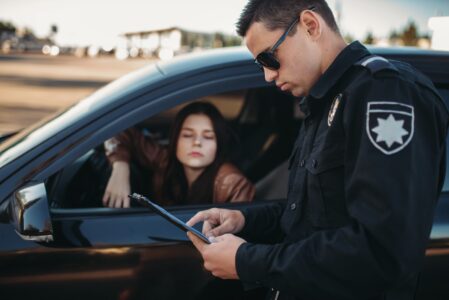
Points on a driving record, license suspension, insurance consequences — all of those compound simultaneously with the more serious charge. And the traffic citation that gets written at the scene creates the official documentation of fault that every subsequent legal proceeding references. How that citation gets handled in the initial days after the incident shapes everything that follows.
Getting the Right Legal Help Immediately
The decisions made in the first days after a pedestrian right of way incident determine what options remain available — and those options narrow fast if nothing gets done.
Evidence gets documented, or it disappears. Witness statements get taken while memories are fresh, or they don’t. The official accident report gets written with a particular framing that shapes how insurance adjusters, prosecutors, and civil attorneys approach the situation. An attorney who gets involved early can influence each of these — not by changing facts, but by ensuring the complete picture gets preserved and accurately represented.
A Missouri traffic ticket lawyer who handles traffic incidents involving pedestrians understands both the criminal traffic dimension and the civil liability dimension simultaneously. Speeding Ticket KC works with Kansas City drivers in situations where a traffic stop or accident has produced multiple overlapping legal consequences — and getting that guidance early, before court dates approach and plea windows close, is where the most meaningful work happens.
Questions Drivers Ask After a Pedestrian Right-of-Way Incident
What exactly are my legal obligations to pedestrians in Kansas City?
Missouri requires drivers to yield to pedestrians in marked crosswalks and at intersections where pedestrians are legally crossing. The obligation applies when a pedestrian is in your lane or approaching closely enough that continuing would create a hazard. It also prohibits passing a stopped vehicle in a crosswalk area — a situation that generates accidents and citations with real frequency. School crossing guards carry additional authority, and failing to comply with their signals is its own separate violation with enhanced consequences.
Is failing to yield to a pedestrian just a traffic ticket or something more serious?
It depends entirely on what happened. A straightforward failure to yield with no contact is a moving violation with points and fines. When a pedestrian is involved in an accident, the charge can escalate significantly depending on injury severity and specific circumstances. When a driver leaves the scene, the situation becomes dramatically more serious immediately. Understanding exactly what you’re facing — not assuming it’s just a ticket — is the first and most important step after any pedestrian-involved incident.
How does civil liability work separately from the traffic citation?
The pedestrian or their family can file a civil lawsuit completely independently of any criminal traffic proceedings. Civil court uses a lower standard of proof than criminal court, meaning even an acquittal or dismissal of criminal charges doesn’t prevent a civil judgment. Missouri’s comparative fault principles mean fault can be allocated between parties, but a traffic citation for failure to yield creates documentation of fault that civil proceedings reference directly. The criminal and civil dimensions of these situations need to be addressed simultaneously, not sequentially.
What should I do immediately after a pedestrian right-of-way incident?
Contact an attorney before making detailed statements to insurance investigators or law enforcement beyond what’s immediately required. The official documentation produced in the first hours after an incident — accident reports, recorded statements, photographs — shapes every subsequent proceeding. An attorney can help ensure that documentation accurately reflects the full circumstances rather than being built entirely on one perspective. This isn’t about avoiding accountability. It’s about making sure the complete picture gets preserved.
Is Speeding Ticket KC the right help for something this serious?
Yes — because these situations sit at the intersection of traffic law, criminal law, and civil liability, and navigating all three simultaneously requires someone who understands how each dimension affects the others. Speeding Ticket KC works with Kansas City drivers on situations that go beyond standard traffic citations — including incidents where pedestrians were involved and where the legal consequences span multiple fronts. Getting that guidance early, before the situation develops further than it needs to, consistently produces better outcomes across all dimensions.