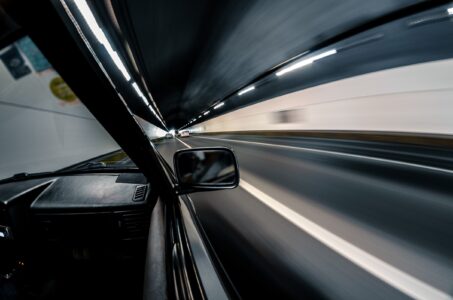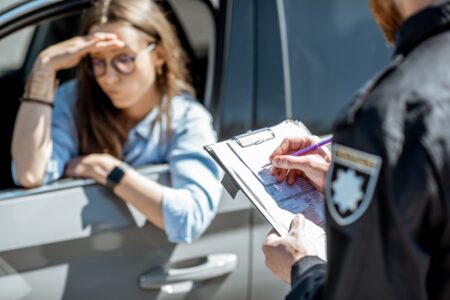
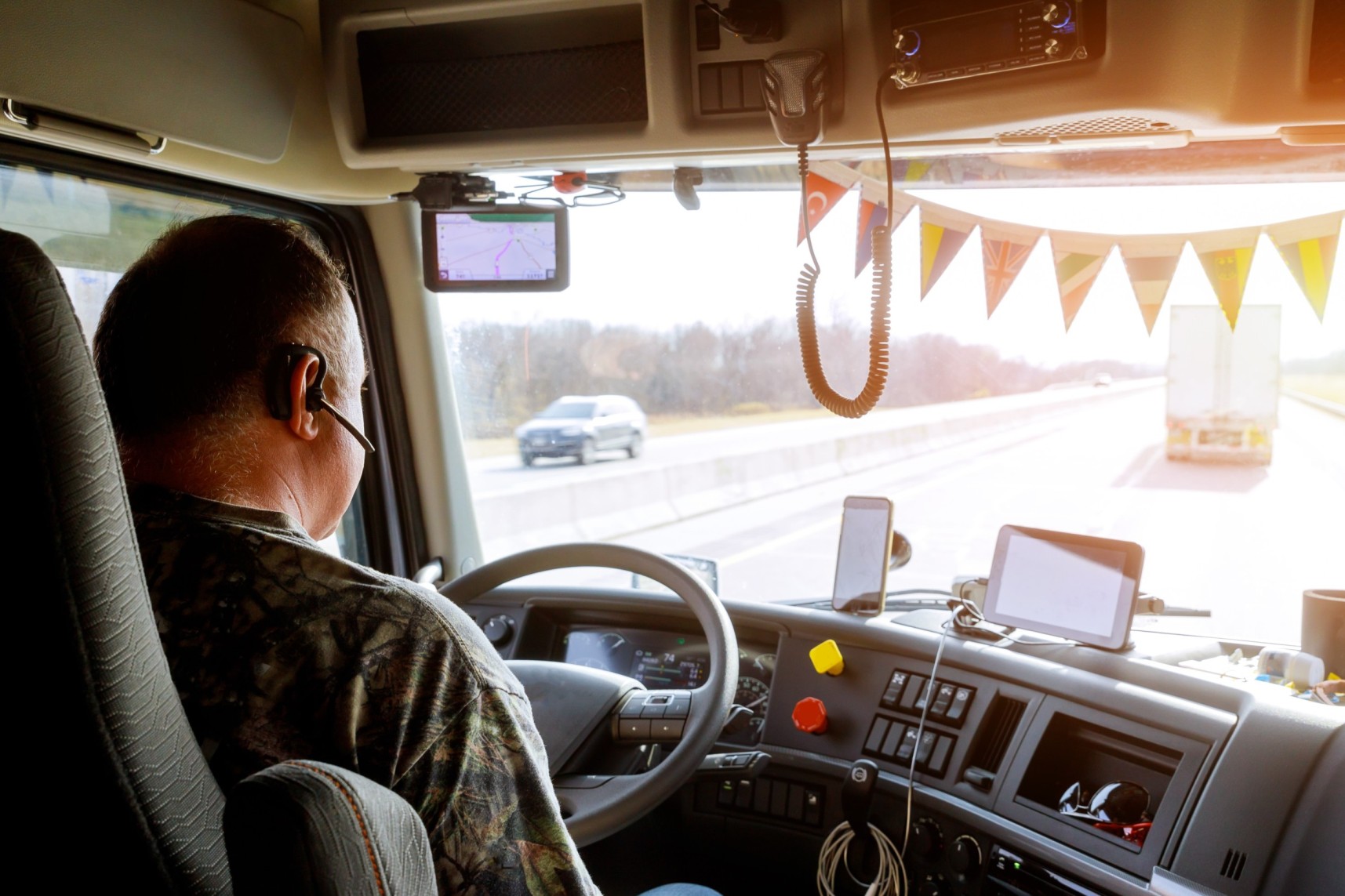
You’ve felt it on I-35. A loaded semi eases toward your lane, you tap the brakes, and you realize the driver had no clue you were there. That gap in what a trucker can see has a name. Truck blind spots, the ones safety campaigns call no-zones, wrap around every big rig on all four sides, and Kansas City drivers slide through them dozens of times on an ordinary commute without ever noticing. Most of those passes end fine. The ones that don’t tend to end badly.
A wreck with one of these trucks isn’t a normal wreck. In 2023, 4,354 people died in large-truck crashes nationwide, and 65% of them were riding in the smaller vehicle, according to the Insurance Institute for Highway Safety. The physics are lopsided, and so is the paperwork afterward. A crash with a tractor-trailer pulls in evidence a fender bender never touches: the truck’s electronic logging device, its engine data, the carrier’s maintenance files and hours-of-service records. Carriers send rapid-response teams to crash scenes, and that data can get overwritten in days, so firms that handle these cases move fast. Texas, which carries more truck traffic than any state in the country, is a useful place to see how that plays out, and resources that explain how truck accident cases get investigated show why the first 48 hours decide so much.
Where Truck Blind Spots Actually Sit
A trucker loses sight of you in four places, and they’re bigger than most people guess.
- Directly behind the trailer, for roughly 30 feet. Tailgate a semi and you’ve simply disappeared.
- Right in front, for about 20 feet. Cut back in too soon after passing and the driver can’t see your bumper.
- Down the driver’s side, angling back from the cab.
- The passenger side, the worst of them, spreading across two lanes from the mirror back past the end of the trailer.
The test is easy to remember. If you can’t see the driver’s face in their side mirror, they can’t see you either. Linger there during a lane change and you’re betting your safety on a driver who doesn’t know you exist.
Newer rigs come with extended mirrors, side cameras, and blind spot sensors, and they help. They don’t erase the problem. A trailer is 53 feet of steel, and no amount of glass turns a driver into someone who can watch four lanes at once. The gear narrows the truck blind spots. It doesn’t close them.
Why Kansas City Drivers End Up in Them
Kansas City sits on top of a freight machine. I-70 runs coast-to-coast traffic straight through downtown, I-35 funnels everything heading toward Des Moines or Dallas, and I-435 loops the metro with trucks merging on and off all day. Throw in the interchange locals still call the Grandview Triangle, where I-435, I-470, and US-71 tangle together, and you get nonstop lane changes next to vehicles that can’t see half the cars around them.
The more big rigs you share pavement with, the more often you drift into a no-zone by accident. A driver running late on the I-435 merge near Grandview isn’t thinking about a trailer’s mirror geometry. They’re thinking about the gap. That’s exactly when the trouble starts.
Time of day stacks the odds, too. Morning and evening rush jams the same lanes the freight runs on, so cars and trucks bunch up right when everyone’s patience is thin. Add a January ice storm on the I-435 curves or a summer work zone squeezing three lanes into two, and the room a truck needs to see and stop just isn’t there. Kansas City weather doesn’t do anyone behind the wheel many favors.
The Blind Spot in Front Is the Scary One
Most drivers fixate on the sides. The space in front of a truck deserves more respect than it gets. A fully loaded tractor-trailer can weigh up to 80,000 pounds, and federal safety officials note that one needs the length of up to two football fields to stop at highway speed. Merge into that front no-zone and brake hard, and the truck behind you can’t stop with you. The math just doesn’t allow it.
Put numbers on it. Your car might stop from 65 in around 300 feet on dry pavement. A loaded rig at the same speed needs far more, and the gap grows on wet roads or with worn brakes. So when you swing in front and slow down, you’re asking a machine 20 to 30 times heavier than yours to do something it physically can’t. The driver sees your brake lights, reaches for the pedal, and the trailer keeps coming.
The same weight gap bites from behind, too. Stop too close to a trailer, and in a rear-end crash a car can slide underneath it, an underride wreck that turns survivable speeds deadly. That’s why the FMCSA’s guidance for passenger drivers says to leave room and hang back when you’re stopped behind a truck, especially climbing a hill where a heavy rig can roll backward before it pulls away.
What to Do When a Truck Never Saw You
If a truck does drift into you, the minutes right after matter more than people realize. Get clear of traffic and call it in. Then photograph everything you can: the truck, the company name and DOT number painted on the door, the plates, the road, the damage on your car. Write down the driver’s name and the carrier.
Look for witnesses before they scatter. A crash on I-70 clears fast, and the driver two cars back who saw the whole thing is your best record of what happened. Get a name and number if you can. If you run a dashcam, save the file that day so it doesn’t loop over itself. Watch what you say at the scene, too. A quick “I’m sorry” to a shaken truck driver feels human, but it can resurface later as an admission. Stick to the facts and trade information.
See a doctor even if you feel fine. Adrenaline hides a lot, and back and neck injuries from a truck impact love to show up the next morning. And hold off on giving any recorded statement to the trucking company’s insurer before you talk with someone who knows these cases. What sounds like a courtesy call is usually the carrier starting its defense while its own log data is still warm.
The Habit Worth Keeping
Every time you settle in beside a semi, hunt for the driver’s mirrors and check whether a face looks back. If it doesn’t, you’re invisible, so speed up or fall back until you’re not. It costs you nothing and a couple of seconds. On a metro that moves this much freight, that’s the cheapest insurance you’ll ever carry.