Drivers should understand that pedestrians can have legal protections at both marked and unmarked crosswalks, even though the two may look different on the road. A marked crosswalk is usually identified with painted lines or other roadway markings, while an unmarked crosswalk may exist at an intersection without visible markings.
Knowing the difference between marked and unmarked crosswalks can help drivers recognize when they need to slow down, yield, and give pedestrians adequate space to cross safely.
Crosswalk rules are especially important in busy communities where pedestrians regularly share the road with cars, trucks, bicycles, and motorcycles. Drivers should pay attention not only to painted markings but also to intersections, pedestrian signals, signs, and people preparing to cross.
Marked Crosswalks Have Visible Roadway Indicators
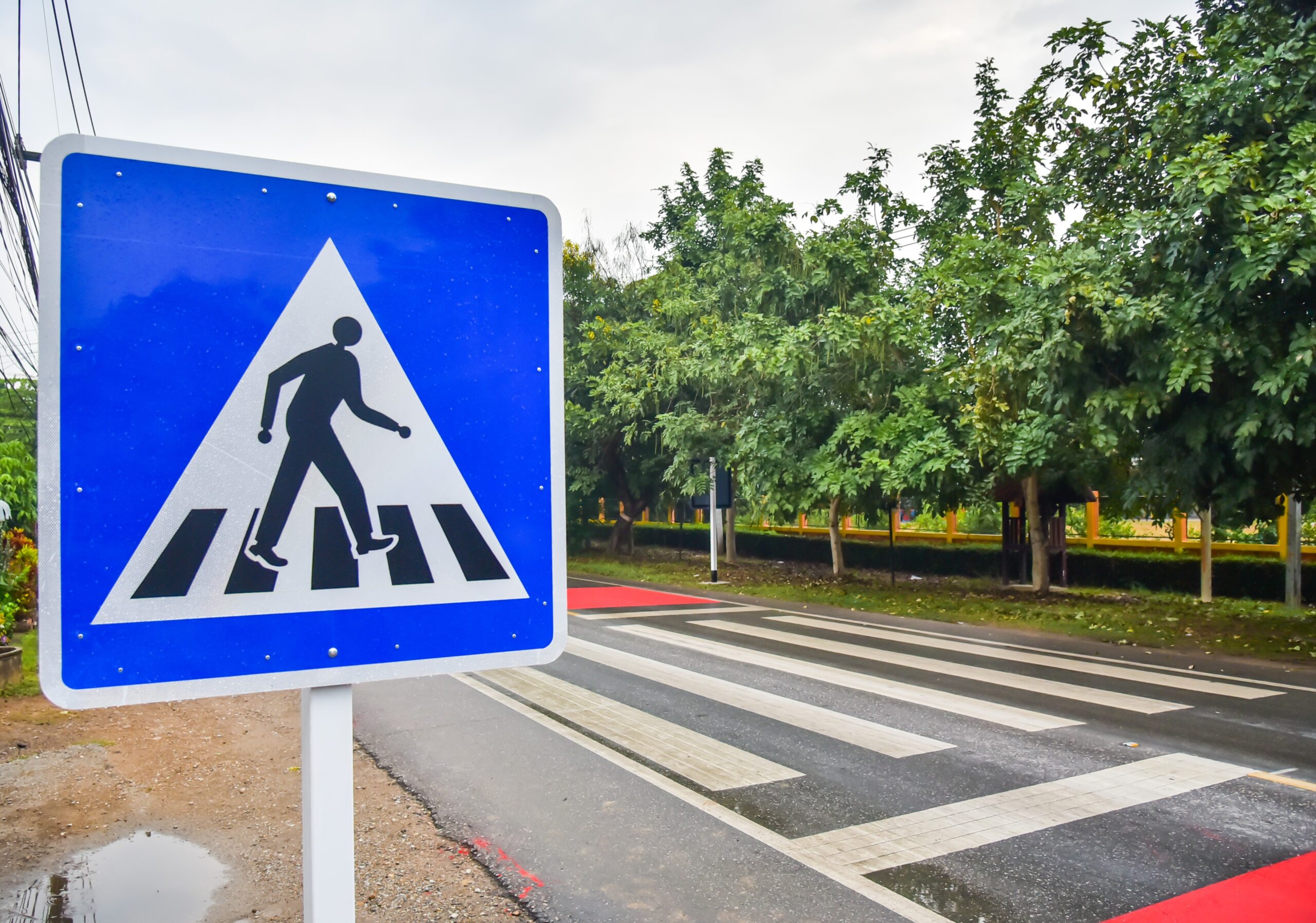
A marked crosswalk is generally easy to identify because it has visible lines or other pavement markings.
These markings may appear at intersections, school zones, traffic signals, or other locations where pedestrian crossings are expected. Some crosswalks use two parallel lines, while others have broader patterns that make the crossing more noticeable.
Drivers approaching a marked crossing should reduce their speed when necessary and watch for pedestrians entering or already using the crosswalk.
A marked crosswalk can make a pedestrian’s intended path clearer, but drivers should still remain alert for people crossing unexpectedly.
Unmarked Crosswalks Can Exist at Intersections
An unmarked crosswalk does not necessarily mean there is no pedestrian crossing.
In many jurisdictions, crosswalks can exist at intersections even when the roadway does not contain painted lines. Drivers may therefore have obligations toward pedestrians at an intersection despite the absence of visible markings.
This is one reason drivers should avoid assuming that an unpainted portion of the roadway is automatically free of pedestrian traffic.
Right-of-Way Rules Can Depend on the Circumstances
Pedestrian right-of-way rules are not always as simple as saying that pedestrians always have priority.
Drivers and pedestrians both have responsibilities. A pedestrian may need to follow traffic signals and avoid suddenly entering a roadway when it is unsafe. Drivers must also exercise appropriate caution and yield when required by applicable traffic laws.
The precise rules can vary by state and local jurisdiction. Drivers should become familiar with the laws where they regularly travel rather than relying on assumptions from another state.
Traffic Signals Can Change How a Crossing Works
Some crosswalks are controlled by traffic signals or pedestrian crossing signals.
When a pedestrian signal indicates that crossing is permitted, drivers should follow the applicable traffic rules and watch for pedestrians within the crossing. Drivers should also remain alert when a pedestrian has already entered the roadway.
A green light for vehicles does not necessarily mean a driver can ignore pedestrians. Turning vehicles, in particular, may encounter pedestrians crossing the road.
Failure to Yield Can Lead to Serious Consequences
A driver who fails to yield to a pedestrian may cause a serious collision. Pedestrians have little physical protection compared with occupants of a motor vehicle, which means even a relatively low-speed crash can result in significant injuries.
A pedestrian accident may lead to an investigation involving photographs, traffic-camera footage, witness statements, vehicle damage, and roadway evidence.
Drivers involved in a collision should remain at the scene, follow applicable reporting requirements, and provide appropriate assistance.
Safe Driving Requires More Than Watching for Painted Lines
The safest approach is to treat every intersection and pedestrian-heavy area as a potential crossing point.
Drivers should scan sidewalks and road edges, reduce speed when visibility is limited, avoid distractions, and watch carefully before turning. At night or during poor weather, extra caution may be necessary because pedestrians can be harder to see.
Understanding crosswalk rules is not simply about avoiding tickets. It is about recognizing vulnerable road users and giving them enough time and space to travel safely.
Key Takeaways
- Marked crosswalks have visible pavement markings.
- Unmarked crosswalks may still exist at intersections under applicable law.
- Drivers should not assume that the absence of painted lines means pedestrians have no legal protections.
- Traffic signals and pedestrian signals can affect right-of-way.
- Failing to yield can result in serious crashes and legal consequences.
- Drivers should remain alert for pedestrians even when a crossing is not clearly marked.