
Most drivers think about speed violations as a straightforward proposition — you were going faster than the sign said, an officer measured it, and now you have a ticket. The formula feels simple. What genuinely surprises people is receiving a citation when they weren’t exceeding the posted limit at all. They were following the sign. They thought they were doing everything right. And yet the citation says failure to reduce speed.
Understanding why this happens — and what the law actually requires — starts with recognizing that Missouri traffic law goes beyond posted limits in ways that most drivers have never fully internalized.
The Law Behind the Citation
Missouri Revised Statutes § 304.010 establishes something beyond the posted speed limit. Drivers must operate at a reasonable and prudent speed given the conditions present at the time. Posted limits represent the maximum permissible speed under ideal circumstances — clear weather, dry pavement, good visibility, typical traffic. When any of those conditions change, the law creates an independent obligation to reduce speed accordingly.
Let me explain what that means in practice. A posted limit of 45 mph on a residential arterial is the ceiling under ideal conditions. Dense fog that reduces visibility to a few hundred feet changes what is reasonable and prudent for that road at that moment. Maintaining 45 mph through that fog is no longer legally protected by the sign — it’s potentially a failure to reduce speed. The posted limit and the legally appropriate speed have diverged because conditions have changed.
This is the gap most drivers don’t know about. The sign isn’t the whole answer.
Why Drivers Get These Citations — The Real Reasons
The common thread across most failure-to-reduce-speed citations is a mismatch between the driver’s speed and the conditions actually required. But the specific situations that generate these citations in Kansas City vary — and knowing them helps clarify what you might actually be dealing with.
Weather is by far the largest driver of these citations, particularly during Kansas City winters. Ice and snow change the physics of driving in ways that most people understand intellectually but underestimate in practice. Stopping distances extend dramatically on ice — what takes 100 feet on dry pavement can take 400 feet or more when the surface is compromised. Drivers who slow down from normal speeds but don’t slow down enough create the mismatch the statute addresses. They adjusted — just not enough.
Spring and summer rainstorms create similar dynamics. Heavy rain that reduces visibility and traction within minutes can turn a normally appropriate speed into a failure to reduce speed in a matter of blocks. The driver who was fine five minutes ago is now driving faster than conditions warrant — often without fully registering how quickly the situation changed.
Construction zones generate these citations, too, particularly when workers are active, and the road surface has changed in ways that affect traction or stopping distance. Accident scenes, school crossings when children are present, and any area where hazards are clearly visible all create situations where the reasonable and prudent standard demands something below what the posted limit allows.
The Citations That Surface After Accidents
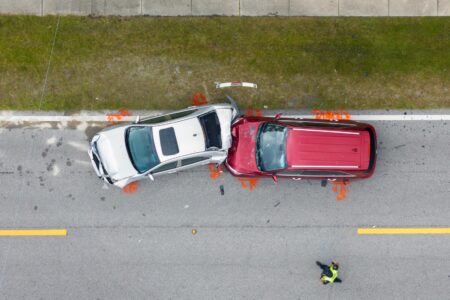
Here’s something worth understanding — failure to reduce speed citations often get written after something has already gone wrong.
When an officer responds to an accident and investigates the cause, the question of whether the driver was operating at a speed appropriate to conditions is one of the first things examined. A driver who was moving faster than road or weather conditions warranted at the moment of impact receives this citation as documentation of the conduct that contributed to the accident. This version of the citation carries more weight than a standalone violation — it’s now linked to documented harm and affects both the traffic proceedings and the insurance claim.
This is where the citation’s consequences extend well beyond a fine and points. Insurance adjusters reference it. Civil attorneys reference it. The documentation created by that citation shapes how fault gets allocated in every subsequent proceeding connected to the accident.
What Happens When You Just Pay Without Thinking It Through
Paying a Missouri traffic ticket is an admission of guilt — full stop. Points land on your record immediately. Insurance companies check records and respond with premium adjustments that compound over the following years. When the citation is connected to an accident, paying it creates a documented admission of fault that insurance adjusters and opposing attorneys use in processing the related claims.
The decision to pay without examining whether the citation accurately reflects the legal situation — and whether there are defensible angles worth exploring — is the decision that consistently costs more over time than any other response.
A Missouri traffic ticket lawyer who handles these violations understands where failure-to-reduce-speed citations are most vulnerable and how to build a defense around the specific circumstances. Speeding Ticket KC works with Kansas City drivers on these cases consistently and brings the local court knowledge that produces different outcomes than going in unprepared. Getting that perspective before any decisions get made keeps options available that paying closes permanently.
Questions Drivers Ask About Failure to Reduce Speed Citations
How can I be cited for speed if I wasn’t over the posted limit?
Missouri requires drivers to operate at a reasonable and prudent speed given existing conditions — separate from and in addition to the posted limit. When weather, visibility, road surface, or traffic conditions change, the law creates an independent obligation to reduce speed below the posted maximum. Maintaining the posted limit when conditions clearly require something slower can still constitute a violation. The sign establishes the ceiling under ideal conditions, not the appropriate speed under all conditions.
What conditions create the obligation to reduce speed?
Missouri addresses a range of conditions — weather events reducing visibility or traction, construction zones with active work, school crossings during active hours, accident scenes, emergency vehicle operations, and any situation where the posted speed would be unreasonable given what’s actually present. The standard is what a reasonable driver would do given the specific conditions at that moment — not what the maximum posted limit allows under ideal circumstances.
How many points does this add to my Missouri license?
Most failure-to-reduce-speed violations add two to three points, depending on classification. Those points stay active for three years and count toward suspension thresholds — eight within eighteen months triggers a suspension. When the citation is connected to an accident, the documentation of fault also affects insurance premium calculations that compound over the following policy periods. Understanding your current record before deciding how to respond is essential information.
If the citation is connected to an accident, how does it affect my insurance?
Directly and significantly. A failure-to-reduce-speed citation connected to an accident creates official documentation of fault that insurance adjusters reference throughout the claims process. How that documentation gets used affects both the claim resolution and your premium trajectory going forward. Addressing the citation and the insurance situation together — with awareness of how each affects the other — consistently produces better outcomes than treating them as separate problems handled independently.
Is getting legal help worth it for this type of citation?
For a standalone citation with a clean record and no accident, it depends on the specific circumstances. But for anyone with prior violations, anyone where an accident was connected to the citation, anyone whose insurance situation makes additional points a real concern, or commercial drivers facing enhanced regulatory exposure — yes, legal guidance makes a measurable difference. Speeding Ticket KC helps Kansas City drivers understand exactly what their specific ticket means before making any decisions. That clarity at the start consistently produces better outcomes than paying first and dealing with the full consequences afterward.