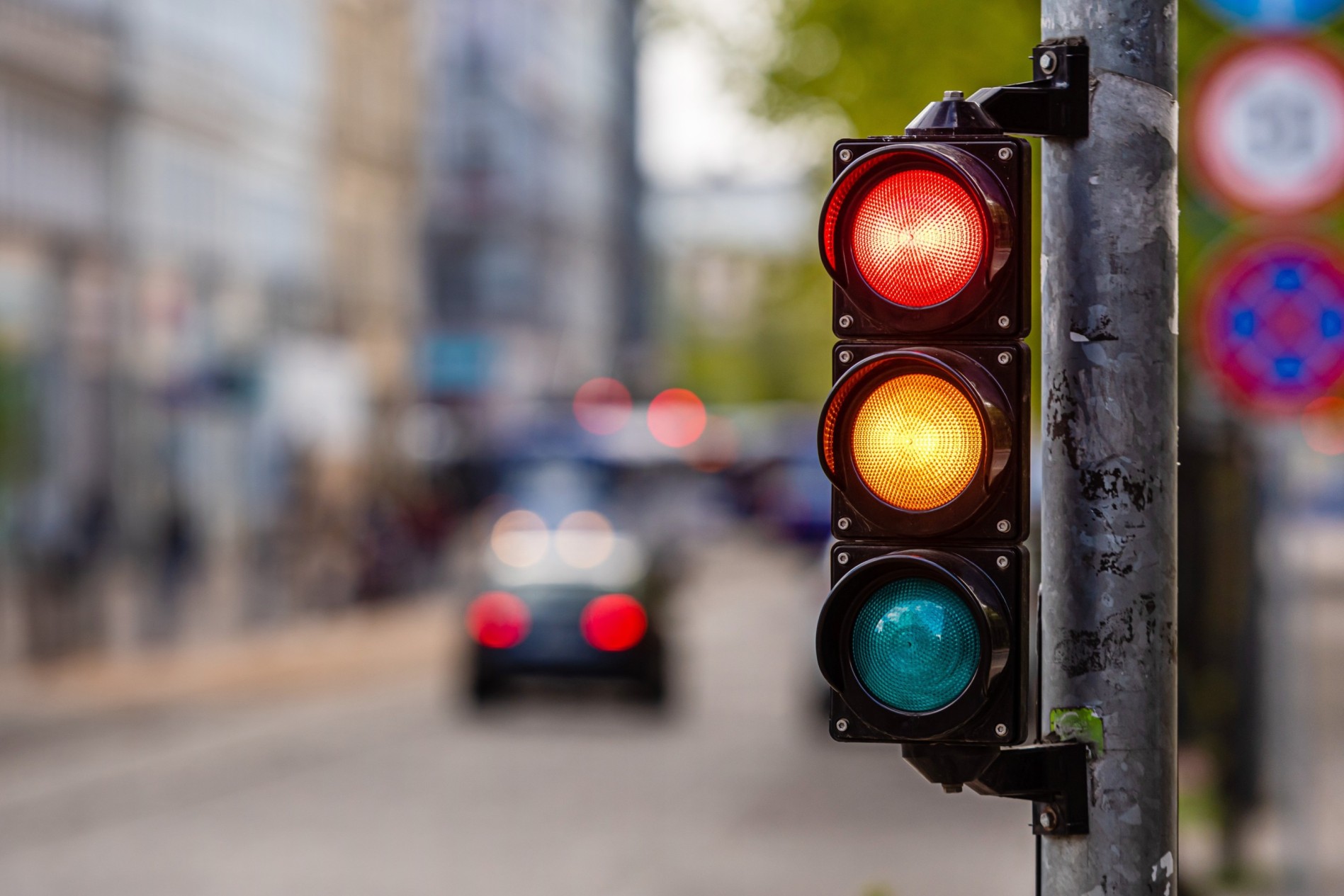
Flashing traffic signals are warning lights used to regulate traffic during low-traffic periods or malfunctions. It is essentially the road’s way of saying, “Hey, pay attention, something is different here.” They are common in school zones, construction areas, rural roads, and intersections.
They are different from the traditional traffic signal light. Instead of the regular cycle of changing through red, yellow, and green, they blink or flash. The rules are quite different too, and this makes a lot of drivers unsure when approaching an intersection with flashing lights.
Some people hesitate at a flashing yellow like they’re waiting for a ghost to cross the street. Learning the meaning of these signals can go a long way to avoid tickets, accidents, and dangerous mistakes on the road.
What Are Flashing Traffic Signals?
Flashing traffic signals are “caution mode” lights that blink nonstop to make sure you’re actually looking at the road. According to the Federal Highway Administration, intersections are where a large portion of accidents happen, so these blinking lights are a simple way to improve road safety.
Flashing Red vs. Flashing Yellow
Usually, you’ll see red or yellow. Each one carries a very specific set of instructions. A flashing red light is a hard stop. No exceptions. A flashing yellow is more of a “heads-up” signal. It means you should probably slow down and watch out for possible hazards.
You’ll find these in spots where traffic patterns change often or a full three-color cycle is not required. Rural roads or school zones use them a lot. Some cities even switch their regular lights to “flash mode” at certain periods of the day. It keeps traffic moving when the streets are basically empty.
What to Do When a Signal Is in Flash
Reactions towards the flashing traffic signal depend entirely on the color. It’s a simple distinction, but you’d be surprised how many people mix them up in the heat of the moment.
If it’s red, treat it like a stop sign. Stop fully. Look out for cyclists, pedestrians, or that one car that looks like it isn’t planning to stop, and once the coast is clear, you’re good to go.
Now, flashing yellow is where it gets tricky. You don’t actually have to stop, which feels weird to some people. You just need to slow down and be alert. Even though you don’t need to stop, you should be prepared for any strange or sudden change.
What Happens When a Driver Fails to Obey Traffic Signals?
Ignoring these lights can result in serious legal problems and accidents. Failure to stop or slow down may lead to a collision with another vehicle or a pedestrian. This is a great way to ruin your week.
Beyond the obvious danger of a crash, ignoring a flashing signal can lead to traffic tickets and higher insurance costs. The National Highway Traffic Safety Administration points out that hundreds of thousands of injuries every year happen because someone thought a traffic signal was just a suggestion.
Even the yellow lights can get you in trouble. If you speed through a flashing yellow and hit someone, they’ll likely cite you for “failure to use caution.”
Final Thoughts
At the end of the day, flashing lights are there to help improve safety and not to annoy you. Red means stop; yellow means watch out. If you can remember that, you’re already doing better than half the people on the road.
Paying attention to these traffic rules can go a long way to protect both drivers and pedestrians.
A Quick Recap
- Flashing signals are basically the road’s “caution mode” signal.
- Red means a complete stop.
- Yellow means “don’t stop, but definitely slow down.”
- Flashing traffic signals are common in rural areas, school zones, and intersections.
- Ignoring them leads to tickets, high insurance, or worse.