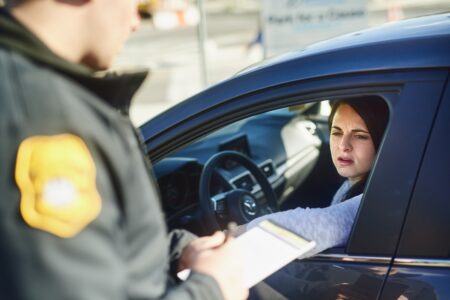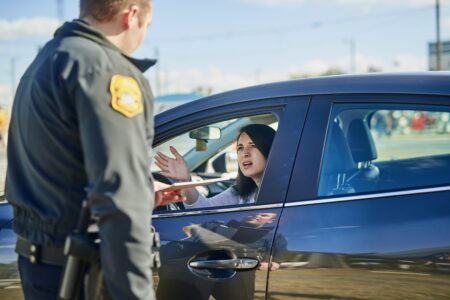
Most drivers who obtain tickets for aggressive driving are startled. Not that they think they drove flawlessly, but they felt like what happened on the road was a typical reaction to a frustrating circumstance. Somebody cut them off, they said. Traffic wasn’t moving; they pushed harder to get through. Sometimes it’s hard to tell from inside the vehicle where exasperation ends, and aggressive behavior begins at enforcement-level.
The view from outside is typically a lot clearer. Learning how cops in Kansas City do just that can help drivers realize how their own driving looks from the perspective of enforcement. And for those drivers who have already received these fines, it helps explain what’s in the documentation that they’re going to need to handle.
It’s Almost Always a Pattern, Not a Single Moment
Here’s the thing about aggressive driving enforcement: officers don’t often stop one person for one aggressive act. They’re looking for patterns of conduct that, in the aggregate, imply a motorist is operating with no concern for everyone around them.
Might receive a mental note for a little aggressive lane move. Same lane shift, then evident tailgating, then sudden speed increase, then cutting in front of another car without sufficient clearance, etc. That’s a pattern. Officers who see that progression across a quarter mile or half mile of highway have something to point out. And what they document provides the basis for many simultaneous tickets, typically involving reckless driving under RSMo § 304.012.
Aggressive driving is the only offense that makes the difference between a series of pedestrian traffic violations and reckless driving. It is a class B misdemeanor in Missouri. No traffic violation. A criminal charge that carries with it the consequence of a criminal record. This is why aggressive driving encounters are categorically distinct from a speeding citation, even when they seem to encompass similar degrees of traffic misbehavior.
Officers Recorded Certain Behaviors
Officers trained in aggressive driving have been instructed to look for certain actions and to accurately report them in their documentation. To better understand why certain driving habits lead to these citations, it helps to know what those actions seem like from an enforcement viewpoint.
One of the most regularly reported elements is distance to the following vehicle. Missouri law specifies a following distance appropriate for safe stopping given the speed and road conditions. If an officer sees a vehicle traveling at a speed of 70 miles per hour and following the vehicle ahead of it by one or two car lengths, he is viewing a blatant violation of the following distance regulation. If it remains across a measurable distance of road, it is recorded as sustained close following rather than a fleeting gap.
The second most reported item is lane change behavior. A lane change that is not safe is not merely one that is made without signaling. One that requires another car to brake or adjust, or one that doesn’t leave enough distance for the lane change to be made safely. Officers who see several of those lane changes in a short period of time document them as a pattern of dangerous lane changes, which supports the reckless driving classification.
It is important to vary the speed within the aggressive pattern. A driver who rapidly passes one vehicle, then slams on the brakes and accelerates again while changing lanes is exhibiting a speed pattern that is erratic and dangerous. Officers watch for this speeding up and slowing down especially because it puts everyone near the car in danger.
Brake checking is rarely reported in cases of aggressive driving because the officer would have to see it to report it, yet it is one of the most obvious forms of intentional risky behavior when seen. An officer who sees a driver brake hard trying to threaten the vehicle behind him has documented an act of aggression that goes straight to the reckless driving level.
Why Patrol Dashcam Footage Matters
If officers witness aggressive driving on the streets of Kansas City, they are usually in their police cars with dashcam systems rolling. Those systems provide the most objective account of what happened during the observed period.
This is a double-edged sword. The citation is further supported by dashcam video that clearly demonstrates the pattern the officer mentioned. If the video does not match the officer’s written report, or reveals a less serious version of events than what was written down, that’s something that can be challenged.
What many drivers don’t know is that this film can be retrieved and seen before any response to the ticket. When a lawyer asks for and sees patrol dashcam video before trial, they know exactly what the prosecution’s evidence is. That knowledge informs every subsequent decision on how to respond to the charges.
Speeding Ticket KC particularly reviews dashcam video in aggressive driving situations because the video often shows the specifics that may either support a challenge or indicate the best negotiation strategy. The traffic ticket lawyers at the business in Missouri view these instances as issues of evidence, not just situations of responding to a citation.
The Role of Eyewitness Testimony
A second complication for the officer called to investigate an aggressive driving incident who didn’t see the incident himself is that he has to work on someone else’s version of events, not his own. This is a different evidentiary picture which influences the way the case is constructed.
Witnesses to aggressive driving are usually other drivers who were affected by the behavior and reported it, or dashcam evidence supplied after the event by other drivers. These accounts vary widely in credibility and specificity. A witness who states a vehicle was driving aggressively has contributed far less useful information than a witness who specifies particular behaviors, with timestamps and geographical data.
In Kansas City, in aggressive driving instances when the case is more dependent on witness testimonies than officer observation, the defense inquires into the reliability, specificity, and corroborating evidence for those accounts. Where the gap generates challenge opportunities is identified by a Missouri traffic ticket lawyer who analyzes what was reported against what the citation charges.
Questions: Kansas City Drivers Ask About Identifying Aggressive Driving
1. Can an officer give me a ticket for aggressive driving based on a complaint from another driver?
Yes, depends on what the report said and whether the officer saw anything themselves. Prosecutors have a harder time proving charges that are based solely on third-party reports with no corroboration by the officer who observed the activity than cases where the officer saw the action firsthand. A lawyer who reviews the real evidence that supports the charge can tell whether the evidence basis is robust or has serious deficiencies.
2. What if I was answering another driver who was aggressive toward me first?
The context matters for negotiations, but it doesn’t invalidate the citation you received. The officer records what they saw in terms of the driver they pulled over, not the whole flow of the interaction. If your reaction was caused by the conduct of another motorist, you can put that forward as mitigation, but it must be as clear and recorded as possible. As soon as you can, write down what the other motorist did, the sequence of events, and any identifying information about their car.
3. How does an officer record an infraction for following too closely?
Officers usually document following distance infractions by relating what they saw: the speed of the vehicles, the approximate distance between them, and how long they observed the activity. They might also note the number of vehicle lengths as a following distance estimate at a particular speed. An attorney reviewing this material may be able to determine whether the officer’s explanation meets the precise legal criteria for following distance infractions under Missouri law.
4. Will my personal dashcam footage be useful for my case?
Well, it is contingent upon what it captures. Dashcam footage showing the entire sequence of events from the perspective of your car can provide context that the officer’s dashcam did not. If your tape depicts the other driver’s behavior that caused your response, or your own driving behavior in a way that’s more favorable than the officer’s version, it’s potentially relevant evidence. An attorney can see how your dashcam film plays with the patrol footage and what it contributes to the defense image.
5. How much time do I have to respond to aggressive driving citations?
Immediately. Patrol dashcam material is subject to retention periods and can be overwritten within weeks if not requested through proper procedures. The best time to reply is immediately after you get the citations, not as the court date approaches. If you’ve received an aggressive driving or reckless driving citation, KC suggests contacting us the same day or the next day for a speeding ticket. The sooner the firm is brought into the case, the more complete the picture of evidence it can create and the more possibilities will remain accessible before any deadlines lock them off.
Endnote
In Kansas City, aggressive driving enforcement is based on pattern observation, accurate documentation, and video that shows what happened on the street. Understanding how that documentation operates is the basis for comprehending how to answer it well. It’s the difference between a driver deciding with complete information and a motorist deciding without it, and that’s where getting legal aid right after these citations comes into play.