
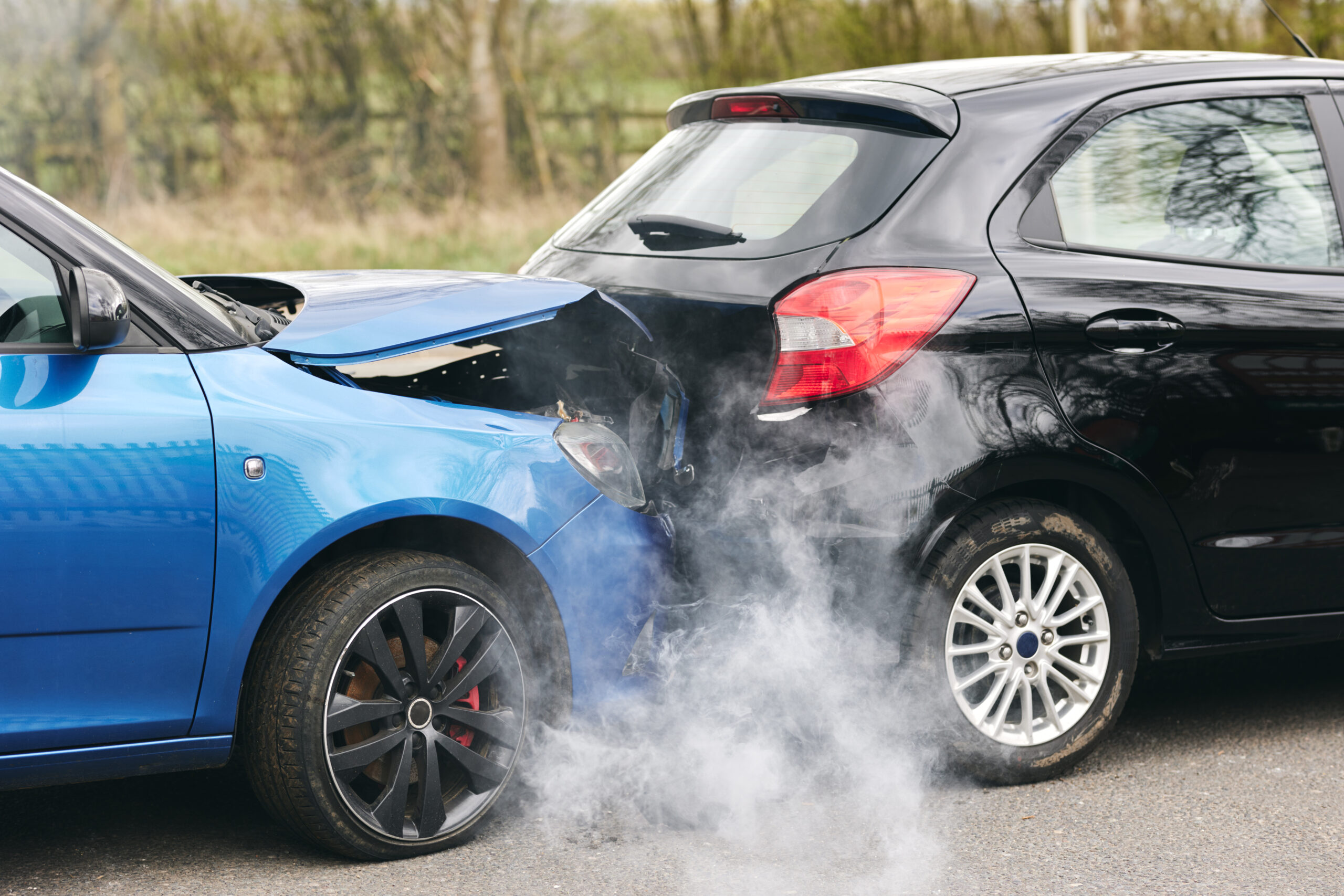
The accident happens in seconds. A sudden impact, the sound of crunching metal, that immediate flood of adrenaline that makes everything feel both sharp and blurry at once. You check yourself. You look at the other vehicle. You try to process what just happened while your hands are still shaking and your brain is trying to catch up.
And in that moment — sometimes — a driver makes a decision that creates far bigger problems than the accident itself.
They leave. Or they stay but never call anyone official. Or both drivers exchange numbers and agree to keep insurance companies and police out of it entirely. All three of these choices can trigger Missouri’s failure to report crash laws — and the consequences that follow are serious in ways that catch drivers completely off guard.
What Most Drivers Get Wrong About Accident Reporting
There’s a widespread assumption that accident reporting is essentially optional for minor crashes. Two adults, calm assessments on both sides, no obvious injuries, a private agreement to sort things out directly — what’s the harm?
The harm is that Missouri’s reporting requirements aren’t optional based on how minor the crash seemed. They’re triggered by objective thresholds — damage amounts, injury presence, vehicle type — that apply regardless of how either driver assessed the situation at the scene. A handshake agreement between two cooperative people doesn’t satisfy Missouri law if the accident met the reporting threshold.
And here’s the thing about those thresholds: they’re lower than most drivers assume. The $500 property damage threshold that triggers the written report requirement is easily met by virtually any modern vehicle collision. A cracked bumper cover, a damaged quarter panel, a broken tail light assembly — individual repair costs for these items routinely exceed $500, sometimes by several times. A driver who looks at a “minor” dent and decides it’s not worth reporting may already be in violation before they’ve even driven away from the scene.
What Missouri Law Actually Requires
RSMo § 577.060 is the governing statute for accident reporting obligations. Understanding it clearly is what prevents the kind of violation that feels like a technicality but produces criminal consequences.
When a crash results in injury or death, the obligations are extensive and non-negotiable. Every involved driver must stop immediately at or near the scene, render reasonable assistance to anyone injured, and provide their name, address, vehicle registration number, and insurance information to the other party and to responding law enforcement. These aren’t sequential steps — they’re simultaneous duties, all required, all legally binding.
Property damage crashes have their own track. When damage appears to exceed $500, Missouri requires the involved drivers to file a written crash report with the Missouri Department of Revenue within 30 days. This is separate from calling police at the scene. Drivers who handle the immediate scene correctly — exchanging information, staying calm, documenting the damage — sometimes still face violation charges because they never filed the required written report afterward.
Accidents involving unattended vehicles carry their own set of obligations. Clipping a parked car in a lot near the Country Club Plaza, backing into someone’s bumper on a residential street — these require leaving written contact information on the damaged vehicle and reporting the incident to local law enforcement. The absence of the other driver doesn’t create a legal exemption. The duty exists whether anyone saw it happen or not.
Why “We Agreed to Handle It Privately” Doesn’t Work
This arrangement feels sensible in the moment. Both drivers are calm. Nobody appears hurt. The damage looks manageable. Everyone wants to move on without the hassle of police reports and insurance involvement. A mutual agreement to resolve it privately seems like a mature, reasonable solution.
The problem is that private agreements are fragile in ways that only become apparent later.
Soft tissue injuries are the most common complication. Whiplash, back strain, neck pain — these injuries frequently don’t register in the immediate aftermath of an accident. The adrenaline of the moment masks symptoms that surface hours or days later. A driver who seemed completely fine at the scene visits a doctor two days after and has medical documentation connecting their condition to the accident. Now the other driver has no police report, no neutral documentation of the scene, no established account of what happened.
Memory shifts too — not through dishonesty, but through the natural way memory works. What both drivers agreed to at the scene can look different a month later when an insurance adjuster or attorney gets involved. The driver without a police report has no documented baseline to point to. Their version of events is unverified and unprotected.
And if the damage turns out to exceed the $500 reporting threshold — which it almost always does in modern vehicle collisions — both drivers who agreed to handle it privately may already be in violation of Missouri law.
The Criminal Consequences Drivers Don’t Anticipate
Failure to report a crash in Missouri is not just a traffic violation. The consequences scale with severity, and the range is significant.
Leaving the scene of a property damage accident — damage over $500, no injuries — is a Class B misdemeanor. Up to six months in jail and fines. Leaving the scene of an injury accident is a Class A misdemeanor: up to a year in jail, larger fines, and a criminal record that follows the driver well beyond their driving history. If someone died, leaving the scene becomes a Class D felony with potential prison time.
These charges don’t just appear on a driving record. They appear on a criminal record — visible in background checks, rental applications, and professional licensing reviews. The distinction between a traffic violation and a criminal conviction matters in contexts that have nothing to do with driving, and it matters for years after the incident.
License consequences run alongside the criminal charges. Serious hit-and-run convictions can result in revocation rather than suspension — requiring a formal reinstatement process, fees, and potentially SR-22 insurance filing before driving privileges return. That process takes time and money on top of everything else.
Civil liability compounds the picture further. When an injured party’s attorney enters the picture, the failure to report becomes evidence of consciousness of guilt — a legal inference that the driver knew they were at fault and left to avoid accountability. That inference influences settlement negotiations and jury decisions in ways that can exceed every other cost associated with the original accident.
A Missouri traffic ticket lawyer at Speeding Ticket KC handles cases where traffic obligations and criminal exposure intersect — which is exactly where failure to report crash charges land. The firm knows how Kansas City prosecutors approach these situations across the severity spectrum, what documentation matters, and what early legal intervention actually changes about the available outcomes.
How Kansas City Investigations Find Unreported Crashes
Drivers who leave an accident scene sometimes operate under the assumption that the situation will stay private. That assumption holds up less often than they expect.
Kansas City’s coverage by home security cameras, business surveillance systems, and traffic monitoring cameras has expanded significantly. A parking lot incident that would have gone unwitnessed a decade ago now gets documented from three angles by cameras the driver didn’t notice. Residential hit-and-runs that felt invisible are solved regularly using Ring camera footage from homes within a block of the incident.
Witnesses who didn’t approach the scene sometimes report later. A neighbor who watched from a window. A pedestrian who noted the plate. A bystander in a vehicle who saw the incident and decided to call it in after the driver left.
When the other party’s injuries develop after the scene clears — and they often do — their medical care creates a paper trail. Their insurance carrier gets involved. Their attorney sends a demand letter. An investigation opens. What seemed private at the scene becomes the subject of professional inquiry that Kansas City law enforcement responds to thoroughly.
Questions Kansas City Drivers Ask About Failure to Report Charges
1. Can I still report the accident after I’ve already left the scene?
Yes — and doing so promptly is strongly advisable if you’ve realized the problem. Voluntary reporting after the fact demonstrates good faith and gives an attorney meaningful material to work with in negotiations. The delay doesn’t eliminate the original failure, but it substantially changes the argument available in court. The longer you wait after recognizing the issue, the harder the good-faith argument becomes. If you’ve already left a scene and recognized the legal exposure, contact Speeding Ticket KC before making statements to police or the other party — the sequence of how you respond matters.
2. What if the other driver told me we didn’t need to call anyone?
The other driver’s preference doesn’t change your legal obligations. Both drivers have independent duties under Missouri law, and those duties apply regardless of what the other party agreed to at the scene. Their statement is relevant as context for mitigation — it helps explain why you made the choice you made — but it doesn’t constitute a legal defense to a failure-to-report charge. Document what was said, by whom, and what the circumstances were at the scene. That documentation gives your attorney something to work with.
3. How does anyone find out if neither driver reported and nothing seemed serious?
Multiple ways, and usually faster than drivers expect. The other party may report independently — particularly if symptoms develop later. Law enforcement may investigate based on camera footage or witness accounts that neither driver knew about. The injured party’s attorney may notify insurance carriers when pursuing a claim. Assuming the situation stayed contained is rarely a safe assumption in a city as camera-covered as Kansas City has become.
4. What’s the difference between a hit-and-run and just not filing a report?
They’re separate violations with different severity levels. Leaving an injury or death scene without stopping, rendering aid, and providing information is the most serious form — Class A misdemeanor or felony territory. Failing to file the required written report for property damage over $500 is a separate, less severe violation. Both can result in charges. An attorney reviewing the specific circumstances of your situation can identify exactly which obligations applied and whether they were met.
5. What does Speeding Ticket KC do for drivers in this situation?
The firm reviews the specific circumstances — what happened at the scene, what was done or not done, what evidence exists, and what reporting occurred. From there, they identify what charges are actually at issue, what the realistic range of outcomes looks like, and how to respond in a way that doesn’t inadvertently make the situation worse. For drivers who’ve already left a scene, guidance on what to do next — and what not to say without counsel — is often the most immediately valuable service. Early contact produces the most options.
Endlines
Accidents compress decisions into moments. What gets decided in those moments — about stopping, reporting, staying — carries legal weight that outlasts the incident itself. Knowing the obligations clearly is the best position to be in before something happens. Knowing your options clearly is what matters when it already has.