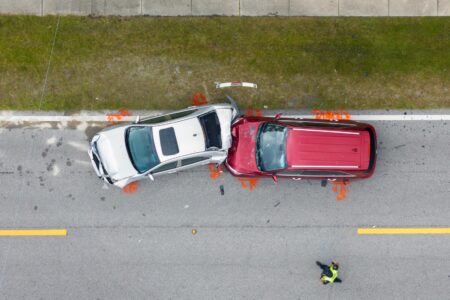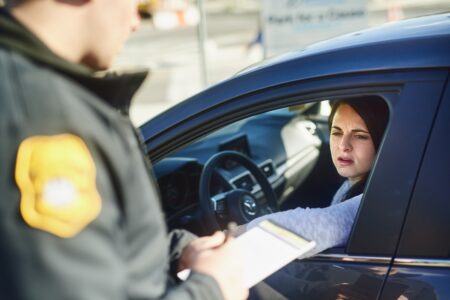

Parking lot accidents feel minor compared to highway crashes. Low speeds, no real danger — that’s how most people think about them. But backing accidents in Kansas City parking lots generate citations, insurance claims, and legal disputes that drag on far longer than the few seconds the incident actually took. And the person who was reversing almost always ends up holding most of the liability.
Understanding why — and what your options are when it happens — changes how you respond.
Why Parking Lots Are Actually Dangerous
Parking lots are chaotic in ways that highways aren’t. Multiple vehicles moving in multiple directions at low speeds, pedestrians appearing from between parked cars, shopping carts drifting into lanes, children running ahead of parents — the variables are constant and unpredictable.
When someone backs out of a parking space, they’re operating in one of the most complex traffic environments there is. Your field of vision is limited. Backup cameras help but don’t catch everything. Other drivers approaching from either direction may not realize you’re moving until you’re already in their path. A driver focused entirely on the gap to the left can miss a cyclist or pedestrian coming from the right. This is exactly why these accidents happen so consistently — and why the law places the burden squarely on the reversing driver.
What Missouri Law Says About Backing
Missouri law under RSMo § 304.019 requires that a driver not reverse a vehicle unless the movement can be made safely. The obligation to verify clearance before moving backward belongs to the driver — not the backup camera, not the parking sensors, not the other drivers nearby.
You cannot back into a crosswalk or intersection. You cannot reverse in a way that interferes with other traffic. The standard is safety — actual verified safety, not assumed safety based on a quick mirror check. Courts apply that standard directly when evaluating what happened in a backing incident.
That’s a higher bar than most people realize when they’re operating on habit in a familiar parking lot.
How Liability Gets Assigned in These Cases
Here’s the reality that surprises most drivers. In a parking lot backing accident, fault defaults to the reversing driver in most situations. The legal reasoning is consistent — you initiated the movement, you had the obligation to verify the path was clear, and the other party had no reasonable expectation that a vehicle was about to reverse into their path.
That presumption isn’t absolute. Missouri applies comparative fault principles. If the approaching driver was moving through the lot at an unsafe speed, driving against posted directional arrows, or otherwise operating unlawfully, that shifts some responsibility onto them. But the reversing driver typically starts the analysis from a weaker position, and moving that needle requires actual evidence — dashcam footage, witness accounts, the physical layout of the lot — not just a competing version of events.
Insurance adjusters apply this logic immediately. Fault determinations in parking lot accidents shape claim payouts, affect your rates at renewal, and can follow you across multiple policy terms if they compound with prior violations.
If someone was injured in the incident — a pedestrian, another driver — civil liability opens up alongside any traffic citation. That’s a fundamentally different situation from a fender bender with no injuries, and it needs to be handled accordingly.
A Missouri traffic ticket lawyer can help you understand exactly what you’re dealing with before you make any decisions about how to respond.
How Speeding Ticket KC Handles These Cases
Speeding Ticket KC is a well-known law firm in Kansas City, Missouri. They handle traffic violations and related defense matters — including parking lot backing citations and the insurance and accident claims that sometimes follow them.
Their attorneys go through each case on its own facts. What exactly was cited? What did the officer document? Is there a lot of camera footage, dashcam video, or witness accounts that challenge the official version? What realistic outcomes exist — reduction, dismissal, or a negotiated result that limits long-term damage to your record? No generic responses. Each case gets an honest read based on what the evidence actually shows.
Questions People Actually Ask
Is the backing driver always at fault in a parking lot accident?
Almost always — but the presumption can be challenged. The reversing driver carries the legal obligation to verify the path is clear before moving. That presumption shifts when the other party was speeding through the lot, driving against the posted directional flow, or doing something else unlawful. Missouri’s comparative fault framework allows responsibility to be shared. But the backing driver typically starts the analysis at a disadvantage, and changing that requires concrete evidence rather than just a different account of events.
Does my backup camera change my legal responsibility?
No. Technology doesn’t transfer your legal duty to the vehicle manufacturer. The obligation to verify clearance before reversing belongs to the driver. A backup camera that failed to detect something explains how the accident happened — it doesn’t eliminate your liability for the outcome. That explanation can be a relevant factor in how the case gets evaluated, particularly if the obstruction was genuinely outside the camera’s detection range. A lawyer can assess whether that argument applies to your specific situation.
Do I have to report a minor parking lot accident in Missouri?
If property damage occurred — even minor damage to another vehicle or structure — Missouri law generally requires you to stop and make a reasonable effort to notify the other party or report the incident. Leaving without doing so creates a separate legal problem layered on top of the original one. When in doubt, document the scene thoroughly and report it. That protects you far better than hoping nothing surfaces later.
Can I fight the citation from a parking lot backing accident?
Yes. A lot of camera footage and dashcam video sometimes tell a completely different story from what the officer documented. Witness accounts, the physical geometry of where the backing occurred, the positions of surrounding vehicles, and posted directional signage all feed into whether the citation holds up. Even when dismissal isn’t realistic, reducing the charge to a non-moving violation removes the points entirely, which changes the insurance implications considerably.
How does a parking lot backing accident affect my insurance?
An at-fault backing accident gives your insurer grounds to raise your rates at renewal. Combined with a moving violation citation, the impact compounds across multiple policy terms. That accumulated increase regularly exceeds the original fine and deductible combined. Running that math before deciding whether to fight the citation — rather than just paying it — is worth doing, especially if you’re already carrying prior violations on your record.