Most drivers don’t think of themselves as tailgaters. The word conjures a specific image — an aggressive driver right on your bumper, flashing lights, clearly trying to intimidate. That’s not who most people picture when they look in the mirror. They’re just keeping up with traffic. Staying close enough to prevent someone from cutting in. Moving with the flow of the highway, the way everyone around them is doing.
And then an officer watching from an overpass or a median writes a following too closely citation — and suddenly that normal driving behavior has a ticket attached to it.
Tailgating violations in Missouri cover a wider range of following behavior than most drivers realize. And they carry consequences that compound in ways people consistently underestimate when they’re deciding whether to just pay the fine and move on.
What Missouri’s Following Too Closely Law Actually Says
More nuanced than a fixed distance rule — and that nuance matters.
Missouri Revised Statutes § 304.017 requires drivers to maintain a following distance that is reasonable and prudent given the current speed, traffic density, and road conditions. Missouri doesn’t mandate a specific number of car lengths or a fixed time gap, the way some states do. The standard is what a reasonable driver would maintain given everything that’s actually happening around them at that moment.
This flexibility sounds like it protects drivers — and in some ways it does. But it also means an officer who judges your following distance unreasonably close, given the conditions, has grounds to write the citation, even if you were maintaining a gap that felt completely adequate from inside your vehicle. Your subjective comfort level with the distance isn’t the legal standard. The objective reasonableness of that distance, given speed, weather, and traffic, is.
The Situations That Generate These Citations Most Consistently
Some driving contexts produce tailgating citations far more regularly than others.
Highway driving during heavy traffic is the primary source. Kansas City’s I-70 corridor and the interchanges around downtown create dense traffic situations where vehicles maintain minimal gaps at highway speeds. The gap that feels adequate at 65 mph when you’re inside the vehicle looks very different from an overpass observation position, where an officer can clearly see the spacing between vehicles. Officers positioned on overpasses and medians observe these situations specifically during peak traffic hours and write these citations with real regularity.
Aggressive tailgating during road disputes generates another significant category. A driver who intentionally follows closely after a perceived slight — someone who cut them off, someone driving too slowly in the passing lane — creates the kind of observable following distance that officers cite readily. The citation addresses the conduct, not the motivation.
Winter driving conditions compound this problem significantly. Ice and snow dramatically extend stopping distances — a well-understood fact that most Kansas City drivers apply less fully than conditions actually require. A gap that’s reasonable on dry pavement becomes legally insufficient when road surfaces have fundamentally changed the physics of stopping. Maintaining normal following distances through winter conditions creates citation exposure that most drivers don’t fully appreciate.
What This Ticket Actually Costs You
Here’s the thing about tailgating citations that most people miss when they’re deciding whether to just pay the fine.
Missouri adds points for following too closely violations. Those points stay active for three years, count toward suspension thresholds, and appear on the records insurance companies check at renewal. Premium adjustments from a moving violation conviction compound over the following policy periods. The cumulative insurance cost over three years from a single tailgating citation regularly exceeds the original fine by a meaningful margin, which is the math most people skip when they’re standing at the mailbox.
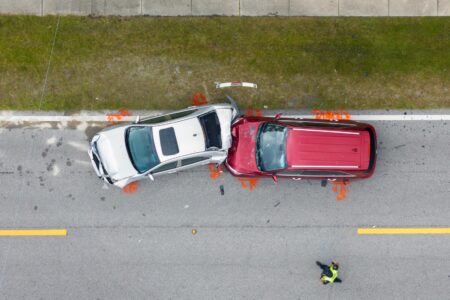
When a tailgating violation is connected to an accident — which it frequently is, since this violation often surfaces specifically because a rear-end collision occurred — the citation creates documentation of fault that affects both traffic court proceedings and the insurance claim simultaneously. The two situations are connected, and handling one without understanding how it affects the other consistently produces worse outcomes.
For commercial drivers, following too closely violations carry additional weight. Enhanced following distance requirements apply to commercial vehicles under federal regulations, and a tailgating citation in a commercial vehicle creates CDL record implications that exceed those for a regular driver in the same situation.
Where Defense Options Actually Live
Tailgating citations feel like clear-cut situations when you’re holding one. They often have more room than that first impression suggests.
The officer’s determination of what constituted an unreasonable following distance is an assessment from one position at one moment. What that gap actually looked like from the driver’s perspective — given the speed of traffic, the predictability of the vehicle ahead, road conditions, and the specific traffic dynamics present — shapes whether the cited conduct actually fell below the reasonable and prudent threshold the statute requires.
Whether traffic ahead was moving consistently or braking unpredictably affects what a reasonable following distance looks like. Whether road conditions were accurately characterized in the citation matters. Whether the observation captured an instantaneous gap during a lane merge rather than a sustained following pattern is a factual question worth examining.
A Missouri traffic ticket lawyer who handles these violations regularly understands where tailgating citations have defensible space and how to build an argument around the specific circumstances. Speeding Ticket KC works with Kansas City drivers on following too closely citations consistently, and brings the local court knowledge that shapes actual outcomes. Getting that perspective before any decisions get made changes what options remain available.
Questions Drivers Ask About Tailgating Tickets
Is there a specific distance requirement for following in Missouri?
No — Missouri uses a reasonable and prudent standard rather than a fixed number. The required following distance depends on current speed, traffic density, and road conditions. A gap that’s legally adequate at 30 mph in clear weather may be insufficient at 65 mph in rain. The standard is objective reasonableness given the full picture of conditions present — not a number you can memorize and apply uniformly across all driving situations.
Can I be cited even if I wasn’t in an accident?
Yes — and this is the part that surprises drivers most. An officer who observes a following distance they judge unreasonably close can write the citation from pure observation, without any accident occurring. The violation is the inadequate gap itself, not the outcome. Officers positioned on Kansas City highway corridors write these citations regularly from observation positions where the following distances are clearly visible.
How many points does a tailgating citation add to my Missouri license?
Most violations that follow too closely add two to three points, depending on classification. Those points stay active for three years and count toward suspension thresholds — eight within eighteen months triggers a suspension. Two or three points feel manageable until you factor in what’s already on your record. The cumulative picture is what matters, and it’s worth understanding that picture clearly before you decide how to respond.
If I were involved in a rear-end accident, how would the citation affect the insurance claim?
Directly and significantly. A following too closely citation creates documentation of fault that insurance adjusters reference when processing any connected claim. How that documentation gets used affects both the claim resolution and your premium trajectory going forward. Addressing the citation and the insurance claim with awareness of how they interact — rather than treating them as separate problems — consistently produces better outcomes.
Is getting legal help worth it for a tailgating ticket?
For a single citation with a clean record and no accident, it depends on the specific circumstances. But for anyone with prior violations, anyone connected to an accident through the same citation, anyone whose insurance situation makes additional points a real concern, or commercial drivers — yes, legal guidance makes a measurable difference. Speeding Ticket KC helps Kansas City drivers understand exactly what their specific citation means before making any decisions. That clarity at the start consistently produces better outcomes than paying first and dealing with the full consequences afterward.