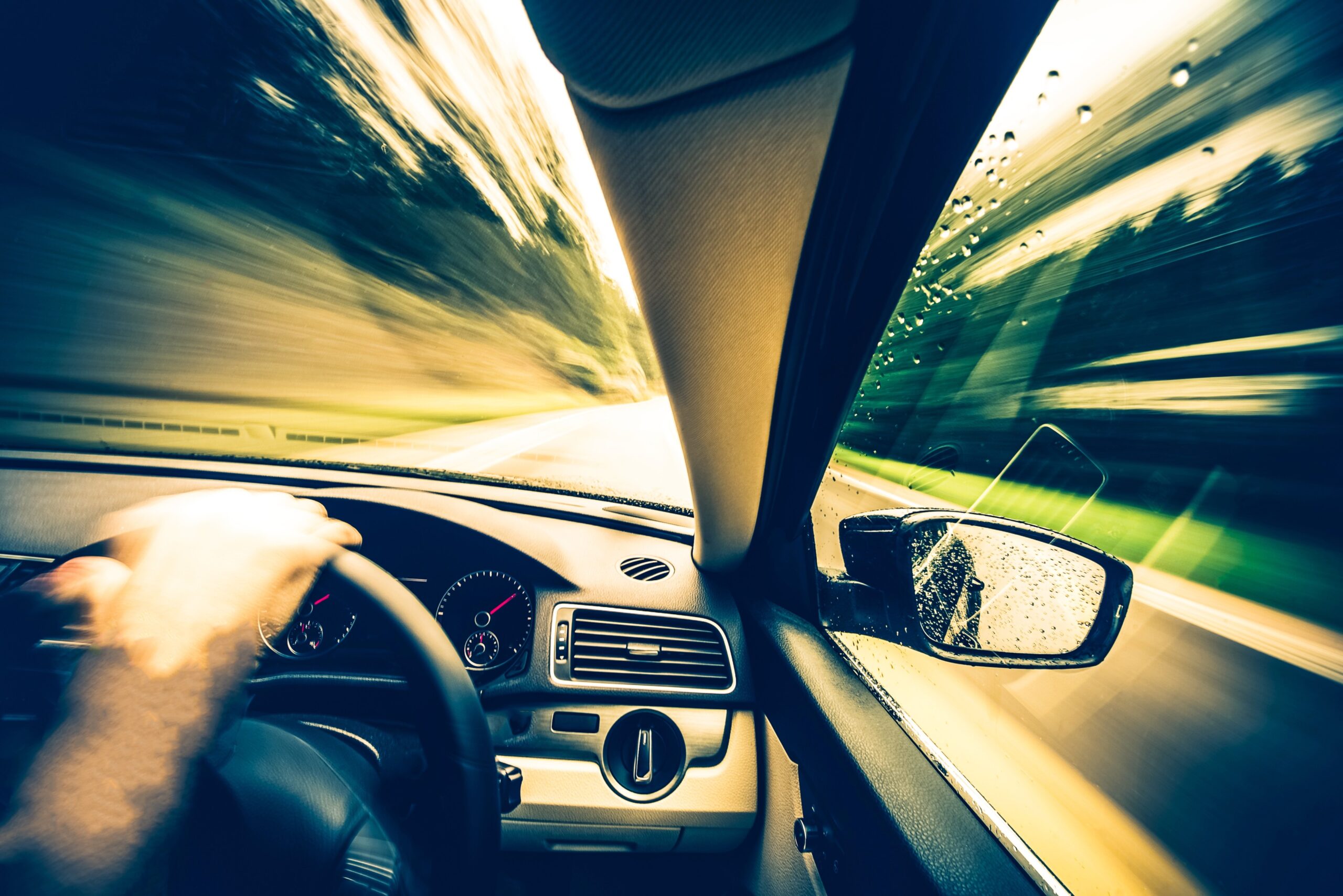
Rush hour on I-435. Someone cuts you off without signaling. You feel a flash of frustration, maybe your foot gets a little heavier, maybe you close the gap a bit more than usual. It happens to almost every driver at some point — that moment where the road feels like it’s working against you and your response gets sharper than it should.
Most of the time, nothing comes of it. But sometimes an officer is watching. And what felt like a normal human reaction to a frustrating traffic situation can become a citation for aggressive driving.
Understanding what Missouri law actually treats as aggressive driving — and what consequences follow — is worth knowing before you’re in the situation where it matters.
Aggressive Driving Isn’t Exactly What Most People Picture
When most people hear “aggressive driving,” they picture obvious road rage — someone screaming out the window, deliberately ramming another car, blocking vehicles intentionally. Those extreme scenarios definitely qualify. But Missouri’s enforcement of aggressive driving covers a much wider range of behavior, and that’s where drivers get surprised.
Missouri doesn’t have one statute expressly named “aggressive driving” like some states have. What Kansas City officers and prosecutors work with is a combination of existing statutes—reckless driving under RSMo § 304.012, following too closely, unsafe lane changes, speeding, and tailgating—applied to a pattern of behavior that suggests a driver is operating with disregard for the safety of others.
That pattern element is important. A single aggressive maneuver might produce one citation. But a series of related driving behaviors documented together — following closely, changing lanes without adequate clearance, exceeding the speed limit, cutting off other vehicles — can be characterized collectively as a pattern that supports enhanced charges. Officers trained to recognize aggressive driving look for the pattern, not just the individual violation.
The Behaviors That Actually Trigger These Citations in Kansas City
Let me be specific about what officers are watching for, because “aggressive driving” as a concept is vague, but the behaviors that produce citations are concrete.
Tailgating is the most commonly observed behavior. Missouri law requires following distance that allows adequate stopping time given the speed and conditions. A driver who follows the car ahead at one car length while doing 60 mph on I-70 is creating real stopping distance problems — and officers who observe this, particularly when combined with other behaviors, document it.
Unsafe lane changes — cutting across multiple lanes without signaling, forcing other drivers to brake, making lane changes with inadequate clearance — are another significant category. Kansas City’s highway interchanges around I-70, I-35, and I-435 create frequent lane change situations, and aggressive lane behavior is observable and documentable.
Excessive speed combined with weaving is a particularly clear pattern. A driver who’s speeding AND making repeated lane changes without adequate clearance is doing two things simultaneously that together paint a clear aggressive driving picture.
Running red lights or stop signs at speed — not rolling stops, but full-speed entries into intersections — can be part of an aggressive driving characterization when combined with other behavior. The question officers are asking is whether this driver is showing a pattern of disregard for traffic controls and other road users.
Brake-checking — deliberately braking suddenly to create a threat to the vehicle following closely — is one of the more clearly aggressive behaviors and has resulted in assault charges in serious cases. Even without that escalation, it’s a documentable act of deliberate danger creation.
Where Kansas City Aggressive Driving Incidents Cluster
Kansas City has specific zones where aggressive driving incidents and citations are more common, and understanding the pattern helps with both awareness and with building context for defense.
Highway corridor disputes produce the highest concentration. The stretch of I-70 running through the metro, the I-435 loop, and US-71 heading south toward Grandview see the most reported aggressive driving incidents. Multiple lanes, high speed, merging traffic, and the particular frustration of highway commuting create conditions where behavior escalates.
Downtown Kansas City during peak event periods generates a separate category. Chiefs game days, Royals games, major concerts at T-Mobile Center — the combination of unfamiliar drivers, congested conditions, and time pressure creates situations where patience runs short and driving behavior changes.
Construction zones throughout the metro are another common site. Lane narrowing, speed reductions, unexpected merge requirements, and general disruption to normal driving patterns tend to bring out heightened frustration in some drivers.
What an Aggressive Driving Citation Actually Costs
The consequences depend significantly on what specific violations get cited and how the overall pattern gets characterized.
At the most basic level, aggressive driving citations that produce individual moving violations — reckless driving, following too closely, unsafe lane changes — carry points that accumulate toward Missouri’s eight-point suspension threshold within 18 months. Reckless driving is a Class B misdemeanor, which means it produces a criminal record entry, not just a driving record entry. That distinction matters enormously for employment, housing, and professional licensing purposes.
Multiple violations from a single aggressive driving incident stack in both point impact and in how prosecutors characterize the overall conduct. A driver cited for both following too closely and an unsafe lane change from the same incident has two separate violations contributing to the point total.
Insurance responds to moving violation convictions at renewal. Aggressive driving characterizations — particularly reckless driving convictions — produce more significant premium adjustments than ordinary moving violations because they signal a specific type of risk behavior to underwriters.
A Missouri traffic ticket lawyer at Speeding Ticket KC reviews aggressive driving citations before any payment or plea decisions get made. The firm handles traffic violations across Kansas City’s municipal and county courts and understands how these pattern-based violations get characterized by local prosecutors — which is different from how a single-incident speeding ticket gets handled. Local knowledge of how Kansas City courts approach these cases shapes what outcomes are realistically achievable.
Questions: Kansas City Drivers Ask About Aggressive Driving Charges
1. Can multiple violations from one incident really be cited together?
Yes — and when they are, they interact in ways that compound both the point impact and the overall characterization. An officer who observed a pattern of behavior has the discretion to document multiple violations from the same driving episode. Each citation is a separate charge with its own point value and its own fine, but they also collectively support a more serious overall characterization of the driving conduct. An attorney who reviews all citations together — rather than each one in isolation — can assess the combined picture and what the most effective defense or negotiation strategy looks like.
2. What’s the difference between aggressive driving and reckless driving legally?
Reckless driving is a specific statutory charge under RSMo § 304.012 — it’s a Class B misdemeanor that produces a criminal record entry. Aggressive driving is typically a pattern description rather than a single statutory label in Missouri, and officers may charge the component violations (reckless driving, tailgating, unsafe lane changes) rather than a single “aggressive driving” charge. When reckless driving is among the charges, the criminal record implications make legal representation essential, not optional.
3. What if I was reacting to another driver’s behavior?
This is context that matters in negotiations, but it’s not a complete defense. Officers document what they observe — the responding driver’s behavior — not necessarily what prompted it. If another driver’s conduct forced a dangerous reaction, that context is worth presenting, but it needs to be supported by some documentation or corroborating account. An attorney can assess how much weight that context carries in the specific charges you’re facing and how to present it effectively to the prosecutor.
4. Can aggressive driving charges be reduced to non-moving violations?
For the component moving violations — tailgating, unsafe lane changes — reduction to non-moving violations is achievable in appropriate circumstances through negotiation. For reckless driving specifically, the misdemeanor classification means the resolution process is different and the stakes of any conviction are higher. Speeding Ticket KC assesses the specific charges, the specific facts, and what outcomes are realistically available through challenge or negotiation before advising on how to proceed.
5. How quickly do I need to act after receiving these citations?
Immediately. Aggressive driving citations — particularly when reckless driving is involved — move through the court system on timelines that don’t accommodate extended deliberation. Evidence is most accessible now. Early legal contact is consistently what produces the most options and the best outcomes. Speeding Ticket KC recommends reaching out within days of receiving any aggressive driving or reckless driving citation, not weeks. The window for the most effective response is widest right after the incident, and it narrows with every passing day.
Endnote
Aggressive driving charges arrive with more complexity than a simple speeding ticket, and they carry consequences that can outlast the incident itself by years — in insurance costs, in criminal record entries, and in license point accumulation. Understanding what you’re actually facing, and getting legal help before any decisions become permanent, is what changes how these charges ultimately resolve.