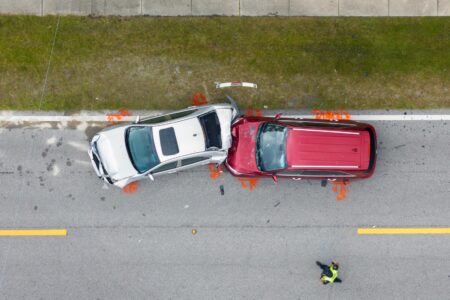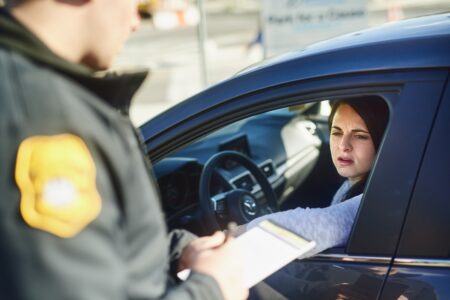
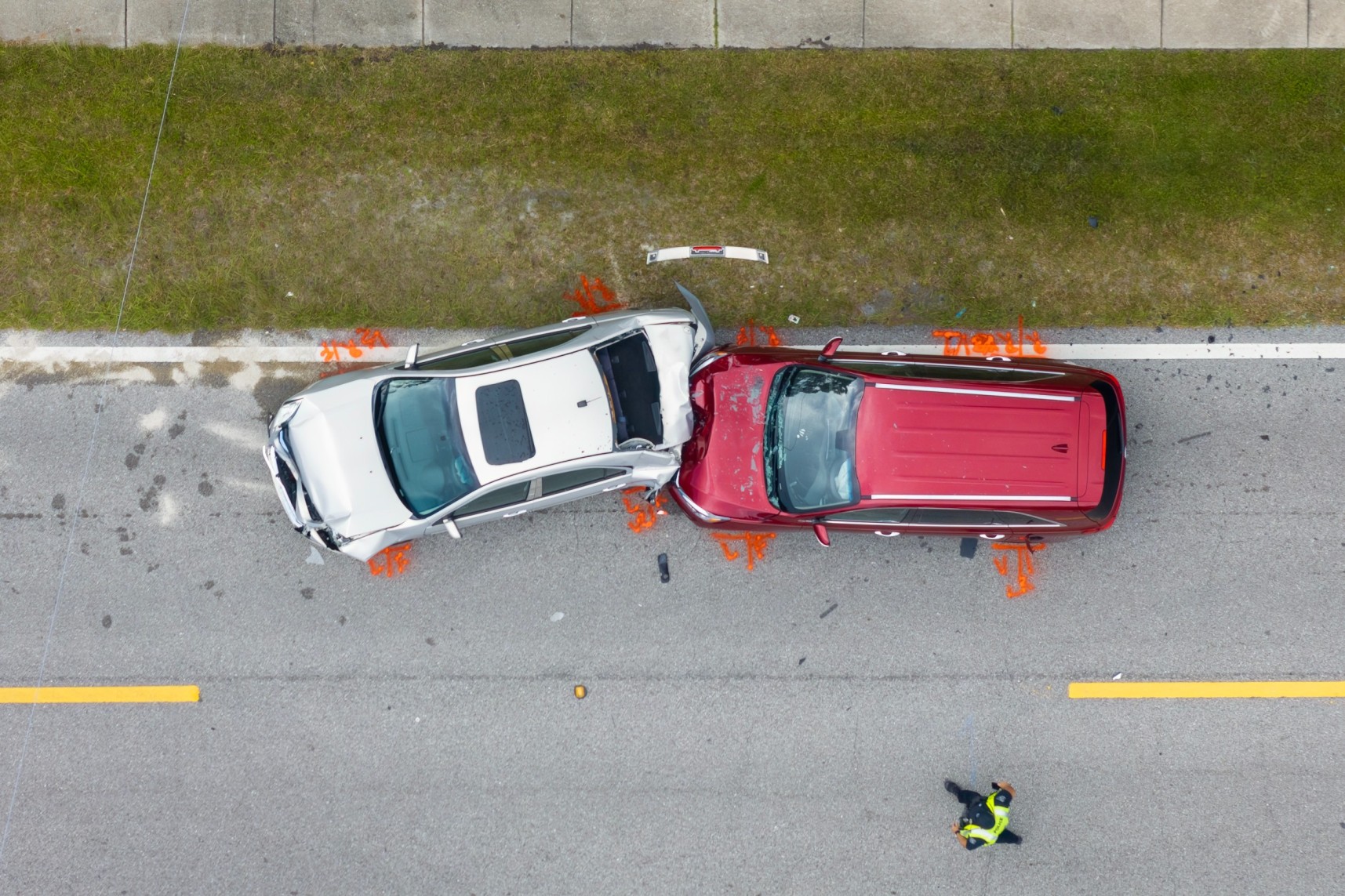
The accident happens. The immediate shock settles into something more like panic. There’s damage, maybe an injury, and a voice in the back of your head calculating what happens next — the insurance call, the police report, the questions you might not want to answer. For a moment, the idea of just driving away feels like it might make the whole thing simpler.
Some drivers act on that impulse. Some start to and then stop. And some drive away without fully understanding what they’ve just done.
“Attempted leaving the scene” might sound like a lesser charge than an outright hit-and-run — and in some ways it is. But it still carries serious legal consequences that catch drivers off guard, particularly because the line between hesitation and violation isn’t always where people expect it to be.
What “Attempted” Actually Means in This Context
Let me explain this carefully, because it’s more nuanced than it sounds. Missouri’s hit-and-run statutes under RSMo § 577.060 address leaving the scene of an accident involving injury, death, or property damage. The standard charge involves a driver who leaves — who actually departs the scene without fulfilling their legal obligations. An “attempted” version of this charge arises when a driver begins the process of leaving and is either stopped before completing the departure or turns back before fully clearing the scene.
Think of it like this: a driver who starts their engine and pulls away from an accident scene — even if they only move ten feet before stopping — may have already initiated conduct that supports an attempted leaving charge. The intent to flee, demonstrated by the action of beginning to leave, is what matters to prosecutors and officers. A complete departure isn’t always required.
This surprises people who assumed that turning back, staying nearby, or stopping almost immediately would eliminate legal exposure. In some circumstances, it reduces it. In others, it doesn’t eliminate it at all.
Why the Distinction Between “Attempted” and Completed Matters
Charging decisions in Missouri depend significantly on what actually happened and what evidence exists.
A driver who fully left an injury scene, drove several miles away, and was apprehended later faces charges under the completed hit-and-run statute. Leaving the scene of an injury accident is a Class A misdemeanor — up to a year in jail and significant fines. Death cases escalate to felony territory.
A driver who began to leave — moved the vehicle, pulled forward, started to drive away — and then returned before leaving the immediate area may face an attempted charge rather than the completed offense. The specific facts determine the specific charge, and the specific charge determines the penalty range.
Here’s the complicating factor: attempted charges don’t feel as serious as completed ones, so drivers sometimes underestimate them. An attempted leaving charge in Missouri can still produce misdemeanor-level consequences. It goes on a criminal record. It affects license points. It appears in background checks. The reduced severity compared to a completed hit-and-run doesn’t mean the consequences are minor.
And the distinction between what counts as “attempted” versus “completed” isn’t always as clear as it might seem to the driver. What felt like briefly pulling forward before deciding to stay may look different from an officer’s perspective — or from footage captured by a nearby camera.
The Kansas City Context That Makes This More Complicated
Kansas City’s surveillance infrastructure has changed what officers can document at accident scenes. Home security cameras, business monitoring systems, and traffic cameras throughout the metro capture incidents in ways that weren’t possible a decade ago.
A driver who pulled away from a parking lot fender-bender, moved three spaces over, and then walked back to the scene may have been captured on a security camera showing the vehicle’s initial departure. That footage can form the basis of an attempted leaving charge even when the driver ultimately did the right thing and stayed. The initial movement, documented on video, matters.
This creates situations where drivers who genuinely believed they were handling the situation correctly find themselves facing charges tied to those initial seconds of movement. It’s not fair in the way most people use that word — but it reflects how Missouri law and Kansas City enforcement interact with modern documentation capabilities.
Officers who respond to accident scenes routinely check for nearby cameras before making charging decisions. What a driver believes went unobserved is frequently less unobserved than they think.
The Legal Consequences That Actually Follow
A misdemeanor-level attempted leaving charge produces consequences that drivers consistently underestimate.
Criminal record. Not a driving record — a criminal record. Visible in background checks for years. Relevant to employment, housing, and professional licensing in ways that outlast the incident significantly.
License points accumulate alongside criminal charges. Missouri’s eight-point suspension threshold within 18 months applies here as it does elsewhere. Significant point additions from an attempted leaving charge can push a driver toward suspension faster than they expected — particularly if any other recent violations are already on the record.
Civil liability runs on a completely separate track. An injured party’s attorney doesn’t need a criminal conviction to pursue a civil claim — and an attempted leaving, even if ultimately returned from, can be characterized as evidence of awareness of fault. That characterization influences settlement negotiations and jury decisions in ways that can be significantly more financially consequential than the criminal charge itself.
Insurance companies respond to these charges at renewal. A criminal conviction related to an accident departure is a serious risk signal that produces meaningful premium adjustments — sustained across multiple renewal periods.
A Missouri traffic ticket lawyer at Speeding Ticket KC handles cases exactly where traffic incidents and criminal exposure intersect. This is precisely that territory. The firm knows how Kansas City prosecutors approach attempted leaving charges, what the realistic range of outcomes looks like depending on circumstances, and what early legal contact actually changes about the options available. For situations this complicated, early contact isn’t optional — it’s the decision that preserves the most choices.
What Makes These Cases Defensible
Not every attempted leaving charge reflects what it appears to reflect, and the cases are more defensible than drivers initially assume.
The state of mind question matters. Did the driver intend to leave, or were they doing something else — moving to a safer position off the travel lane, pulling forward to clear traffic, repositioning to allow emergency vehicles through? These are genuine distinctions that affect both the charge and the available defense.
Camera footage cuts both ways. Yes, it can document a departure. It can also document that the driver returned promptly, that they stayed within the immediate area, or that their movement was consistent with repositioning rather than fleeing. An attorney who reviews what footage actually shows — rather than accepting the prosecution’s characterization of it — often finds the picture is more nuanced than the charge suggests.
The timeline of the incident matters. How quickly did the driver return? How far did they move? What did they do upon returning? These details affect both the charge characterization and the available mitigation.
First-time offenders with clean records consistently have more options than they expect. Prosecutors have discretion in how they pursue these cases, and the specific circumstances of the incident shape how that discretion gets applied.
Questions: Kansas City Drivers Ask After This Charge
1. I started to drive away but came back immediately. Does that matter?
Yes — significantly. Immediate return is one of the strongest mitigating factors available in these cases. Courts and prosecutors distinguish between a driver who left and was apprehended miles away versus one who moved briefly and returned within minutes. The timeline, distance traveled, and what the driver did upon returning all factor into how prosecutors characterize the conduct and what outcomes they’re willing to discuss. Document exactly what happened — when you moved, how far, when you returned, and what you did after returning. Specifics build arguments.
2. What if I genuinely didn’t realize there was an accident?
Genuine lack of awareness is a real defense in some cases — particularly for incidents involving minor contact at low speed where the driver truly didn’t register that impact occurred. The challenge is credibility: courts assess whether the claim of non-awareness is consistent with the specific circumstances. Evidence that supports it — the nature of the contact, the driver’s route, witness accounts, vehicle damage patterns — strengthens the argument. An attorney who reviews the specifics can assess whether this defense is viable in your particular situation.
3. Can camera footage help me even if it also shows me starting to leave?
Often, yes. Camera footage that shows a brief movement followed by immediate return can actually support the defense narrative more effectively than relying solely on witness accounts. Footage that establishes the timeline, the distance moved, and the prompt return gives an attorney concrete material to work with. The footage tells a story — and an attorney who understands how to present that story in a Kansas City courtroom can significantly affect the outcome.
4. What’s the difference between this and a completed hit-and-run charge?
Primarily severity and what the prosecution must establish. A completed hit-and-run requires proving the driver left the scene without fulfilling legal duties. An attempted charge involves proving the driver began that process. The completed version typically produces more serious charges and penalties. The attempted version still produces criminal exposure but with more room to argue about intent, circumstances, and outcome. Speeding Ticket KC can assess which characterization fits your specific situation and what defense options each creates.
5. How quickly do I need to get legal help after this charge?
Immediately. These charges move through the system on timelines that don’t accommodate extended deliberation. Evidence is freshest now. Camera footage may only be retained for limited periods before being overwritten. Witness memories are most accurate immediately after an incident. And the decisions made in the early stages of a criminal case — about what to say, what not to say, how to respond — affect what options exist later. Speeding Ticket KC recommends reaching out the same day or within 24 hours of any charge involving accident scene departure. Early contact is consistently what produces the most options.
Final Words
Attempted leaving the scene charges land in uncomfortable territory — legally serious enough to require a real response, but close enough to ambiguity that the outcome isn’t predetermined. Understanding what you’re actually facing, and acting on that understanding before the situation develops further, is what determines how this ends up affecting your record, your license, and your life beyond the incident itself.