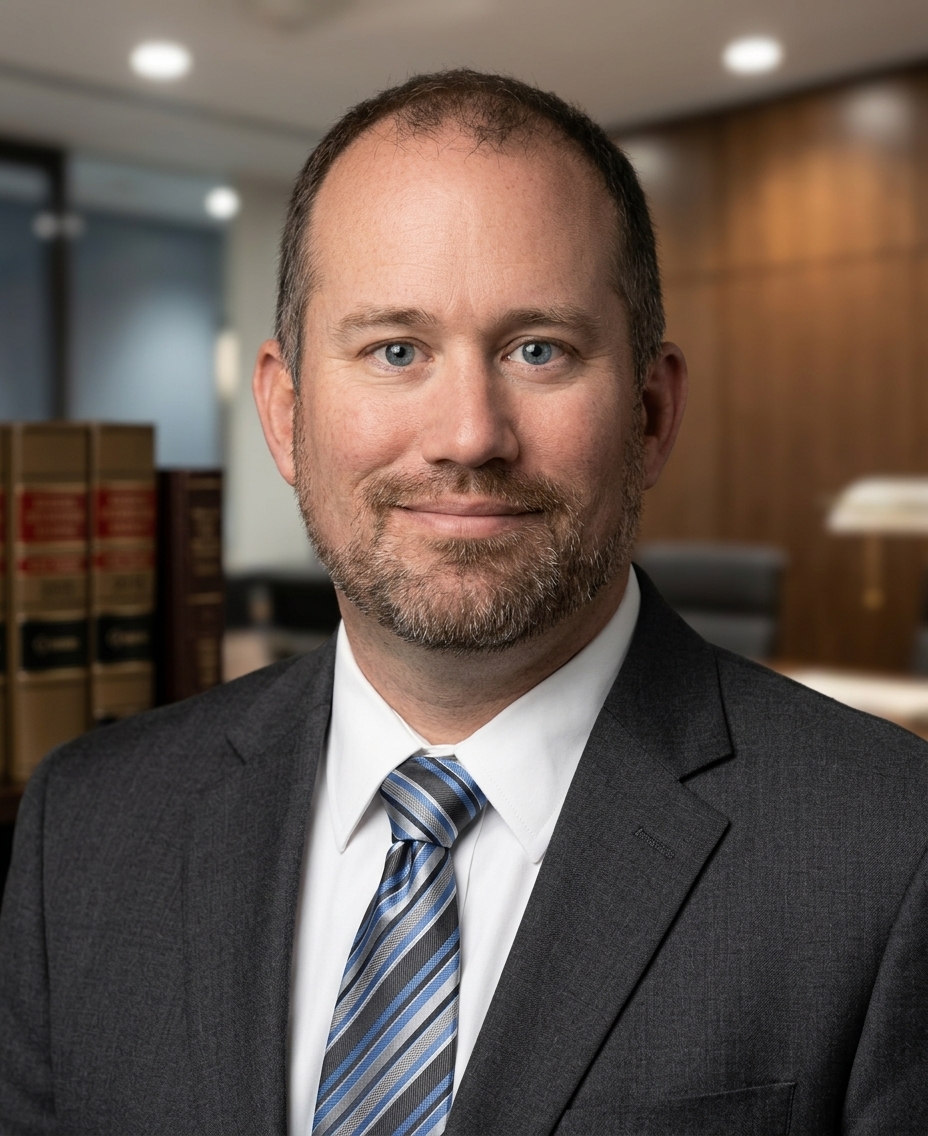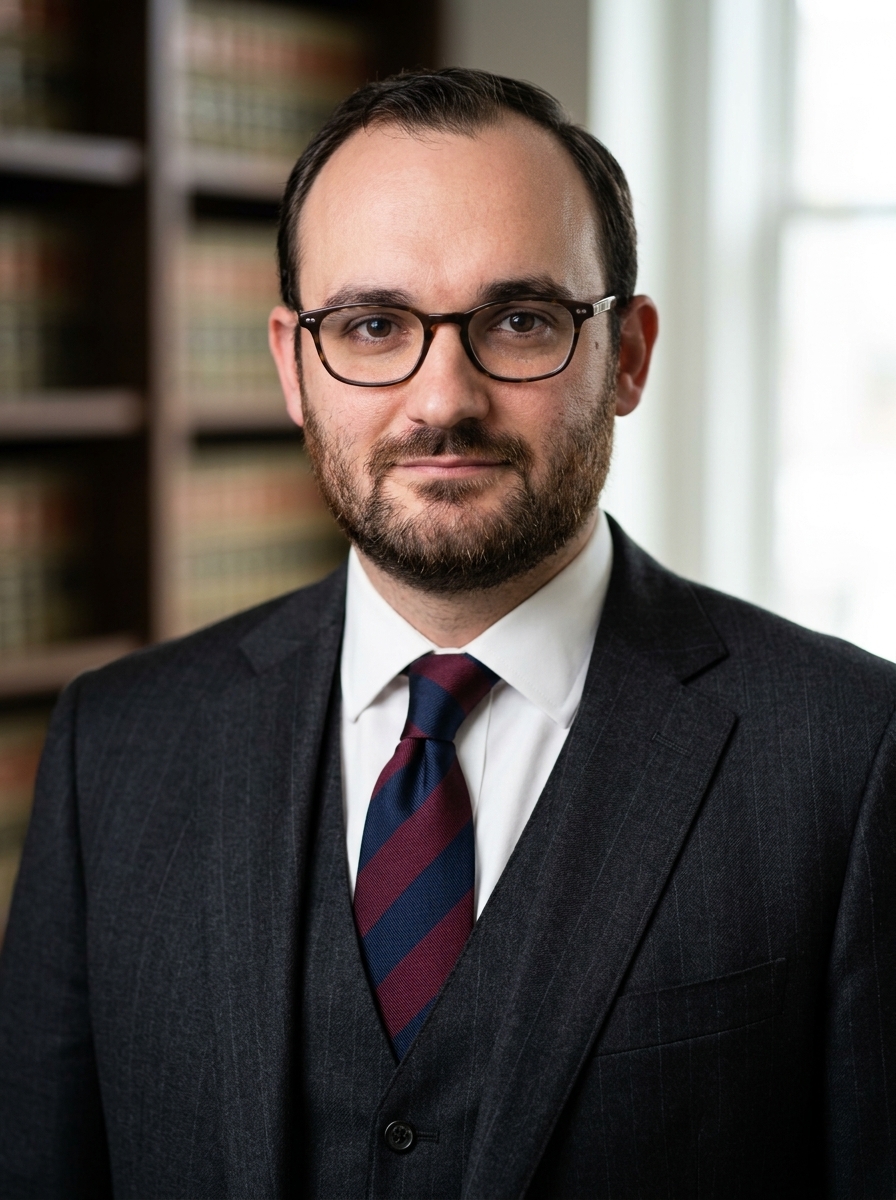

They met as law students in Houston, opened a practice together in 2001, and have spent every year since doing one kind of work.
Once a year, Ted Lorenz stands in front of a room full of twelve-year-olds at Hill Country Middle School and tries to explain what a lawyer does all day. He chairs the school’s Career Day. He could send a check and a banner and call it support. He goes in person instead and takes the questions himself.
“You get a room full of twelve-year-olds asking what a lawyer really does all day, and you’d better have a good answer,” he says.
His own answer hasn’t changed much in a long time. Ted and his wife, Lesley Lorenz, have run Lorenz & Lorenz Accident & Injury Lawyers in Austin since 2001. The firm does personal injury work and nothing else, and these days that means motor vehicle cases: car wrecks, 18-wheeler crashes, motorcycle collisions, rideshare accidents, and pedestrians and cyclists hit by drivers. It started as a two-person office. It now represents several thousand people a year.
A pull toward the other side of the table
Ted knew what he wanted to do before he ever enrolled in law school. He was still an undergraduate at the University of Texas when the idea took hold, though he can’t name the day it happened.
“I can’t point to one dramatic moment where it clicked,” he says. “It was more a pull toward the idea of standing next to one person when a big company is on the other side of the table.”
By the time he reached the University of Houston Law Center, he was already aiming at the courtroom. He threw himself into mock trial and treated each round as practice for a jury he hadn’t met yet. That meant a few hundred hours of judges and panels telling him exactly what wasn’t working in his arguments.
The feedback stung at 24. He still calls it the best training he ever got.
Law school is also where he met Lesley, in the same section at UH. Neither of them had a plan to build a practice with a spouse. What they did share was a goal: representing people who had been hurt and had nobody fighting for them. Ted graduated in 2000. A year later, the two of them were practicing together in Austin. To hear him tell it, opening their own firm was less a leap of faith than the obvious next step once they both wanted the same thing.
Two roads to one office
Ted’s path ran in a straight line. Lesley’s did not. She clerked for Judge Mark Davidson in the 11th District Court, then spent years as an Assistant District Attorney in Dallas County prosecuting cases for the state, then worked at a personal injury firm in Dallas before the couple opened their own doors.
That background shows up in the way the two of them work a file. Lesley learned to build cases around what a court will actually admit, and Ted leans on that every day.
“I’m constantly testing my read of a file against somebody who learned to build a case around what’s admissible, not what merely sounds good,” he says. “If I think a piece of evidence is going to carry the day, she’s the first one to tell me how the other side will attack it.”
He’s aware of how unlikely the arrangement looks from the outside.
“In a profession where partnerships break up and firms merge or rebrand every few years, the same two names are still on the door,” he says. “That still strikes me as more improbable than most of the case stories I could tell you.”
The lean years
When Ted got his law license, he made a decision that felt a little reckless. He would practice personal injury only, and he would take every case on contingency. No hourly work. No side practice in family law or criminal defense to carry the firm through slow months. He has held to that since the day he was licensed.
In the early years it cost something. It was just Ted and Lesley, and every case had a say in whether the lights stayed on. A young lawyer feels pressure to take whatever walks through the door.
Turning down paying work to stay narrow took more patience than he expected going in.
The other obstacle never went away. Insurance companies dispute fault. They lean on old assumptions, especially about motorcycle riders, that the rider must have been doing something reckless. They count on an injured person getting tired and taking less than the case is worth. Texas uses a modified comparative fault rule, so every point of blame an insurer can shift onto a client comes straight out of the recovery, and the adjusters know it.
Ted’s answer to both problems was the same: discipline. “Stay in the lane,” he says. “Build every case the way you’d want it to look in front of a jury, not just enough to get it off your desk.”
That’s still how the office on Capital of Texas Highway runs.
Gross, net and a $6 million truck case
The case people at the firm still bring up is a truck accident that settled for $6 million. The client suffered severe injuries in a wreck with a commercial truck, the kind that changes how a person lives for the rest of their life.
The number Ted cares about is a different one. Lorenz & Lorenz publishes its results with both the gross settlement and what the client took home. On that case, after fees and costs, $3,589,112 went to the client.
“That’s real money in the hands of somebody who needed it, and the whole office felt that one,” he says. Past results don’t guarantee a future outcome, he adds, but the case is a fair picture of how the firm tries to work every file.
The results page lists others the same way. A $3 million head-on collision with an 18-wheeler. A $2 million rear-end crash in which the client suffered a T3/T4 fracture and paralysis. A $2 million case for a pedestrian hit by a vehicle at work. Each entry sits next to the client’s net figure. Ted’s reasoning is simple: clients deserve to know what a number means for them.
Trucking cases in particular reward the narrow focus. When Ted talks about one, he’s talking about federal hours-of-service rules, electronic logging data and stacked insurance policies, not a general notion of what an injury lawyer does.
He’s also careful about how he tells the firm’s story. He won’t dress it up with a single dramatic turning point, and he won’t invent one to make a better quote. What he points to instead is volume and consistency: several thousand clients a year, one case at a time, and a firm that never wandered off from the work it set out to do.
Scholarships, Christmas families and Career Day
Outside the office, the Lorenzes’ giving tends toward things they can show up for. The firm runs a Scholar Athlete of the Month program that awards a $1,000 scholarship every month to a local high school student who stands out on the field, in the classroom or in service.
Ted and Lesley are Legacy Circle members with Saint Louise House, which helps Austin-area women and children escaping abuse or homelessness, and they adopt families there at Christmas. They’re Powerful Voice Society members with CASA of Travis County. Lesley chaired the Eanes Education Foundation gala in 2024 and serves on several Austin nonprofit boards. And every year there’s Career Day at Hill Country Middle School.
None of it generates business, and Ted is fine with that. “None of that brings in a case, and that’s exactly why I’m proud of it,” he says.
He sees Career Day and the casework as coming from the same instinct: show up for people in person, not from a distance.
More of the same, and deeper into trucking
Ted doesn’t picture the firm doing anything dramatically different in a few years. The plan is to keep representing people hurt in car, truck and motorcycle wrecks in Austin and across Central Texas, out toward the Hill Country and up the I-35 corridor, on contingency and with a free consultation.
Trucking is where he wants to go deeper. The rules change often enough that a lawyer can’t handle a commercial truck case once in a while and expect to keep up. Hours-of-service limits, electronic logging devices, maintenance records and layered coverage between drivers, carriers and trailer owners all make the work harder, and he thinks a firm that treats it as a core focus can do more for a client than one that dabbles.
He also expects the back end of a case to keep getting faster. Software that summarizes medical records or organizes discovery is already saving hours. It doesn’t replace judgment, he says: knowing which piece of evidence a jury will believe, guessing the defense’s argument before it comes, hearing an adjuster’s tone shift halfway through a call. Depositions, mediations and trial will stay in person at Lorenz & Lorenz.
The personal goals are short. Keep working with Lesley. Keep growing the scholarship program so more kids get that $1,000. Keep going back to Hill Country Middle School every year.
“If the firm looks basically the same in a few years, just bigger, and still run by the same two people who opened the doors in 2001,” he says, “I’ll call that a win.”