
The moment feels electric — two cars at a red light, engines idling, an unspoken challenge hanging in the air. Maybe it started as nothing. A look. An engine rev. And then the light changed, and both drivers accelerated harder than they should have.
What felt spontaneous in the moment becomes very real when lights flash in the mirror a few seconds later.
Speed competition charges in Kansas City don’t get filed away like ordinary traffic tickets. They land differently — legally, financially, and on your permanent record. If you’re holding a citation right now, or trying to understand what you’re actually facing, this is where to start.
This Is Not a Speeding Ticket With a Bigger Fine
That misconception needs addressing immediately, because it shapes every decision a driver makes after getting charged.
Speeding is a traffic infraction. Pay the fine, take the points, move on. Speed competition — street racing, drag racing on public roads, any organized or impromptu vehicular contest on Missouri streets — falls under the reckless driving framework. Reckless driving is a misdemeanor. Criminal. Not a traffic infraction.
That single distinction changes everything. A misdemeanor conviction doesn’t just mark your driving record. It goes on your criminal record — the one employers check, landlords check, licensing boards check. It follows you into job applications, apartment rentals, and professional certification processes for years after the incident. Paying a fine and moving on isn’t how this works.
Missouri made that choice deliberately. Speed competitions on public roads kill people. Not occasionally — with disturbing regularity. Bystanders who had no idea what was happening. Drivers in the wrong place. Passengers who trusted someone to get them home. The law reflects the severity of what can go wrong when public streets become racetracks.
How Kansas City Officers Build These Cases
Direct observation remains the most common basis for a speed competition charge. An officer who watches two vehicles accelerate side by side from a stop, maintain competitive speeds, and show the behavioral signs of a race has what they need to stop both drivers and write citations.
But Kansas City enforcement has expanded well beyond what officers personally witness. Traffic cameras mounted at intersections and along monitored corridors capture vehicle behavior across the metro. Body camera footage from officers who arrive at a location where racing was reported documents the scene. Dashcam footage from uninvolved drivers who witnessed the event — and reported it, or submitted it voluntarily — has supported prosecution in Kansas City cases.
Social media deserves its own paragraph because its role in these cases is larger than most participants realize. People film speed competitions. They post the footage to Instagram, TikTok, and Snapchat. They share clips in group chats. Those posts circulate — and investigators find them. Missouri prosecutors have used social media footage as primary evidence in street racing cases, and courts have accepted it. A driver who was careful at the scene can still be identified through a clip that circulated online days later. Posting about a race, appearing in someone else’s footage, or even commenting on race-related content creates a digital record that investigations access.
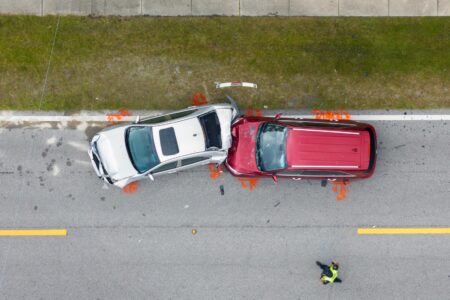
When accidents occur during speed competitions, everything escalates. An injury accident involving racing can bring felony charges, civil liability, and a level of prosecutorial attention that makes the original citation look minor.
The Law Behind the Charge
RSMo § 304.012 governs speed restrictions and reckless vehicle operation on Missouri roads. Speed competitions fall under the reckless driving framework because they represent willful disregard for the safety of everyone else on the road — not just carelessness, but a deliberate choice to treat a public street as a racing surface.
Missouri doesn’t require both drivers to have formally agreed to race. Participation is what matters — engaging with another driver’s acceleration, matching speeds in a competitive pattern, racing from a traffic signal. The statute reaches the act of competing, not just a formal pre-race agreement.
Organizers and facilitators face real exposure too, even if they weren’t driving a competing vehicle. Someone who set up the route, flagged the start, coordinated the gathering, or helped promote the event can be charged under Missouri law. Distance from the actual cars doesn’t mean distance from the legal risk — a fact that surprises people who assumed they were safely on the sideline.
What a Conviction Actually Does to You
Let’s be direct about the full scope, because the consequences extend further than most drivers anticipate.
A reckless driving conviction in Missouri is a Class B misdemeanor — up to six months in jail and fines. That’s the criminal exposure. The criminal record that follows is separate and permanent, visible in background checks for years.
Points hit the license hard. Missouri suspends licenses at eight points within 18 months, and a reckless driving charge typically pushes well past that on its own. License suspension or revocation follows. Reinstatement isn’t automatic — it requires a formal process, fees, and sometimes SR-22 insurance filing before driving privileges return.
Insurance reacts to reckless driving convictions more severely than to ordinary moving violations. Standard carriers sometimes decline renewal after this kind of conviction, pushing drivers into specialty high-risk markets where premiums can run two or three times their previous rate. That financial burden compounds across renewal periods in a way that makes the original fine feel minor by comparison.
None of this is theoretical. These are the actual outcomes that follow a conviction — and they’re why the decision to pay a citation without reviewing options first is the one people most commonly regret.
A Missouri traffic ticket lawyer at Speeding Ticket KC handles speed competition cases and understands how Kansas City prosecutors approach them. The firm knows what evidence tends to be strong or weak, where the arguments that produce better outcomes actually live, and how to navigate a case that has both traffic and criminal dimensions. Early contact — before any decisions get made — is consistently what produces the most options.
“We Weren’t Racing — We Were Just Both Going Fast”
This argument comes up in nearly every speed competition case, and sometimes it’s genuinely true. Two drivers, similar speeds, same direction — that’s not automatically a race.
The challenge is that prosecutors don’t need a formal agreement or a confession to establish a competition. They build the case from observable behavior: side-by-side acceleration from a stop, sustained competitive speeds, engines revved at a light before simultaneous launches, pre-event communication between drivers, or video showing coordinated movement.
The more circumstantial evidence exists, the harder the independent-speeding argument becomes to sustain. An attorney who reviews the specific facts — what the officer documented, what video exists, what the driving pattern actually looked like over time — can honestly assess whether that argument is viable or whether a different approach makes more sense.
What gets said during and immediately after the stop matters too. Statements made at the scene become part of the record. How a driver responds in those first minutes affects what the prosecution has to work with going forward. Saying nothing — which is a legal right — is often the best initial choice.
Questions Kansas City Drivers Ask After a Racing Charge
- What’s the difference between a speed competition charge and reckless driving?
Speed competition on a public road is prosecuted as reckless driving in Missouri — they’re the same charge framework. The distinction matters because reckless driving is a misdemeanor, not a traffic infraction. That means criminal record implications, not just driving record implications. Some cases are charged specifically as “speed competition” under local ordinance, which may carry slightly different procedural handling — but the severity is comparable. An attorney reviews exactly how your citation was written and what that means for your specific situation.
- Can social media footage really be used against me?
Yes — and effectively. Missouri courts have accepted social media footage as evidence in speed competition prosecutions. If footage from the incident exists online — whether you posted it, someone else did, or it circulated through group chats — investigators can access it. Footage that shows your vehicle, your license plate, or your involvement in the event is usable regardless of who originally posted it. If you’re aware that footage exists, tell your attorney immediately. Early knowledge of evidence changes how the defense gets built.
- What if I was only there watching, not racing?
Pure spectators have less direct exposure than participants or organizers — but “pure spectator” is narrower than most people assume. If you helped arrange the event, flagged the start, communicated about it beforehand, or played any role in facilitating the gathering, Missouri law can reach you. Being physically present without any other involvement is different from participating in an organization. If you’re uncertain about where your involvement falls, describe the full situation to an attorney before assuming you’re in the clear.
- Is there a realistic path to a better outcome than a misdemeanor conviction?
Yes — depending on specifics. Cases where the competition evidence is genuinely ambiguous, where identification of participants is uncertain, or where a first-time offender with a clean record is involved have more room to work with than cases with strong evidence and prior history. Speeding Ticket KC evaluates these factors honestly and tells clients what outcomes are realistically achievable — not what they want to hear, but what the actual evidence supports. That honest assessment is what allows drivers to make informed decisions.
- How quickly do I need to act after receiving this charge?
Immediately. Speed competition charges that carry misdemeanor implications move through the court system differently than standard traffic tickets. Response timelines are real, and options narrow as deadlines approach. The gap between when a charge is issued and when the court date arrives is when the most options exist. Speeding Ticket KC recommends reaching out within days — not weeks — of receiving any citation involving speed competition allegations. Early contact is consistently the factor that produces the best available outcomes.
Final Thoughts
A speed competition charge isn’t something to pay and forget. The criminal record implications, the license consequences, and the insurance fallout compound in ways that follow a driver for years. The time between a stop and a court date is when the most options exist. After a conviction, they don’t. Knowing what you’re actually facing — and acting on that knowledge early — is what changes the outcome.