Traffic moves because everyone more or less agrees to follow the same signals. Red means stop, green means go, arrows tell you where to turn, signs tell you where not to. The whole system depends on compliance — not perfect compliance, but enough of it that intersections function and roads remain predictable.
When a driver disobeys a traffic control device in Kansas City, they’re not just bending a rule. They’re creating an unpredictable situation in a system built on predictability. And Missouri law responds to that with a charge that carries more weight than most drivers realize when they first see it on a citation.
What Counts as a Traffic Control Device
This is where a lot of people get surprised, because the category is broader than “traffic lights.”
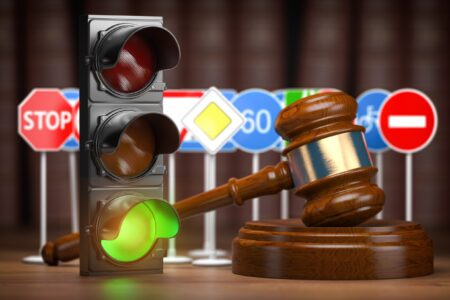
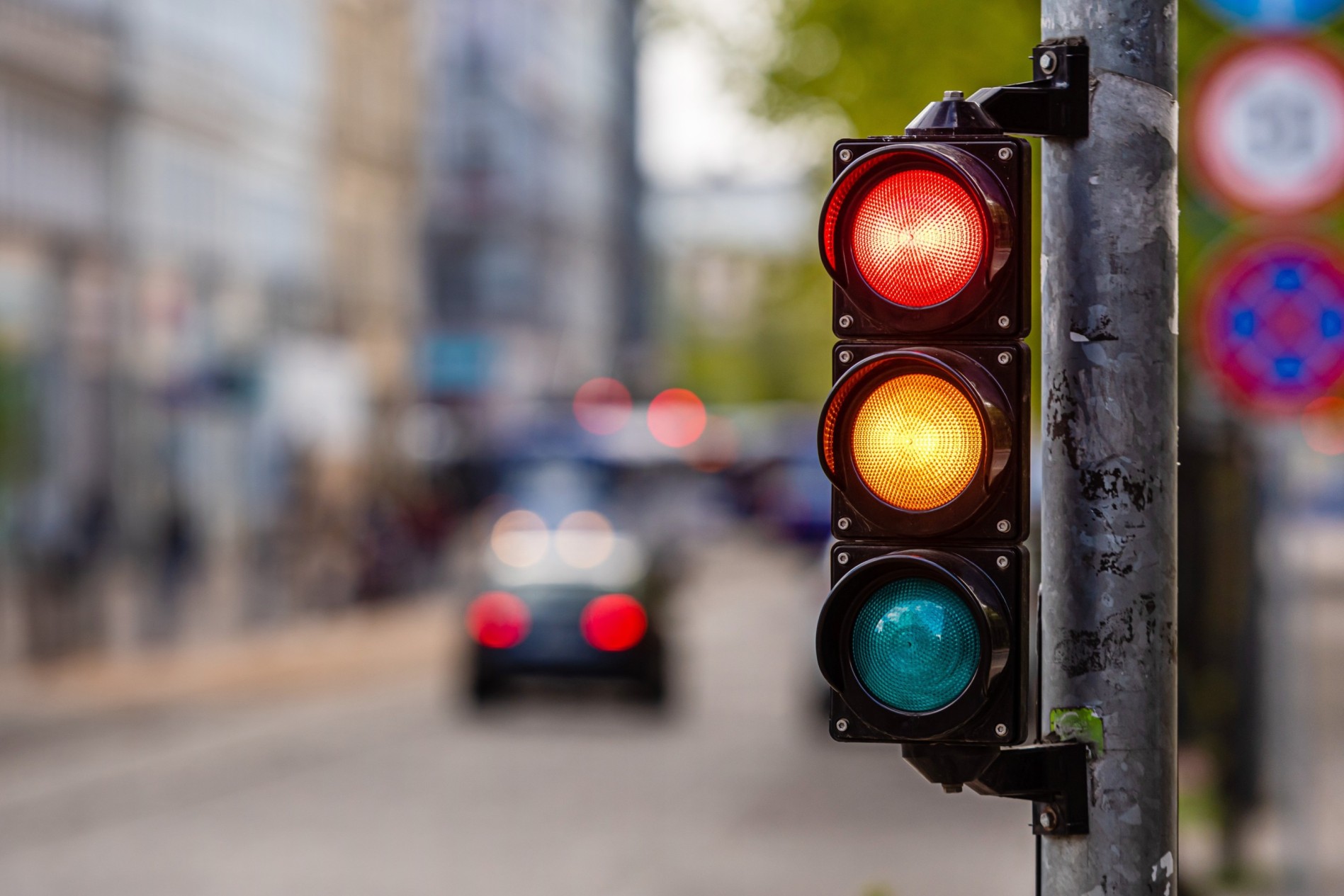
Missouri defines traffic control devices as signs, signals, markings, and devices placed or erected by public authority to regulate, warn, or guide traffic. That definition covers a wide range of things drivers encounter daily. Traffic signals with their red, yellow, and green lights — obviously. Stop signs and yield signs. Lane direction arrows painted on the road. No-turn signs at intersections. Railroad crossing signals and gate arms. Barricades placed during road closures. Temporary construction signage.
All of these are traffic control devices under Missouri law. Disobeying any of them can produce a citation under RSMo § 304.281, which governs compliance with official traffic control devices. The statute is broader than most drivers expect, which is why the charge shows up in contexts that seem to reach beyond the familiar “ran a red light” scenario.
Running a red light is the most common version. But “disobeying a traffic control device” also covers driving past a stop sign without stopping, making a turn where a no-turn sign is posted, crossing a solid white line where markings prohibit it, driving through a road closure barricade, and ignoring temporary traffic control during construction. The charge is more of a category than a single specific violation.
The Kansas City Situations That Produce These Citations
Understanding where these violations actually occur in Kansas City helps both for context and for identifying what a defense needs to address.
Traffic signal violations are the highest-volume source. Kansas City’s intersection network — from the complex downtown grid to the surface streets running through neighborhoods like Midtown, Waldo, and Northeast — produces constant opportunities for signal timing violations. Yellow lights that drivers push into red. Turns made on solid red without a full stop when a right-on-red would technically be permitted. Left turns on red signals at one-way street intersections where the turn is legal but the signal compliance wasn’t.
Construction zone signage produces another consistent category. Kansas City’s perpetual road projects generate temporary traffic control devices that didn’t exist on these roads a week ago. Drivers following familiar routes encounter new stop conditions, lane restrictions, and detour markers they weren’t expecting. Missing or ignoring those temporary devices produces citations that can carry enhanced penalties in active work zones.
Intersection stop sign violations are common in residential neighborhoods — particularly in the older Kansas City neighborhoods where stop sign placement can feel inconsistent. A driver who treats a stop sign as a yield sign in a familiar residential area may not register the non-compliance until an officer documents it.
And speed zone signage violations — driving into a school zone at a speed above the posted limit during active hours — produce citations under the disobeying-a-device framework when the posted speed sign is the device being violated. Kansas City school zone enforcement is active during school hours, and these citations carry enhanced penalties.
What the Charge Actually Says on the Citation
Here’s something worth understanding before making any decisions about how to respond: “disobeying a traffic control device” is a charge category, not a single specific violation. How the officer writes the citation — which specific device, under which specific statute or ordinance, in what specific circumstances — shapes the point value, the fine schedule, and which court handles the case.
Kansas City municipal code and Missouri state statute can both apply to traffic device violations, and they route through different courts with different procedures and different negotiation dynamics. A citation written under municipal ordinance goes to Kansas City municipal court. A citation written under state statute may go elsewhere. The specifics matter, and they’re not always obvious from the face of the ticket.
This is one reason why having a lawyer review the citation before responding makes practical sense. Not because every disobeying-a-device citation is dramatically complicated, but because the specific charge language determines what defense options exist and what reduction paths are realistically available.
Points, Fines, and the Consequences That Follow
Two to three points on a Missouri license for a standard traffic device violation. Against Missouri’s eight-point license suspension threshold within 18 months, two to three points represent meaningful accumulation — particularly for drivers with any prior violations already on their record.
Fines vary based on the specific violation and jurisdiction. Work zone violations carry enhanced fines under Missouri law. School zone violations carry their own enhanced fine structure. Court costs add to the base fine regardless. The fine amount is typically the smallest part of the financial picture.
Insurance is where the long-term cost lives. A moving violation conviction shows up at renewal. Carriers treat traffic device violations as risk signals — not dramatic ones for a single isolated incident, but signals that prompt premium adjustments. Fifteen to twenty-five percent increases for a single moving violation aren’t unusual, and they compound across renewal periods. Over three to four years, the total impact of a paid conviction regularly exceeds the original fine significantly.
Paying the citation immediately closes every other option permanently. Once paid, the conviction is on the record — points counted, insurance notified, not subject to review or reduction.
A Missouri traffic ticket lawyer at Speeding Ticket KC reviews traffic control device citations before any payment decision gets made. The firm handles these violations throughout Kansas City — in municipal court and county court, under state statute and city ordinance — and knows how local prosecutors approach them. That local knowledge of which arguments carry weight, which cases have realistic challenges, and which courts are receptive to negotiated outcomes is what changes what’s available before any deadline passes.
When This Charge Is More Serious Than It Appears
Most disobeying-a-device citations stay in traffic court. Points, fine, court appearance — significant, but manageable with the right legal response. Context pushes cases further in recognizable situations.
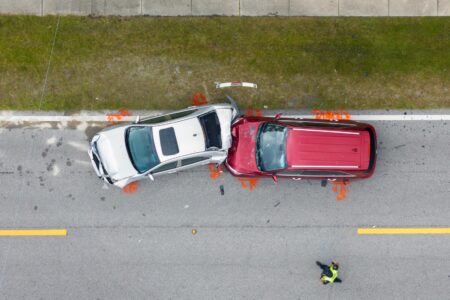
A traffic device violation that contributed to an accident — running a red light that produced a collision, ignoring a barricade that led to a vehicle entering an unsafe area — creates both criminal and civil exposure beyond the basic citation. The traffic violation becomes evidence in the accident investigation and in any subsequent civil claim. The conviction documents that the driver was operating outside the law at the moment of the incident.
A pattern of device violations within a short period changes how prosecutors characterize the behavior. Two or three traffic device citations in 18 months suggest something beyond isolated mistakes. That pattern affects both the charge characterization and the reduction options prosecutors are willing to discuss.
Work zone and school zone violations deserve special mention. Enhanced penalties in these zones aren’t just higher fines — they reflect a policy decision that violations in these areas are more serious, and courts treat them accordingly. Officers stationed in active work zones and school zones during enforcement windows write these citations specifically because the enhanced penalties are meant to matter.
Questions: Drivers Ask After This Citation
1. Does “disobeying a traffic control device” mean I ran a red light?
Not necessarily — it’s a broader category. Running a red light is one version, but the charge also covers stop sign violations, illegal turns where no-turn signs are posted, crossing solid lane markings where prohibited, ignoring construction signage, and other non-compliance with posted devices. The specific device and the specific circumstances determine what the charge actually reflects. Reading the citation carefully — and having an attorney review it — establishes exactly what’s being alleged.
2. What if the traffic signal malfunctioned or the sign was obscured?
Signal malfunction and obscured signage are legitimate defense factors. An officer who observed a violation at a malfunctioning signal, or at a sign that wasn’t clearly visible from the driver’s approach angle, is documenting a situation that may be defensible. Document the condition of the device as quickly as possible after the citation — photos of a malfunctioning signal, a partially blocked sign, or poor visibility conditions give an attorney concrete material to work with. Generic claims about malfunction without documentation are much harder to sustain.
3. Can this citation be reduced to a non-moving violation?
In the right circumstances, yes. Non-moving violation reductions eliminate the point impact and the insurance signal entirely — the most consequential practical consequences of the citation. Kansas City courts allow these reductions, particularly for first-time offenders with clean records. Speeding Ticket KC handles these negotiations and gives clients a realistic assessment of what’s achievable based on the specific facts and the court where the case will be heard.
4. What if the violation happened in a construction or school zone?
Enhanced penalties apply in active construction zones and school zones during restricted hours. Fines can be significantly higher than standard traffic violation amounts. Courts approach these cases with less flexibility than ordinary moving violations. If your citation involves a work zone or school zone, the stakes are higher than a standard device violation — and the legal response should reflect that. Speeding Ticket KC assesses zone-specific violations and advises on the realistic options given the enhanced penalty framework.
5. How quickly do I need to respond after receiving a traffic control device citation?
Sooner than most drivers move. Kansas City court dates arrive faster than people expect, and response deadlines are real. Missing a deadline adds failure-to-appear consequences on top of the original violation — an avoidable problem that narrows every subsequent option. Speeding Ticket KC recommends reaching out within days of receiving any traffic control device citation, not weeks. Early contact means more time to review the documentation, understand the specific charge, and pursue the best available outcome before any windows close permanently.
Endline
Traffic control devices are the infrastructure of orderly road use — the system that makes it possible for thousands of drivers to share the same streets without constant chaos. When that system gets ignored, even briefly, even by accident, the law responds with a charge that carries real weight. Understanding what that charge means, and what options remain before it becomes permanent, is what separates a manageable situation from one that follows a driver’s record for years.