
A traffic case can raise questions that ordinary observation cannot fully answer. Was a speed reading associated with the correct vehicle? What sequence of movements led to a collision? What does a laboratory result reveal about a driver’s condition? These questions may call for different kinds of technical knowledge.
For drivers facing a disputed citation or a collision-related proceeding, understanding expert witness specialties can make unfamiliar evidence easier to follow. Each field provides tools for examining particular types of evidence, from physical damage to electronic records.
Match the Disputed Question to the Right Specialty
An eyewitness may describe seeing a vehicle enter an intersection. A reconstruction specialist may examine whether that account matches the physical evidence. One reports observations; the other applies specialized methods to interpret them.
When a dispute involves technical evidence, it can help to explore fields of expert testimony and identify the specialty that addresses the question. A subject-based directory lets readers compare areas of expertise before evaluating individual qualifications.
An issue involving radar operation differs from a suspected brake failure or interpreting a blood sample. A broad engineering or scientific background does not automatically qualify someone to address all three. Defining the disputed question helps keep the analysis relevant.
Crash Reconstruction Specialists and Collision Evidence
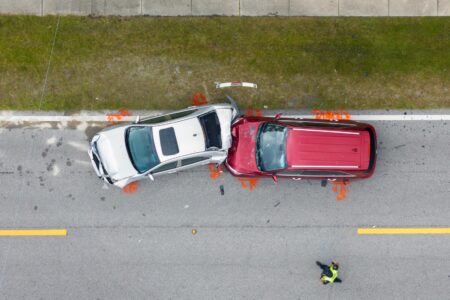
Crash reconstruction specialists examine how a collision may have occurred. They compare scene measurements, vehicle damage, photographs, tire marks, roadway geometry, and available electronic records to evaluate vehicle movements and test proposed explanations.
Suppose two drivers disagree about where their vehicles first made contact. A specialist might compare damage patterns with documented debris locations and the vehicles’ final positions to assess which accounts fit the evidence. That assessment must account for any movement of vehicles or debris after the collision.
A reconstruction may also estimate speed, but that estimate differs from a police device reading taken at the time. Calculations depend on the method, measurements, and assumptions about conditions such as road friction. The explanation should distinguish measured information from estimates and identify missing evidence.
Reconstructing a collision does not settle legal responsibility. That determination also requires consideration of the applicable law and the broader case.
Forensic Toxicologists and Alcohol or Drug Evidence
Forensic toxicologists analyze biological samples for substances such as alcohol and drugs and interpret the findings. In impaired-driving cases, they may address what was detected, its measured concentration, and its potential effects.
A specialist may review laboratory methods, sample handling, and the interval between driving and collection. A later sample does not directly measure the driver’s condition at the time of driving; inferring that earlier requires an appropriate scientific basis.
For drug evidence, detecting a substance and evaluating impairment are distinct tasks. A positive finding alone does not establish a person’s ability to drive at a particular moment. The toxicologist must explain the result in context and identify uncertainties affecting that interpretation.
Speed Measurement Specialists and Radar or Lidar Readings
A dispute about recorded speed may require expertise in the instrument and how it was used. Radar and lidar use different measurement principles: radar commonly uses changes in reflected radio-wave frequency, while lidar uses timed laser pulses to measure distance.
A specialist may examine the device model, testing records, operating conditions, and target identification. The analysis should address whether those details support the specific measurement.
Where several vehicles were present, the specialist might assess how the reading was associated with the cited vehicle. Traffic density alone does not establish a measurement error; the circumstances and records must support the concern.
Published speed-measurement training materials provide separate resources for radar and lidar operation. They offer technical context, although the requirements governing a particular case depend on the jurisdiction and circumstances.
Vehicle Engineers and Mechanical Failure Questions
When a driver reports a component failure, a vehicle engineer may evaluate that explanation. Relevant expertise could involve brakes, steering systems, tires, or electronic controls.
A physical inspection, maintenance records, and diagnostic information may help establish whether a defect existed before the incident. After-incident damage must be examined to determine whether it caused the collision or resulted from it.
For a claimed brake failure, the specialist would need to connect the component findings to its performance before impact. Damaged brake parts alone do not establish that connection.
Vehicle engineers address component performance, while reconstruction specialists examine collision dynamics. Their work may overlap, but a case involving both questions can require expertise in each.
Digital Forensics Specialists and Electronic Records
Digital forensics specialists examine how electronic information was created, stored, and recovered. Their work may involve dashcam files, phone records, or other digital material whose authenticity or timing is disputed.
An examiner may review original files, extraction procedures, signs of alteration, and metadata, which records details about a file. Before using a timestamp to establish a precise sequence, the examiner should check it against the device’s settings and other evidence.
Vehicle event data requires particular care. An event data recorder may capture selected information around a qualifying crash event, rather than a continuous account of the journey. Available fields and recording conditions vary.
Extracting a vehicle record and interpreting its engineering significance may require different qualifications. Assess recorded values alongside the system’s documentation and physical evidence.
Human Factors Specialists and Driver Perception
Human factors specialists examine how human abilities and limitations interact with the driving environment. Relevant questions may concern visibility, sight lines, attention, or the opportunity to recognize and respond to a hazard.
A dispute involving a pedestrian at night may require analysis of lighting, contrast, obstructions, and the pedestrian’s position. These factors help assess when the hazard could have become detectable.
A general response-time figure cannot establish exactly how a particular driver reacted. Any estimate needs an explanation of its basis and its relevance to the conditions under review.
Evaluate Qualifications and the Scope of the Opinion
Assess the proposed expert’s education, training, and experience with the specific equipment, methods, or evidence involved. Experience in a related field may be useful, but its relevance to the assignment should be clear.
Ask what materials the expert needs, how the analysis will be performed, and which assumptions could affect the conclusion. A well-supported opinion should explain its reasoning and address findings that contradict it.
The need for expert witness testimony depends on the disputed issue and whether specialized analysis would help explain it. A straightforward citation may not justify the same work as a complex collision or a contested scientific result.
A directory listing does not guarantee that an opinion will be admitted. Traffic citations, impaired-driving proceedings, and civil collision claims can involve different requirements. Counsel can assess the applicable rules and the proposed testimony’s role in the case.
A Clearer Understanding of Technical Evidence
Understanding expert witness specialties helps readers identify the knowledge a technical dispute may require. The appropriate field depends on the evidence and the question it raises.
A useful opinion explains how the analysis supports its conclusions and acknowledges what remains uncertain. That clarity helps readers assess technical findings without treating them as more definitive than the evidence allows.