
Backing up feels like the most basic driving task there is. Shift into reverse, check the mirror, ease back. You’ve done it so many times that it happens almost automatically. But improper reverse driving charges in Kansas City are written more often than people realize — and when they end up in traffic court, drivers are frequently caught off guard by how seriously these cases get treated.
Understanding what the charge actually covers and what happens when it lands in front of a judge changes how you respond to it.
What Missouri Law Prohibits When Reversing
Missouri law under RSMo § 304.019 sets a clear standard. A driver cannot back up a vehicle unless the movement can be made safely. You cannot reverse into an intersection or crosswalk. You cannot back onto a highway or freeway. And you cannot reverse in a way that interferes with other traffic — pedestrians, cyclists, or other vehicles.
The obligation that runs through all of this is straightforward. Before you move backward, you’re legally responsible for knowing the path is clear. Backup cameras help — but they don’t transfer your legal duty to the manufacturer. The camera shows what it shows. Your obligation extends to what it doesn’t show, too. Courts apply that standard when reviewing what happened in a backing incident.
That’s a higher bar than most drivers assume when they’re operating on muscle memory in a familiar parking lot or driveway.
How These Charges End Up in Traffic Court
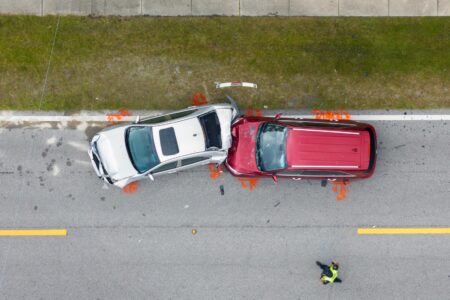
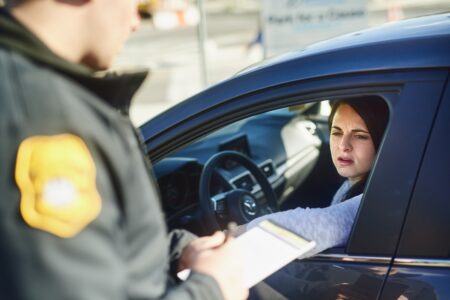
Most improper reverse charges reach traffic court through one of two paths. Either an officer directly observed the unsafe backing maneuver and issued a citation on the spot — common in parking lots, driveways, and areas where officers monitor pedestrian-heavy traffic — or an accident occurred, and the citation was written as part of the incident report.
Parking lot incidents are the most common source. Shopping centers along Metcalf, Ward Parkway, and Barry Road see backing incidents regularly. Two vehicles are reversing from adjacent spaces simultaneously. A driver backing out of a spot without fully checking the lane. A pedestrian crossing behind a reversing vehicle that the driver didn’t see. These situations generate citations and sometimes personal injury claims that follow the driver into court.
Residential driveway incidents are next. Backing out onto a neighborhood street seems low-stakes until something goes wrong. Poor sight lines past parked vehicles, a cyclist moving faster than expected, a child running out from a neighbor’s yard — these situations happen on quiet streets with the same legal weight as anything on a main road.
Commercial vehicle backing violations create a separate category. Delivery drivers reversing on city streets, trucks backing into loading areas that block traffic, large vehicles reversing near pedestrian zones — these get cited and prosecuted with particular attention because the size differential between the vehicle and anyone in its path creates a distinct level of risk.
What Happens in Traffic Court for These Charges
When an improper reverse charge reaches court, the judge looks at the specific facts — what the officer documented, what evidence exists, and whether the backing maneuver was genuinely unsafe based on the conditions at the time. This isn’t automatic. The charge has to be supported by the evidence, and evidence can be challenged.
Dashcam footage is the most useful tool in these cases. If your camera captured the backing maneuver, it either supports or contradicts the officer’s account directly. Parking lot and business camera footage can show the same thing from a different angle. Witness accounts, the physical geometry of the location, and the positions of other vehicles all factor into whether the citation holds up under scrutiny.
Missouri’s comparative fault principles apply in accident cases. If the other party was also doing something unlawful — speeding through a parking lot, ignoring posted directional arrows, crossing outside a designated path — that shifts some responsibility onto them. The backing driver typically starts the analysis at a disadvantage, but the analysis isn’t always one-sided.
A Missouri traffic ticket lawyer who understands how Kansas City traffic court handles these cases can review the evidence, identify where the charge has weaknesses, and assess what realistic outcomes exist for your specific situation.
How Speeding Ticket KC Handles These Cases
Speeding Ticket KC is a recognized law firm in Kansas City, Missouri. They handle traffic violations and related defense matters — including improper reverse driving charges that end up in traffic court — for drivers who want to actually understand their options before deciding how to respond.
Their attorneys go through each case on its own facts. What exactly does the citation charge? What did the officer document? Is there footage, witness accounts, or physical evidence that challenges the account? What outcomes are genuinely available — reduction, dismissal, a negotiated result that limits damage to your record? No templates. Each case is read for what it actually contains.
What to Do After Getting This Charge
Don’t pay it automatically. Paying is a legal admission — points attach immediately and your insurance company will see it at renewal.
Write everything down while the details are still sharp. The location, what you could see from your position before backing, what happened, what the officer said, any witnesses who were nearby. If you have dashcam footage, save it before it overwrites. If the incident happened near a business with exterior cameras, note where those cameras are located — that footage can sometimes be requested before it’s overwritten.
Then talk to a lawyer before your court date. Not after. Options narrow as deadlines pass. Whether that’s a reduction to a non-moving violation that removes the points, identifying a problem with the citation’s documentation, or building a comparative fault argument based on the other party’s conduct — none of those paths stay open indefinitely.
The difference between a driver who comes out of this with minimal consequences and one who absorbs the full weight of the charge often comes down to whether they asked the right questions before the deadline passed.