Kansas City is a railroad city in a way most people don’t fully appreciate until they’ve waited through a freight train blocking a crossing on their morning commute. The rail infrastructure here is extensive — the city sits at one of the busiest rail hubs in North America, and those tracks cross surface streets throughout the metro in ways that affect daily driving constantly.
Most drivers treat railroad crossings as an inconvenience. A few treat them as optional. And the ones who make that second choice tend to discover, sometimes in the worst possible way, that the law and the physics of the situation are both unforgiving.
Railroad Crossings Are Not Like Other Traffic Signals
That’s worth stating plainly, because a lot of crossing violations happen because drivers apply traffic-signal logic to a fundamentally different situation. A red light means stop and wait for the green. There’s a predictable cycle. You can see what’s coming.
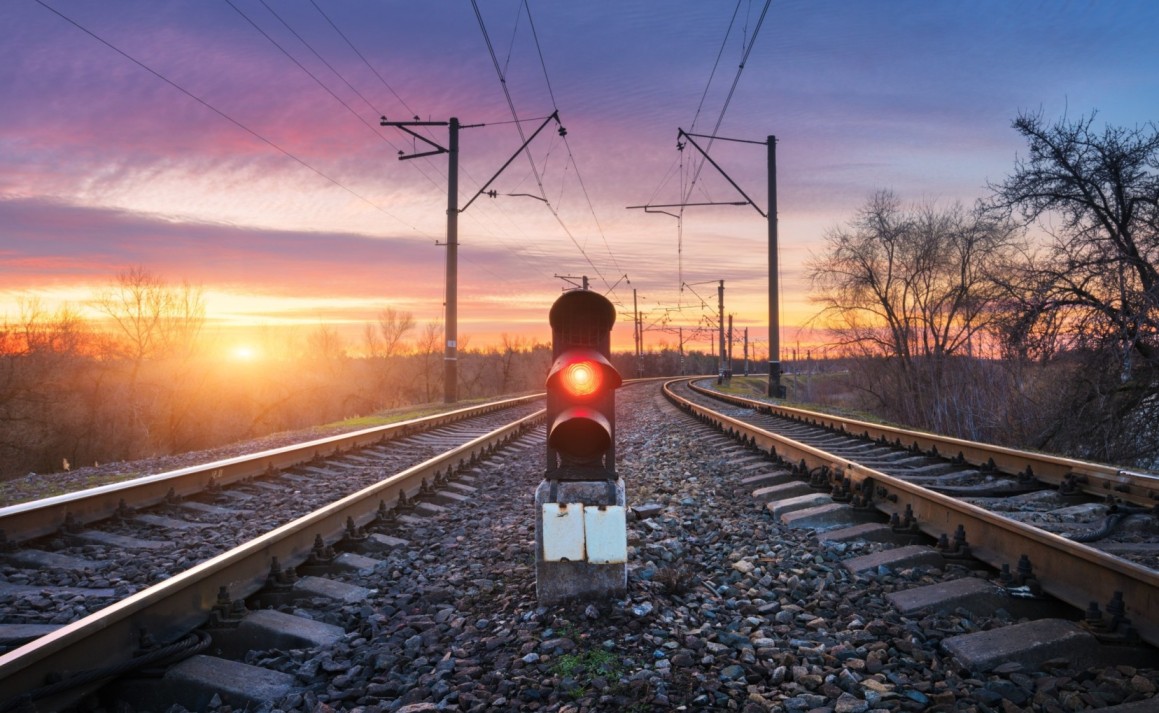
A railroad crossing doesn’t work that way. The signals — flashing lights, audible warnings, descending gates — activate because a train is coming. The train doesn’t stop for traffic. It doesn’t have a yellow light before the crossing arms come down. By the time those arms are moving, the train is already close and moving at a speed that makes stopping impossible. A freight train traveling at 55 miles per hour needs over a mile to stop. A driver who beats the gate by two seconds and stalls on the tracks has no margin. None.
Missouri law reflects this reality, and the penalties for railroad crossing violations are calibrated to the severity of the risk involved.
What Missouri Law Actually Requires at Railroad Crossings
RSMo § 304.030 through § 304.040 govern railroad crossing conduct for drivers. The requirements are specific, and several of them surprise drivers who assumed they understood the rules.
When lights are flashing, or a gate is descending or lowered, drivers must stop before reaching the nearest rail — not at the gate, not at the edge of the pavement, but before the rail itself. Stopping at the gate and then inching forward onto the tracks while waiting is a violation even if the gate hasn’t fully descended yet.
The law also prohibits stopping a vehicle on railroad tracks under any circumstances. This isn’t just about signals — a driver who gets stuck on a crossing because traffic ahead is backed up has violated Missouri law, regardless of whether signals were active at the time. That situation is more common than people realize, particularly at urban crossings where traffic queues extend across the tracks.
Commercial vehicles and certain hazardous material carriers face additional requirements. These vehicles must stop at all railroad crossings — regardless of whether signals are active — open their windows, look both ways, and proceed only when certain the crossing is clear. Kansas City’s industrial corridors see significant commercial traffic, and officers enforce these enhanced requirements actively.
And here’s one people genuinely don’t know: Missouri prohibits driving around a lowered gate. Fully around — not just under it, but navigating around the barrier entirely. This happens more than it should, typically when a gate malfunctions and stays down after a train has passed, or when a driver decides the wait is taking too long. Both situations are violations. Neither excuse holds up legally.
The Crossings Where Kansas City Drivers Get Into Trouble
The rail network in Kansas City creates crossing situations across a wide range of contexts, and the violation patterns are recognizable.
Industrial corridor crossings — particularly in the areas north of downtown, through the West Bottoms, and along the east side near the freight yards — see frequent train traffic at irregular intervals. Drivers who use these routes daily develop a sense of the patterns, which creates a dangerous familiarity. They think they know when trains come. They don’t always know correctly.
Suburban crossings in areas like Raytown, Independence, and Lee’s Summit involve higher-speed freight traffic that moves faster than drivers expect. A crossing that looks clear because the approaching train isn’t yet visible can become a crisis in seconds. The distance-to-speed calculation that feels intuitive doesn’t account for how quickly a train at highway speed closes a gap.
Downtown crossings present a different problem: traffic backup. When cars queue at a light and a train activates a crossing signal mid-queue, the vehicles already on the tracks when the gates descend face a serious situation. This isn’t theoretical — it happens at several downtown crossings with regularity, and the legal and physical exposure is significant for any driver caught on the tracks when a train is active.
Malfunctioning gate situations generate genuine confusion and real violations. A driver who sees a gate stuck in the down position after a train has clearly passed may assume it’s safe to proceed — sometimes by going around the barrier. That assumption doesn’t create a legal exemption, and if a second train is using the same crossing on a parallel track, the assumption can be fatal.
What the Violation Actually Costs
Missouri railroad crossing violations carry points — typically two to four depending on the specific charge and circumstances. Two to four points against Missouri’s eight-point suspension threshold create real risk for any driver with prior violations on their record.
Fines for basic crossing violations run higher than standard traffic infractions. Commercial vehicle violations at crossings carry enhanced penalties under both Missouri law and federal regulations. And if the violation contributed to an accident — a vehicle struck by a train, or a collision caused by a driver swerving to avoid a crossing situation — the legal picture expands significantly.
For commercial drivers, federal consequences run parallel to state ones. A railroad crossing violation for a CDL holder triggers federal reporting requirements and can affect commercial driving privileges independently of what happens in Missouri traffic court. The professional consequences make these cases materially different from standard traffic violations.
Insurance responds to moving violation convictions here the same way it does elsewhere — by identifying elevated risk at renewal and adjusting premiums accordingly. Crossing violations, because of their association with severe accident potential, can trigger meaningful rate increases that compound across renewal periods.
Paying the citation without reviewing options locks in the conviction permanently. A Missouri traffic ticket lawyer at Speeding Ticket KC handles traffic violations across Kansas City — including railroad crossing cases — and can assess whether the specific citation holds up under scrutiny before any decision gets made. Local familiarity with how these cases move through Kansas City courts matters in ways that generic advice doesn’t account for.
When a Crossing Violation Becomes Much More Serious
Most railroad crossing violations stay in traffic court. A fine, some points, a lesson learned — that’s the typical arc for a driver who ran a signal without incident.
The cases that don’t stay in traffic court are the ones involving accidents. A vehicle struck by a train generates insurance claims, potential civil litigation, and — if the driver survived — criminal exposure depending on circumstances. Reckless endangerment charges become possible when the behavior shows clear disregard for the obvious danger. If passengers were in the vehicle, or if the accident affected other motorists, the exposure multiplies.
Even near-miss situations that don’t result in physical contact can generate charges if an officer observes the violation. The risk created by a vehicle on the tracks during an active warning is the violation — not the outcome.
Getting legal review early — before making any statements about what happened — consistently produces better outcomes than reacting after the fact.
Questions Kansas City Drivers Ask About Railroad Crossing Violations
- What if the gate was malfunctioning and stuck down after the train passed?
Malfunctioning signals create genuine confusion, and that context matters legally — but it doesn’t automatically eliminate the violation. Missouri law requires drivers to stop when gates are lowered, regardless of the reason for the lowered position. If you proceeded around a lowered gate, even with a train clearly gone, you’ve technically violated the statute. The mitigation argument centers on whether you verified the crossing was clear, whether a second track existed, and what the observable conditions were. Document everything about the malfunction — photos, time, location — and contact an attorney before your court date.
- I was stuck on the tracks because of traffic backup. Is that a violation?
Yes — Missouri law prohibits stopping on railroad tracks regardless of whether signals were active when you entered the crossing. The standard requires drivers not to proceed onto a crossing unless they can clear it completely. In backed-up traffic situations, that means waiting behind the crossing even when the light ahead is green until enough space exists to clear the tracks. Officers and prosecutors understand that traffic backups happen — but the legal obligation to not proceed until clearance is possible exists independently of traffic conditions.
- Are penalties different for commercial vehicles?
Significantly different. Commercial drivers face enhanced Missouri penalties plus federal regulatory consequences for railroad crossing violations. Federal rules require CMV operators to stop at all crossings — whether signals are active or not — open their doors or windows, look both ways, and proceed only when certain it’s safe. Violations trigger federal reporting and can affect CDL status separately from state traffic court outcomes. If you’re a commercial driver facing a crossing citation, legal representation is essential from the start — the professional stakes extend well beyond the traffic fine.
- Can a railroad crossing violation be reduced or dismissed?
In the right circumstances, yes. Cases where signal malfunction was documented, where the circumstances were genuinely ambiguous, or where a first-time offender with a clean record is involved have paths toward negotiated reductions or dismissal. Non-moving violation reductions eliminate the point impact and the insurance consequences entirely. Speeding Ticket KC evaluates the specific facts of each case and gives clients an honest picture of what realistic outcomes look like — not generic optimism, but an assessment grounded in how Kansas City courts actually handle these violations.
- How quickly do I need to respond after receiving a railroad crossing citation?
As quickly as possible. Court dates in Kansas City arrive faster than most people expect, and the options available narrow as deadlines approach. Failure to respond adds consequences on top of the original violation. Speeding Ticket KC recommends reaching out within days of receiving any citation — not weeks. Early contact means more time to review documentation, assess the officer’s account, and build the strongest possible response before any windows close.
Bottom Lines
Railroad crossings sit at the intersection of traffic law and physics in a way that most traffic violations don’t. The train doesn’t negotiate. The signals don’t give second chances. And the law, recognizing that, builds penalties that reflect the gravity of what can go wrong. Treating a crossing citation like an ordinary traffic ticket — something to pay and forget — misses how these cases actually work and what they actually cost.