
There’s a certain energy that comes with a long, empty stretch of road late at night. No traffic, no lights, just pavement ahead. For most drivers, it’s just a quiet commute home. For some, that stretch becomes a starting line.
Street racing in Kansas City is not a minor traffic issue. It’s not something you pay a fine for and forget about. The charges that follow — and they do follow — can reshape someone’s life in ways that have nothing to do with how fast they were going.
This Isn’t Just a Speeding Ticket
People sometimes assume street racing gets treated like an aggravated speeding charge. Go fast enough, pay a bigger fine, take a defensive driving course. That’s not how Missouri handles it.
Street racing and speed competitions are treated as a separate category of offense entirely. The law isn’t just concerned with how fast you were going — it’s concerned with the act of competing, the deliberate choice to turn a public road into a track. That distinction changes everything about how charges get written, how prosecutors approach the case, and what penalties are on the table.
Missouri takes this seriously for a straightforward reason: street racing kills people. Not occasionally — regularly. The combination of high speeds, unprepared roads, bystanders who don’t know what’s happening, and drivers focused on beating each other rather than watching their surroundings creates conditions that end badly. Kansas City has seen it happen, and local law enforcement responds accordingly.
What Missouri Law Actually Says
RSMo § 304.012 and related statutes cover speed restrictions and reckless operation. Street racing gets pulled under the reckless driving framework — which is a misdemeanor, not a traffic infraction. That’s the first thing people need to understand. You’re not just fighting a ticket. You’re potentially dealing with a criminal charge.
Participation in a speed competition on a public road — whether you organized it, entered it, or even aided it in some way — falls under this framework. Missouri doesn’t require you to win or even to finish. Being part of the competition is enough.
Here’s something that surprises people: spectators and organizers can face charges too. If you helped arrange the race, flagged the start, or were part of a coordinated gathering that facilitated the competition, prosecutors have tools to reach you. The law isn’t narrowly focused on the drivers alone.
How Kansas City Handles These Cases
Kansas City police have become more active about street racing enforcement, particularly in areas where it tends to cluster — certain stretches near the east side, industrial corridors late at night, and occasionally the broader highway network when groups organize runs on I-70 or I-435.
Officers use multiple methods. Direct observation by patrol units is the most obvious. But traffic cameras, dashcam footage from other drivers, and social media posts — people film these events constantly, and that footage circulates — all feed into investigations. Prosecutors have used video evidence pulled from Instagram and TikTok in these cases. Posting about it creates a record that’s hard to argue against later.
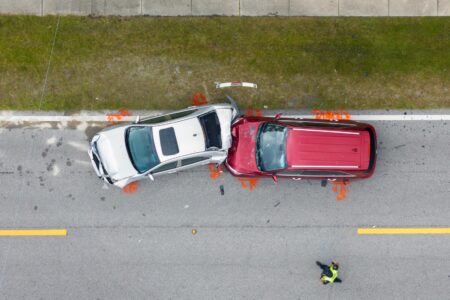
When an accident happens during a speed competition, the situation escalates fast. An injury accident involving street racing can bring felony charges — assault, endangerment, potentially worse depending on outcomes. The criminal exposure in those situations goes well beyond what most people anticipate when they think of a “traffic incident.”
The Penalties That Follow a Conviction
A reckless driving conviction in Missouri is a Class B misdemeanor. That means potential jail time — up to six months — plus fines, and a criminal record that shows up on background checks. Not a driving record. A criminal record.
Points hit your license hard. Missouri can suspend or revoke a license tied to a reckless driving conviction, and the threshold for suspension sits at eight points within 18 months. A street racing charge typically pushes well past that on its own.
Insurance reacts strongly to this kind of conviction. Carriers treat reckless driving as high-risk behavior — not just higher-risk than a speeding ticket, but potentially uninsurable through standard carriers. Some drivers find themselves priced into specialty high-risk insurance after a conviction, paying two or three times their previous premium for years.
And the criminal record piece is what people underestimate most. A misdemeanor conviction shows up when employers run background checks. It appears on rental applications. It can affect professional licensing. Paying a fine and moving on isn’t how this works — the conviction follows you.
Why Legal Help Isn’t Optional Here
A Missouri traffic ticket lawyer at Speeding Ticket KC handles these cases, and the approach to street racing charges is fundamentally different from a standard citation review. This isn’t about negotiating a fine down. It’s about protecting a criminal record.
The questions that matter are specific: What evidence does the prosecution actually have? Was the driver positively identified in footage? Were the vehicles actually competing, or were two cars simply traveling fast in proximity? Did the officer’s account establish competition rather than independent speeding? These distinctions have real legal weight.
Speeding Ticket KC works with Kansas City courts regularly. They know how prosecutors approach these cases, what evidence tends to be strong or weak, and where the arguments that produce reduced or dismissed charges actually live. For something with criminal record implications, that local knowledge matters enormously.
When “We Were Just Driving Fast” Doesn’t Hold Up
It’s one of the most common explanations officers hear: two drivers, both going fast, but not racing — just coincidentally moving at similar speeds in the same direction. Sometimes that’s genuinely true. The legal challenge is that proving a competition existed requires establishing intent and coordination, and prosecutors know how to build that case from circumstantial evidence.
Matching speeds. Revving at a light. Side-by-side acceleration from a stop. Video of the event. Communications between drivers beforehand. Any of these can form the foundation of a competition charge even without a confession. The more of these elements are present, the harder the independent-speeding argument becomes to sustain.
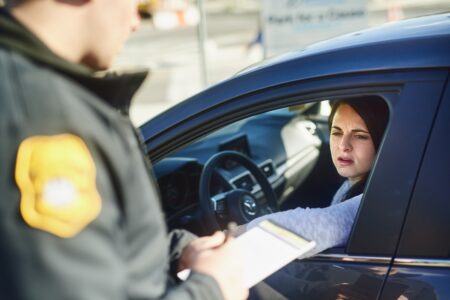
That’s why how the case gets handled from the very first interaction matters. What’s said — or not said — during and after the stop affects what the prosecution has to work with.
Questions People Ask About These Charges
1. Is street racing a felony or misdemeanor in Missouri?
Typically, a Class B misdemeanor under reckless driving statutes — for the racing itself. The charge can escalate to felony territory if someone is injured or killed as a result of the competition. An accident during a street race, particularly one involving serious injury, triggers a completely different legal track. What starts as a traffic-adjacent situation becomes a serious criminal matter fast. The specific charges depend on what happened, and an attorney needs to see the full picture before advising on exposure.
2. Can I be charged if I was just watching?
Organizers and facilitators face real legal risk under Missouri law. Pure spectators have less exposure — but “pure spectator” is narrower than people think. If you helped arrange the event, communicated about it, flagged the start, or participated in coordinating the gathering in any way, prosecutors have grounds to include you. Even social media activity promoting or documenting an organized race has been used as evidence in Missouri cases. Don’t assume distance from the vehicles equals distance from the charge.
3. What happens to my license after a street racing conviction?
Missouri can suspend or revoke a license connected to a reckless driving conviction. The point hit alone — typically four or more points for reckless driving — can push a driver past the suspension threshold if there’s any prior history. Beyond points, a judge has discretion to order license revocation as part of sentencing. Reinstating a revoked license requires a separate process, fees, and sometimes SR-22 insurance filing. The license consequences alone make fighting the charge worth serious consideration.
4. Does video evidence from social media actually hold up in court?
Yes, and it holds up well. Missouri prosecutors have successfully used footage pulled from social media platforms in street racing prosecutions. Video that shows the vehicles, the road, identifiable participants, and the nature of the competition gives prosecutors strong material to work with. If footage of your vehicle or your involvement exists online, assume it’s already been identified. An attorney needs to know about it early — before the prosecution builds its case around it.
5. What’s the realistic outcome if I fight the charge?
It depends heavily on the specific evidence, the jurisdiction, and your prior record. Cases with weak identification evidence, ambiguous footage, or circumstances that genuinely resemble independent fast driving rather than organized competition have more room to work with. First-time offenders with clean records often have better negotiating positions than those with prior violations. Speeding Ticket KC evaluates these factors directly and gives clients a realistic picture — not a guarantee, but an honest assessment of where things stand and what outcomes are actually achievable.