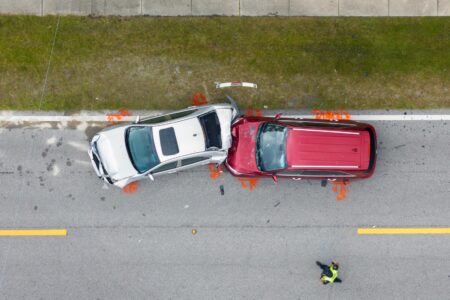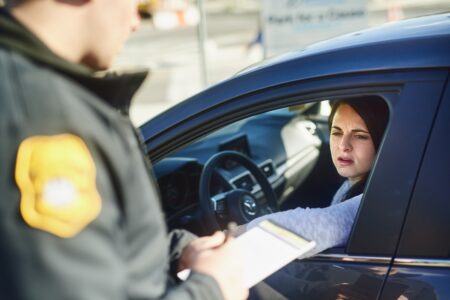

There’s a moment in certain traffic stops where something shifts — where a driver makes a decision that changes everything about what follows. It might be a suspended license they can’t explain. It might be the presence of something in the car they don’t want found. Or it might be a genuine misread of the situation — lights they didn’t realize were directed at them, a signal that registered late, a hesitation that stretched three blocks longer than it should have.
Whatever the reason, the moment a driver continues rather than pulling over after a clear signal to stop, the situation transforms from a traffic stop into an eluding charge. And eluding charges in Kansas City are not handled in traffic court.
What Missouri Law Actually Says
Direct and more serious than most people expect when they first hear the charge.
Missouri Revised Statutes § 575.150 addresses resisting or interfering with arrest, detention, or stop. When a law enforcement officer signals a driver to stop — through lights, sirens, or both — Missouri law creates a clear obligation to comply. Failing to stop, continuing to drive after that signal, or taking deliberate evasive action to avoid the stop constitutes a criminal offense under this framework.
The base charge — failing to stop for a law enforcement officer — can be prosecuted as a Class A misdemeanor. Up to one year in jail, fines, and a criminal conviction that appears on background checks in ways that a traffic citation never would. When the conduct involves excessive speed, reckless driving, or creates a danger to other people on the road, the charge escalates to a felony. When injuries result from a pursuit, the criminal exposure becomes significantly more serious still.
This isn’t points on a driving record. This is a criminal case.
Who Actually Gets These Charges
Here’s something worth saying plainly — not everyone who gets an eluding charge was trying to evade law enforcement in the dramatic sense people picture.
Some drivers genuinely don’t register that the signal is directed at their vehicle, particularly in heavy traffic. Some recognize it too late and drive a block or two while processing what’s happening — which still constitutes eluding if the officer documents the sequence as a refusal to comply. Some have outstanding warrants and make a bad calculation at the moment about what stopping versus not stopping will cost them. Some are in unfamiliar areas, it’s late at night, and they want to reach a lit location before pulling over — not understanding that brief delay looks entirely different in a police report than it felt inside the car.
The law doesn’t ask why the driver continued. It asks whether they did, for how long, and what the circumstances of the pursuit looked like. Those answers shape the charge. But the explanation factors into how the case eventually gets handled — which is exactly why it needs to be documented and presented correctly from the beginning, not improvised at the wrong moment.
What an Eluding Conviction Actually Costs
Most people think about jail time when they first understand this charge. The record is what follows you longer.
A Class A misdemeanor conviction in Missouri shows up in background checks for employment applications, housing applications, professional licensing, and security clearances. Driver’s license suspension can follow directly from the conviction. Insurance companies check driving records, and a criminal conviction connected to a driving incident produces premium adjustments that compound over years in ways that no traffic ticket does. For commercial drivers, a criminal conviction connected to driving conduct creates CDL implications that federal regulations treat with immediate and serious consequences — consequences that can threaten employment before the legal case even fully resolves.
When the charge escalates to a felony — because the pursuit involved reckless conduct, other drivers were endangered, or someone was hurt — the stakes climbed dramatically. Longer incarceration exposure, more substantial fines, and a record that affects every significant decision for years.
Where Defense Actually Begins
These cases have more defensible space than people assume when the charge first lands.
The first question is always whether the officer’s signal was clearly directed at the defendant’s vehicle, clearly visible and audible, and whether the driver’s failure to stop was genuine evasion or something more ambiguous. How long the failure to stop lasted, what was done during that period, and whether the driver ultimately pulled over voluntarily are all things the prosecution can prove and a defense attorney can fight.
Context matters enormously. A driver who continued for one block in dense traffic because they weren’t certain the signal was directed at them is a different legal situation from a driver who led officers on a ten-minute chase through residential streets. Both may carry the same initial charge — but how they resolve can look very different with the right legal positioning from the start.
A Missouri traffic ticket lawyer who handles criminal traffic matters understands how eluding charges move through Kansas City’s court system and where the prosecution’s case is most exposed to challenge. Speeding Ticket KC works with drivers facing serious traffic-related criminal charges — including situations where a moment of bad judgment at a traffic stop has created a legal situation that traffic court alone can’t resolve. Getting that guidance before any court appearances, and before making any statements beyond what’s immediately required, is where the outcome gets shaped.
Questions: Drivers Ask About Eluding Charges
1. Is failing to stop for a police officer really a criminal matter in Missouri?
Yes — and the severity depends on what the conduct actually looked like. A basic failure to stop is a Class A misdemeanor with potential jail time up to one year, fines, and a criminal record. When the conduct involves dangerous driving or puts other people at risk, the charge escalates to a felony with significantly more serious consequences. This isn’t a traffic infraction — it requires a fundamentally different legal response than a speeding ticket or a moving violation.
2. What if I genuinely didn’t realize the officer was signaling me?
That’s a real and legitimate defense argument — but making it hold up requires more than just saying it. It requires establishing that the officer’s signal was ambiguous under the conditions present, that the driver’s response was consistent with genuine uncertainty rather than evasion, and that the full sequence of events supports that interpretation. Officers document these situations thoroughly, and an attorney who examines that documentation can identify whether the prosecution’s account of when and how clearly the signal was given actually survives scrutiny.
3. Does it help if I eventually pulled over voluntarily?
Yes — and meaningfully so. Voluntarily stopping, even after a delay, is factually different from a sustained pursuit. It demonstrates that the driver wasn’t committed to evading the stop and ultimately complied. How quickly the driver stopped, what their conduct looked like during the delay, and how they behaved immediately upon stopping all factor into how prosecutors approach the case. These details shape the outcome in ways that make them worth documenting and preserving from the beginning.
4. Can an eluding charge affect my driver’s license?
Yes — and sometimes independently of the criminal case. A conviction for eluding or fleeing law enforcement can result in license suspension or revocation under Missouri law. When the charge involves a criminal conviction rather than a traffic infraction, the license consequences flow through the criminal penalty framework rather than the standard points system. Understanding the full licensing implications of your specific charge is part of what legal counsel clarifies early — before any decisions about how to plead get made.
5. How early should I contact a lawyer after an eluding charge?
Immediately — or as close to it as circumstances allow. The decisions made before the first court appearance shape everything that follows. Statements made without legal guidance create documentation that becomes part of the case against you. Plea decisions made without fully understanding the charge and its realistic range of outcomes narrow options that would otherwise exist. Speeding Ticket KC works with Kansas City drivers on criminal traffic matters including eluding charges — and the earlier the involvement, the more the outcome can actually be influenced rather than just managed.