
Most Kansas City drivers have crossed railroad tracks hundreds of times without a second thought. You slow down, check both ways, and roll through. It becomes automatic. But the clearance rules that govern how you cross those tracks are more specific than most people realize — and getting them wrong can result in a citation that carries more legal weight than almost any other moving violation on the books.
Kansas City sits inside one of the busiest freight rail corridors in the country. These crossings see real traffic, real enforcement, and real consequences when the rules get violated.
The Clearance Rule That Most People Don’t Fully Understand
Missouri law under RSMo § 304.035 requires something specific before you enter a railroad crossing. You cannot proceed onto the tracks unless there is enough clear space on the far side to hold your entire vehicle without stopping on or over the rails.
Every inch of your vehicle — front bumper to rear bumper — must clear the tracks completely before you commit to crossing. If traffic ahead has backed up and any part of your vehicle would end up sitting on the rails while you wait, you should stay put before the crossing. Not probably clear. Not about to clear. Actually clear right now.
The rule removes the judgment call. You don’t evaluate whether you think it’ll work out. You wait until it’s genuinely open, then go.
This applies to every vehicle type. A standard sedan, a full-size pickup, a commercial vehicle — all of them. Longer vehicles need more clearance beyond the tracks, and the margin for misjudgment shrinks with every additional foot of length.
Other Crossing Rules That Get People Cited
The clearance requirement isn’t the only thing officers enforce at crossings. Missouri law under RSMo § 304.040 covers additional crossing conduct.
Drivers must stop when crossing signals activate — flashing lights, a lowering gate, or a train close enough to be an immediate hazard. This isn’t slow-roll territory. Stop means stop. Proceeding when signals are active is a separate violation from the clearance issue, and it gets treated with particular seriousness because the potential outcome is more direct.
Driving around or under a lowering gate is prohibited. Full stop on that one. It doesn’t matter how slow the gate is moving or how certain you are that the train isn’t coming. The act of bypassing the gate is the violation.
Stopping on the tracks themselves — for any reason other than a genuine unavoidable emergency — also violates Missouri law. A stall, a distraction, a miscalculation of available space — these all create the same dangerous situation the law is designed to prevent.
Why These Violations Hit Harder Than Standard Moving Violations
A speeding ticket is a speeding ticket. A lane violation is a lane violation. Railroad crossing violations are something different — and courts treat them that way.
The reason is straightforward. A vehicle stopped on active tracks in the path of a freight train represents a risk level that most traffic violations don’t approach. Trains traveling at freight speed cannot stop quickly. The physical math of a collision between that kind of mass and a passenger vehicle has a predictable outcome. Missouri prosecutors and judges understand this reality, and how they handle crossing citations reflects it directly.
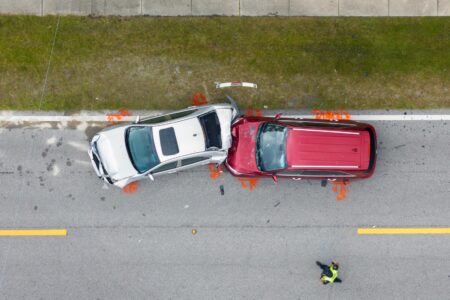
These are moving violations with points attached to your Missouri license. Fines vary based on the specific charge and circumstances. If the violation contributed to an accident — property damage, injuries, emergency response — civil liability opens up alongside the citation. What started as a traffic stop becomes something considerably more complicated.
A Missouri traffic ticket lawyer can give you a clear read on what you’re actually facing before any decisions get made about how to respond.
CDL Holders — The Stakes Are Higher
For commercial drivers, railroad crossing violations carry consequences beyond what Missouri state law imposes on standard passenger car drivers. Federal regulations impose additional penalties on CDL holders specifically for crossing violations — including potential disqualification from operating commercial vehicles for a defined period depending on the specific offense.
Those federal consequences stack on top of Missouri state penalties. They don’t replace them. A commercial driver facing a crossing citation is dealing with two separate consequence tracks simultaneously, and the timeline for responding to both is shorter than most people assume. Getting legal help immediately — not after seeing how things develop — is the right call.
How Speeding Ticket KC Handles These Cases
Speeding Ticket KC is a recognized law firm in Kansas City, Missouri. They handle traffic violations and related defense matters — including railroad crossing citations that carry more legal weight than most drivers initially realize.
Their attorneys review each case on its own specific facts. What was cited? What did the officer document? What were the signal and traffic conditions at that particular crossing? What realistic options exist — reduction, dismissal, or a negotiated outcome that protects your record? No templates. Each case gets a genuine read based on what actually happened.
What to Do After Getting a Crossing Citation
Don’t pay automatically. Payment is a legal admission — points attach immediately, and your insurance company will notice at renewal.
Write down everything while it’s still clear. The crossing location, what the signals were doing when you approached, what traffic conditions looked like on the far side, and what the officer said. If there was a specific reason you entered the crossing — traffic movement, signal timing, an unfamiliar detour route — document that while the details are fresh.
CDL holders: contact a lawyer the same day. The federal consequence timeline doesn’t follow the state court schedule.
For everyone else, get in touch with a lawyer before your court date. Options narrow as deadlines pass. Knowing what’s realistically available early — whether that’s challenging the citation’s account, identifying procedural issues, or negotiating a reduction that removes the points — gives you actual room to respond with intention rather than just absorbing what comes.