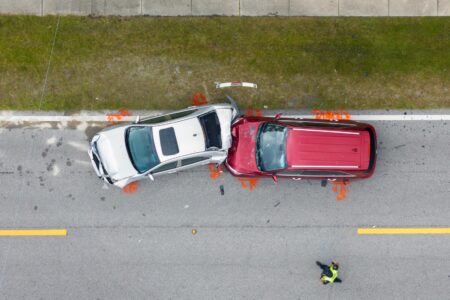

Traffic flows because everyone’s operating from the same basic set of instructions. Red means stop. Green means go. A yield sign means give way to oncoming traffic. Lane markings tell you where to be. These instructions are so embedded in daily driving that most people follow them without conscious thought — which is also why violating one feels minor in the moment. It was just a second. The light was almost green. Nobody was coming.
The citation that follows doesn’t share that casual perspective. And drivers who treat traffic control device violations as minor administrative inconveniences often discover — usually at insurance renewal time — that the consequences were more significant than the violation felt.
Understanding what these charges actually mean, and what rights you have as a driver in Kansas City, is the starting point for responding correctly.
What “Traffic Control Device” Actually Covers
The term sounds technical, and it is — but it describes something drivers interact with constantly. Missouri defines traffic control devices as any sign, signal, marking, or device placed by public authority to regulate, warn, or guide traffic. That definition is broader than most people initially picture.
Traffic signals are the obvious example — the red, yellow, and green lights governing intersections throughout Kansas City. But the category extends significantly beyond that. Stop signs and yield signs are traffic control devices. Lane markings — the painted lines that define lanes, indicate no-passing zones, and direct traffic patterns — are traffic control devices. No-turn signs are traffic control devices. Speed limit signs are traffic control devices. Temporary construction signage and road closure barricades are traffic control devices. Railroad crossing signals and gate arms are traffic control devices.
When Missouri’s RSMo § 304.281 requires compliance with official traffic control devices, it means compliance with all of these — not just the traffic lights at busy intersections. A driver who rolls through a stop sign in a residential neighborhood, makes a turn where a posted sign prohibits it, or crosses a solid lane line in a no-passing zone has disobeyed a traffic control device under the same legal framework as someone who runs a red light.
That breadth is what makes these citations show up in contexts that surprise drivers. They’re not just about red lights.
The Kansas City Violations That Actually Happen
Kansas City’s road network, event calendar, and construction environment create specific situations where traffic control device violations cluster.
Signalized intersections produce the most citations by volume. Red light violations — whether from drivers who misjudge yellow timing, roll stops, or simply aren’t paying attention — are documented constantly throughout the metro. Kansas City has red light cameras at certain intersections, which means some of these violations produce mailed citations rather than roadside stops.
Construction zone violations are increasingly common throughout the city’s ongoing infrastructure work. Temporary traffic control devices — speed limit signs, lane direction signs, construction zone boundaries — appear and shift on schedules that don’t always communicate clearly to regular drivers. Ignoring a temporary speed reduction posted in an active work zone isn’t just a moving violation; it can carry enhanced penalties under Missouri’s construction zone provisions.
Event-related temporary control devices around major venues — GEHA Field, T-Mobile Center, the Sprint Center — create situations where drivers unfamiliar with event-specific traffic patterns ignore temporary no-turn signs or restricted access markings posted for the event footprint. Officers working event traffic enforcement cite these.
Residential neighborhood stop signs produce a consistent category of violations. Drivers who treat stop signs as yield signs — particularly at low-traffic intersections they pass regularly — sometimes encounter officers who’ve specifically targeted that intersection based on complaint or observation.
And school zone speed limit signs during active hours produce violations with enhanced penalties when ignored. Kansas City schools sit throughout the metro, and school zone enforcement during restricted hours is active.
Your Rights as a Driver — and Why They Matter Here
Here’s the thing that gets lost in the immediate aftermath of receiving a citation: a citation isn’t a conviction. It’s an accusation — a formal notice that an officer believes you violated a specific statute or ordinance. You have the right to challenge that accusation.
The right to contest a citation is fundamental and frequently underused. Most drivers pay traffic citations without ever questioning whether the citation was accurate, whether the device was functioning correctly, whether the violation was observed from a position that allowed for clear documentation, or whether circumstances existed that affect the charge. These questions matter, and they have legal weight.
Traffic control device violations specifically often rest on an officer’s direct observation of the incident. That observation can be examined. Where was the officer positioned? What was their line of sight? Was the signal functioning correctly at the time? Were there environmental factors — weather, visibility, traffic conditions — that affected what could be reliably observed? Was the device itself properly placed and clearly visible from the driver’s approach direction?
These aren’t technicalities invented to avoid accountability. They’re legitimate legal questions that courts evaluate when these cases are contested. And in Kansas City, local knowledge of how municipal courts and county courts approach these specific questions makes a meaningful difference in outcomes.
A Missouri traffic ticket lawyer at Speeding Ticket KC reviews traffic control device citations with these questions in mind — before any payment decision gets made, before any options are foreclosed. The firm works Kansas City traffic cases across multiple court systems and knows the patterns that produce better outcomes for drivers who exercise their rights rather than defaulting to payment.
The Consequences That Follow a Conviction
Two to three points on a Missouri license for a standard traffic control device violation. Against Missouri’s eight-point license suspension threshold within 18 months, those points accumulate against any prior violations on the record.
Enhanced penalties apply in school zones and construction zones. Fines in these areas can be significantly higher than standard traffic violation amounts, and courts approach them with correspondingly less flexibility.
Insurance is where the financial impact compounds over time. Moving violation convictions appear at insurance renewal. Carriers treat them as risk signals and adjust premiums accordingly — typically 15 to 25 percent increases for a single moving violation, sustained across multiple renewal periods. A single paid citation, viewed across three or four years of renewals, costs significantly more than the fine amount on the ticket.
Paying the citation permanently closes every other option. Paid means convicted — on the record, in the point total, visible to insurers. That finality is what makes the decision about how to respond so consequential.
Questions: Kansas City Drivers Ask About These Citations
1. What if the signal was malfunctioning when the violation occurred?
Signal malfunction is a legitimate defense — one that requires documentation to be effective. An officer who observed a driver proceeding through what appeared to be a red light didn’t necessarily observe what the driver saw if the signal was malfunctioning. Traffic signal maintenance records, reports from other drivers, and your own contemporaneous documentation of the malfunction all support this argument. If the light was behaving abnormally, document it immediately — photograph the intersection, note the time, and contact an attorney before the next step. Signal maintenance records are obtainable and can establish whether the device was functioning correctly at the relevant time.
2. Do red light camera citations carry the same legal weight as officer-issued tickets?
Red light camera citations in Missouri are issued under local ordinance frameworks that can differ from standard traffic statute violations. The procedural requirements, fine structures, and point implications vary depending on how the camera program is implemented and administered. Some camera citation programs in Missouri have faced legal challenges. An attorney who reviews the specific camera program that issued your citation can assess whether the citation was properly issued and what the realistic options are for contesting or reducing it.
3. Are construction zone and school zone violations treated differently?
Yes — significantly. Missouri law explicitly enhances penalties for traffic control device violations in active construction zones and school zones during restricted hours. Fines can double in construction zones when workers are present. School zone violations carry their own enhanced penalty structure. Courts also approach these cases with less flexibility than standard violations, reflecting the policy decision that compliance in these areas is especially important. If your citation arose in a work zone or school zone, the stakes are higher, and the response should reflect that.
4. Can a traffic control device violation be reduced to a non-moving offense?
In the right circumstances, yes. Non-moving violation outcomes eliminate the point impact and the insurance signal entirely — the most consequential practical consequences of the citation. First-time offenders with clean driving histories have realistic access to these reductions through negotiation in Kansas City courts. The path to a reduction requires knowing how the specific court handles these cases and what arguments carry weight with that court’s prosecutors. Speeding Ticket KC has that local knowledge and gives clients an honest assessment of what’s achievable before any decision gets made.
5. If I was following GPS directions that led me to violate a traffic device, does that matter?
GPS directions don’t constitute a legal defense — Missouri law holds drivers responsible for complying with traffic control devices regardless of navigation software instructions. What GPS context can do is support an argument that the violation was inadvertent and non-deliberate, which influences how prosecutors approach the case and what reductions they’re willing to discuss. For first-time offenders, that context — combined with a clean record — gives an attorney something to work with. The stronger argument is built around the specific circumstances of the navigation error and what a reasonable driver in that situation might have done.
Endline
Traffic control device violations feel routine because they’re common. They’re cited constantly throughout Kansas City, and they get paid just as constantly — often without the driver ever considering whether they had the right to contest the charge or negotiate a better outcome. That right exists. The time to exercise it is before the payment deadline passes and every other option closes permanently.