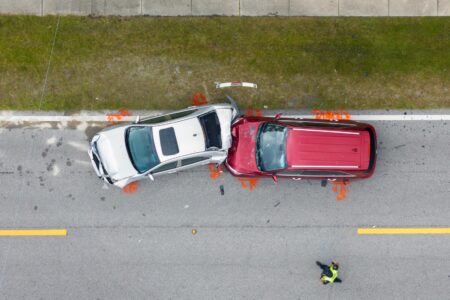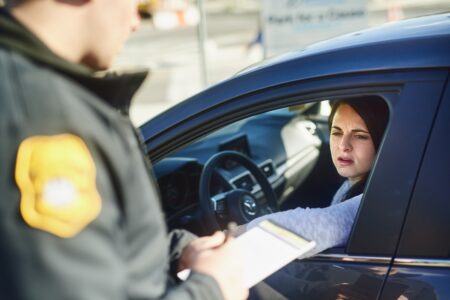

Accidents happen fast. One second everything is normal, and the next there’s an impact — metal on metal, a crunch, the sudden stop. And then comes that disorienting moment where every instinct is firing at once. Check yourself. Look at the damage. Think about what this means for your insurance, your license, your day.
For some drivers, one more thought enters the mix: what if I just drove away?
Most don’t act on it. But some do — or start to, and then stop. That partial departure, that moment of beginning to leave before turning back, is exactly what “attempted leaving the scene” described under Missouri law. And the legal consequences attached to that partial action are more serious than most drivers realize when they’re standing at the edge of making that decision.
What “Attempted” Means Under Missouri Law
Let’s be specific here, because the word “attempted” in a legal context doesn’t mean what it might seem to mean in conversation.
In everyday language, “attempted” suggests something that didn’t fully happen — an effort that failed, an incomplete action. In Missouri traffic law, an attempted leaving charge doesn’t require the driver to have successfully fled the scene. It requires demonstrated intent to flee, shown through some overt action in that direction.
A driver who puts their vehicle in gear and starts moving away from the accident scene — even if they only travel ten feet before stopping — may have already taken sufficient action to support an attempted leaving charge. The moment of beginning to depart, observed and documented by an officer or captured on camera, establishes the conduct. Whether the driver ultimately completed the departure or turned back can affect the severity of the charge, but it doesn’t necessarily eliminate the charge altogether.
RSMo § 577.060 governs leaving the scene of an accident in Missouri. Prosecutors and officers apply this statute along a spectrum — from complete departure with no return, to partial departure and return, to various factual situations in between. Where a driver’s conduct falls on that spectrum shapes what charge gets written and what penalties follow.
Why “I Came Back” Doesn’t Always Fix It
This is the part that surprises people most. The instinct is: if I started to leave but came back and did everything I was supposed to do, the problem goes away. That’s not always how Missouri courts see it.
Immediate return to the scene is a meaningful mitigating factor. Courts and prosecutors genuinely distinguish between a driver who left and was apprehended miles away versus one who moved briefly and returned within a minute or two. The distinction matters for how the case gets charged and how aggressively it gets pursued. Quick return, combined with compliance with all subsequent legal obligations — providing information, rendering assistance if needed, calling for emergency services when appropriate — builds the strongest possible case for the driver.
But here’s the complicated reality: the initial movement, captured on a camera or observed by an officer, is already part of the record. A driver who pulled three spaces forward in a parking lot before walking back to the scene may not feel like they “tried to leave.” The footage may tell a different story than the driver’s internal experience of the event.
Kansas City’s surveillance environment makes this particularly significant. Home security cameras, business monitoring systems, and traffic cameras cover more of the city than ever. Incidents that feel unwitnessed frequently aren’t. What a driver believes was a private moment of hesitation can turn out to be documented from multiple angles.
The Situations That Produce These Charges in Kansas City
Attempted leaving charges in Kansas City tend to cluster around recognizable patterns, and understanding them helps make sense of both how the charge arises and what a defense needs to address.
Parking lot incidents are the most common source. A driver clips a parked car near a busy commercial area — maybe near the Plaza, maybe in a Northeast neighborhood lot, maybe at a shopping strip off Barry Road — and the immediate reaction is to start moving. They pull forward, realize what they’ve done, and return to the scene. But the initial movement was captured on the lot’s security system.
Minor rear-end contacts at low speed produce similar situations. The impact felt small. Nobody appeared to be injured. One driver’s first response was to check their mirror and start moving, then stop when the other driver stepped out of their vehicle or when they realized an officer was nearby.
Construction zone and road rage adjacent incidents sometimes produce this charge when one driver’s reaction to contact with another vehicle is initially to clear the area before thinking through the legal obligations.
And residential neighborhood incidents — backing into someone’s parked car, clipping a fence post that turns out to belong to someone’s property — often involve a moment of “nobody saw this” followed by a decision to return that the driver felt should eliminate any concern.
The Legal Consequences That Don’t Match the Moment
Here’s what matters most for any driver who has received this charge: the consequences attached to it are calibrated to the harm that leaving an accident scene can cause — not to how brief or inadvertent the departure was.
A misdemeanor-level attempted leaving charge in Missouri produces a criminal record. Not a driving record — a criminal record. Visible in background checks, employment screening, rental applications, and professional licensing reviews for years after the incident. The classification doesn’t disappear because the departure was partial.
License points accumulate alongside the criminal exposure. Against Missouri’s eight-point suspension threshold within 18 months, significant point additions can push a driver toward suspension faster than expected — particularly when any prior violations are already on the record.
Civil liability runs on its own separate track. An injured party’s attorney can use evidence of an attempted departure — even one that was stopped and reversed — to argue consciousness of fault. That argument influences settlement negotiations and civil court outcomes in ways that often exceed the financial consequences of the criminal charge itself.
A Missouri traffic ticket lawyer at Speeding Ticket KC handles cases exactly at this intersection of traffic law and criminal exposure. The firm knows how Kansas City prosecutors approach attempted leaving situations across the full spectrum of circumstances, and what early legal contact changes about the realistic options available. Getting legal help before making statements or decisions is consistently what produces the best outcomes in these cases.
Questions Kansas City Drivers Ask About This Charge
1. What’s the practical difference between attempted and completed leaving the scene?
The difference is significant in terms of charge severity and what’s available through negotiation. A completed departure — where the driver left and was located elsewhere — typically produces more serious charges and leaves less room for mitigation arguments. An attempted departure, where the driver began to leave and returned, gives prosecutors and courts more to work with in terms of demonstrated good faith. The timeline of the return, how far the driver moved, and what they did after returning all factor into how the case gets handled. Document everything you remember about the sequence of events as specifically as possible.
2. Does camera footage of my vehicle moving work against me even if I returned?
It can — but it doesn’t have to. Camera footage that shows a brief movement followed by immediate return can actually support a defense narrative when presented effectively. The footage establishes the timeline, and a short gap between departure and return demonstrates that the driver’s decision to come back was quick and voluntary. An attorney who understands how to use that footage — rather than simply accepting the prosecution’s characterization of it — can often change how the case is evaluated. Early access to the footage, before it’s overwritten, is critical.
3. What if I genuinely didn’t realize there was contact until I was already moving?
Genuine lack of awareness of contact is a real defense in some cases, particularly at low speeds where the impact wasn’t clearly felt. Whether this argument is credible depends on the specifics: the nature of the contact, what was visible from the driver’s position, what damage occurred, and how the driver’s subsequent behavior is characterized. It’s not a guaranteed defense, but it’s a legitimate one that an attorney can develop with the right facts. Document your account of the moment of contact as specifically as possible while the memory is fresh.
4. Can this charge be reduced or resolved without a criminal conviction?
In appropriate circumstances, yes. Cases with strong mitigation factors — immediate voluntary return, no injury, first-time offense, full compliance after returning — have realistic paths toward negotiated outcomes that avoid a criminal conviction. Kansas City prosecutors have discretion in how they pursue these cases, and the specific facts influence that discretion significantly. Speeding Ticket KC evaluates these factors and tells clients what outcomes are realistically achievable based on what actually happened, not what the worst-case scenario looks like.
5. How quickly do I need to get legal help after this charge?
Immediately — and that’s not an overstatement for this type of charge. Evidence is freshest now. Camera footage may only be retained for limited periods. Witness memories are most reliable in the immediate aftermath. And the decisions made in the early stages — about what to say, what not to say, and how to engage with any subsequent police contact — affect what options exist later. Speeding Ticket KC recommends same-day or next-day contact for any charge involving accident scene departure, attempted or otherwise.
Final Thoughts
Accidents are stressful enough on their own. The moment of hesitation that produces an attempted leaving charge is often understandable — a product of fear and poor decision-making under pressure, not malice. But the legal system responds to the action, not the internal state. Understanding what the charge actually means, and getting legal help before any decisions become permanent, is what separates a manageable situation from one that follows a driver for years.