
A signal violation ticket feels almost insulting when you get one. You weren’t speeding. You weren’t weaving through traffic. You just forgot to use your turn signal — or used it a half-second too late — and now there’s a moving violation on your record over something that felt completely minor in the moment.
But signal violation tickets in Kansas City carry real consequences, and the legal weight behind them surprises drivers who assumed they were just paying a small fine and moving on.
What Missouri Law Actually Requires
Missouri law under RSMo § 304.019 requires drivers to signal before turning or changing lanes. That’s the basic rule. But the specifics matter more than most people realize.
The signal must be given far enough in advance to actually warn other drivers before the move. On highways and higher-speed roads, Missouri requires a signal at least 100 feet before a turn or lane change. On city streets, the standard is a “reasonable distance” given speed and traffic conditions. The point is communication before the move — not during it, not after it.
A blinker activated the same moment you began turning doesn’t satisfy the requirement. Neither does signaling while you’re already committed to a lane change. Advance notice is the legal standard, and courts apply it based on whether the signal gave surrounding drivers enough time to actually respond.
Left-turn signals at intersections, right-turn signals pulling off a road, signals when pulling out of a parallel parking space, lane change signals on highways — all fall under the same framework. Officers enforce every version of it.
Why Signal Violations Get Used as Stop Justification
Here’s something most drivers never consider. Improper signaling is one of the most commonly used legal grounds for initiating a traffic stop in Missouri — not just for writing a ticket, but as a reason to pull someone over and investigate further.
Under Missouri law, any observed traffic violation — including a signaling infraction — gives an officer legal justification to stop the vehicle. Officers use this regularly. A driver who signals late or not at all gives an officer the legal basis for a stop, even if the officer had other reasons for their interest.
This matters practically. If you were stopped for a signal violation and the stop led to something else — a search, a DUI investigation, other citations — the legality of the entire stop depends on whether that signaling violation actually occurred and was properly documented. If it wasn’t, everything that followed would become challenging.
Most drivers never think about this. Attorneys do.
What the Ticket Costs You
A failure to signal a citation is a moving violation. Two points go on your Missouri license. Fines typically run between $100 and $150 before court costs. That’s the base case — no accident, no injury, no aggravating circumstances.
The fuller picture is what consistently surprises people. Missouri suspends licenses at eight points within 18 months. If you’re carrying points from a prior speeding ticket or any other recent moving violation, two more push you toward that threshold faster than expected. Insurance companies review your driving record at renewal — a rate increase compounding over two or three years regularly costs more than the fine itself.
If the signal violation occurred in a construction zone with workers present, Missouri’s doubled-fine statute applies. What normally runs $100 to $150 can reach $300 or more depending on the specific zone.
A Missouri traffic ticket lawyer can review your specific situation and help you understand what options realistically exist before you decide how to respond.
When a Signal Violation Connects to Something Bigger
Most signal citations resolve on their own as standalone moving violations. But sometimes the signal violation is the entry point for a more complicated situation.
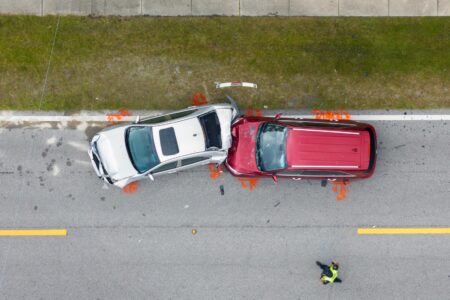
If the failure to signal contributed to an accident — a collision in an intersection, a lane change that forced another driver to brake hard — the citation becomes part of an accident report. The fault in that accident is influenced by whether you signaled. Insurance adjusters use that documentation. Civil claims reference it. What started as a small citation suddenly carries weight in a much larger legal situation.
If the signal violation was used to justify a stop that led to a DUI arrest, drug charges, or other serious charges, the validity of the signal violation citation becomes a foundational question in the entire case. Challenging it at that level requires someone who understands how traffic stops and constitutional law interact.
How Speeding Ticket KC Handles These Cases
Speeding Ticket KC is a recognized law firm in Kansas City, Missouri. They handle traffic violations — including signal violation citations and the broader situations they sometimes connect to — for drivers who want to understand their actual options.
Their attorneys review the specific citation, what the officer observed and documented, whether the stop itself was legally justified, and what realistic outcomes exist. Reduction, dismissal, or a negotiated result that keeps points off your record — the path depends on what the case actually contains. No templates, no assumptions.
What to Do After Getting a Signal Violation Ticket
Don’t pay it automatically. Paying is a legal admission — points attach immediately, and your insurance company will see it at renewal.
Write down everything while it’s still clear. The road, what you were doing, how far in advance you signaled, if you did, what the officer said, and any witnesses nearby. Save dashcam footage before it overwrites. Note whether you were in a construction zone.
Then contact a lawyer before your court date — not after. Options narrow as deadlines pass. Knowing what’s realistically available early gives you room to respond strategically rather than just reacting to a fine and hoping the points don’t hurt you later.
The difference between a driver who understands their options and one who just pays often comes down to whether they asked the right questions before the deadline closed.